


Communicable Diseases in Dominica
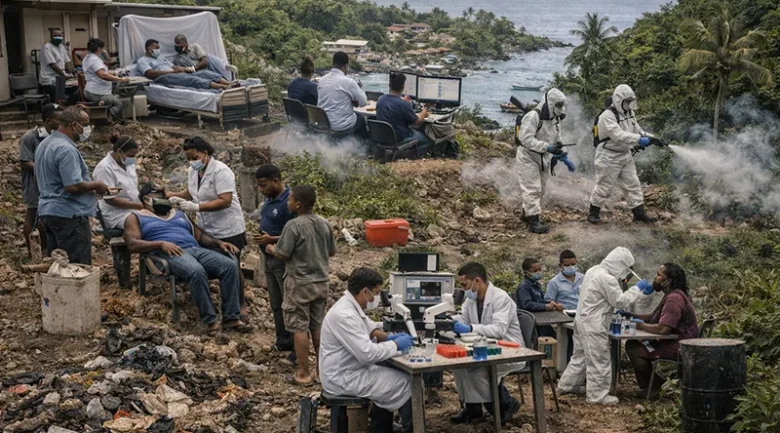
The management of communicable diseases in Dominica is one of the most complex public health challenges, where rugged volcanic landscape and intricate river systems serve as both national assets and epidemiological vulnerabilities. While chronic non-communicable conditions currently claim the highest mortality rates, infectious agents that spread from person to person, animals to humans, or thrive within the tropical environment require constant vigilance.
In a Small Island Developing State (SIDS) with a population of approximately 72,000, even a highly localised outbreak can rapidly escalate into a national emergency, threatening human lives, overwhelming the centralised healthcare infrastructure, and paralysing the vital tourism industries and agricultural sector.
Following the recent ratification of the Pan American Health Organization (PAHO) Multi-Country Cooperation Strategy (MCCS) 2026–2031, Dominica is actively modernising its epidemiological surveillance. We focus on detailing historical data, the current clinical landscape, and the strategic future of communicable disease management in Dominica.
The Climate-Disease Nexus in the Caribbean
To understand communicable diseases in Dominica, one must first understand its climate. The island’s epidemiological calendar is dictated by the Atlantic Hurricane Season and the corresponding rainy season, which run from June to December.
Climate change has fundamentally altered the predictability of these seasons. Warmer atmospheric temperatures increase the humidity and ambient heat, creating hyper-favourable conditions for bacterial proliferation and mosquito breeding. Furthermore, extreme weather events, such as the catastrophic Hurricane Maria in 2017, can serve as catalysts for infectious diseases. When infrastructure is destroyed, populations are exposed to contaminated water, disrupted waste management, and crowded sheltering conditions, the perfect storm for outbreaks of water-borne and respiratory pathogens.
Dominica’s current public health system doctrine relies heavily on a One Health approach. This philosophy recognises that human health is inextricably linked to animal health and the shared environment. Monitoring rainfall patterns is now just as critical to the Ministry of Health as monitoring hospital admissions.
Vector-Borne Diseases: The Persistent Arboviral Threat
Arboviruses (arthropod-borne viruses) transmitted by mosquitoes represent the most significant recurring communicable disease threat in Dominica. The primary vector is the Aedes aegypti mosquito, an aggressive daytime biter that thrives in urban and semi-urban environments, breeding in small pools of stagnant water found in discarded tires, uncovered water drums, and flower pots.
Dengue Fever: The Endemic Giant
Dengue fever has been endemic in the Caribbean for decades, with major cyclical outbreaks occurring every 3 to 5 years. There are four distinct serotypes of the virus (DENV-1, DENV-2, DENV-3, and DENV-4). Infection with one serotype provides lifelong immunity to that specific strain. Still, subsequent infection with a different serotype significantly increases the risk of developing Severe Dengue (previously known as Dengue Hemorrhagic Fever or Dengue Shock Syndrome), which is characterised by plasma leakage, severe bleeding, and organ impairment.
The 2019 National Outbreak:
The most severe recent test of Dominica’s vector control system occurred in late 2019, mirroring a massive hemisphere-wide surge in Dengue.
- The Data: Between July 28 and November 30, 2019, Dominica recorded 855 suspected and confirmed cases of Dengue.
- Hospitalizations: The severity of the circulating serotypes resulted in 167 hospital admissions, with 12 patients requiring critical support in the Intensive Care Unit (ICU).
- Geographic Spread: The outbreak initially localised in the Roseau, Castle Bruce, and La Plaine health districts before spreading island-wide.
- Response: The Ministry of Health activated the National Emergency Dengue Prevention and Control Plan. This involved massive source reduction campaigns, aggressive public education, and the deployment of state-of-the-art molecular PCR testing donated by PAHO to the Dominica China Friendship Hospital (DCFH), allowing for rapid, in-country confirmation rather than waiting weeks for overseas results. Remarkably, despite the high hospitalization rate, Dominica managed to maintain a zero percent case fatality rate during this specific outbreak due to rapid clinical intervention.
Zika and Chikungunya
The Caribbean landscape was permanently altered by the introduction of the Chikungunya virus in 2014 and the Zika virus in 2016.
- Chikungunya: Caused explosive epidemics characterized by debilitating, long-lasting joint pain (polyarthralgia). While the massive wave of initial infections has subsided, the virus remains present, and many Dominicans still report chronic joint stiffness years after their initial infection.
- Zika Virus: The 2016 Zika outbreak triggered a global health emergency due to its devastating teratogenic effects, specifically, its ability to cause microcephaly in the unborn fetuses of infected pregnant women, as well as its link to Guillain-Barré syndrome (a severe neurological disorder) in adults. Today, Zika is closely monitored through the maternal health program, with suspected cases immediately flagged for advanced ultrasound and molecular tracking.
Malaria: A Story of Elimination
It is important to note that Dominica is officially free of endemic Malaria. The Anopheles aquasalis mosquito (which transmits the Plasmodium parasite) is heavily controlled. However, because of global travel, the island maintains strict surveillance for imported malaria cases from travellers arriving from endemic regions in South America or Sub-Saharan Africa.
Zoonotic and Water-Borne Infections
While Dengue dominates the headlines, Leptospirosis is arguably the most insidious and environmentally linked communicable disease in Dominica. It is a zoonotic bacterial disease caused by the Leptospira genus.
Pathophysiology and Transmission
The bacteria are primarily maintained in the renal tubules of animal reservoirs, most notably the Brown Rat (Rattus norvegicus) and the Black Rat (Rattus rattus), though dogs and livestock can also carry it. These animals shed the bacteria in their urine without appearing sick.
In Dominica, transmission is intimately tied to the island’s 365 rivers and heavy rainfall. When torrential rains and flash floods occur, the water flushes the bacteria out of rat burrows and into agricultural soil, public waterways, and urban streets. Humans contract the disease when this contaminated water or soil comes into contact with the mucous membranes (eyes, nose, mouth) or microscopic cuts and abrasions on the skin.
Clinical Presentation
Leptospirosis is notoriously difficult to diagnose clinically because its early phase mimics Dengue or the flu, presenting with sudden high fever, severe headache, and distinct muscle pain (myalgia), particularly in the calves and lower back. If it progresses to the severe form, known as Weil’s Disease, it causes jaundice (liver failure), acute kidney injury, and massive pulmonary hemorrhage, which carries a high risk of death.
Epidemiological Data and Outbreaks
Recent regional scoping reviews published in late 2025 highlight that Small Island Developing States (SIDS) such as Dominica bear a disproportionate burden of Leptospirosis due to their climate and topography.
- Demographic Vulnerability: The disease heavily skews male. This is due to occupational hazards; farmers working barefoot in the soil, construction workers handling wet materials, and municipal waste management workers are at the highest risk.
- The 2010–2011 Outbreak: Following severe weather, Dominica recorded 40 confirmed cases and 4 fatalities. Testing revealed the presence of the Icterohaemorrhagiae serovar, which is known for causing particularly severe disease.
- The Early 2025 Spike: In the first half of 2025, linked heavily to municipal waste management challenges and heavy unseasonal rains, the island saw a spike of 17 suspected cases by April, with a confirmed fatality.
Public Health Interventions
The Ministry of Health combats Leptospirosis through the “Starve, Shut Out, and Wipe Out” campaign. This focuses on environmental sanitation: securing garbage in rat-proof bins, clearing overgrown vegetation near homes, and educating farmers to wear protective boots and gloves.
Respiratory Infections: From Tuberculosis to COVID-19
Respiratory pathogens spread via droplet and aerosol transmission, making them highly contagious in crowded environments, schools, and public transport.
The COVID-19 Pandemic Context
Dominica’s handling of the COVID-19 pandemic (SARS-CoV-2) is a testament to the agility of small island health systems, but also highlights vulnerabilities. By implementing strict border controls and quarantine mandates, Dominica successfully escaped widespread community transmission for the first year and a half of the pandemic.
However, when the Delta and Omicron variants eventually breached the borders in late 2021, the island experienced three distinct outbreak peaks. By May 2022, the country recorded 67 COVID-19-related deaths.
The vaccination campaign, heavily supported by the COVAX facility and bilateral donations, encountered significant vaccine hesitancy, a phenomenon seen globally but felt acutely in tight-knit Caribbean communities. Vaccination coverage plateaued with approximately 45% of the population completing their primary series. The pandemic forced a massive upgrade in Dominica’s laboratory capacity, leaving the island with a robust PCR testing infrastructure that is now used for other diseases.
Tuberculosis (TB): A Public Health Triumph
Tuberculosis, caused by Mycobacterium tuberculosis, remains a top infectious killer globally. However, Dominica represents a spectacular success story in TB control.
According to PAHO’s most recent Health in the Americas profiles, Dominica reported no new tuberculosis cases in 2022. This is achieved through rigorous screening of immigrants, rapid contact tracing for any suspected cases, and the historical use of the BCG vaccine in infants. The current protocol focuses on identifying and treating latent TB infection (where the bacteria live in the body without making the person sick) to prevent future active cases.
Influenza and RSV
Seasonal influenza and Respiratory Syncytial Virus (RSV) place a reliable, predictable strain on the district health centres every winter (aligning with the Northern Hemisphere’s flu season due to tourist travel). The Ministry of Health proactively campaigns for the quadrivalent influenza vaccine, targeting healthcare workers, pregnant women, the elderly, and individuals with underlying NCDs such as asthma and diabetes.
5. Vaccine-Preventable Diseases and the EPI
The bedrock of Dominica’s defense against communicable diseases is its Expanded Program on Immunisation (EPI). For decades, Dominica boasted some of the highest childhood vaccination rates in the developing world, ensuring that diseases such as polio, diphtheria, and neonatal tetanus remained relegated to history books.
The Post-Pandemic Coverage Challenge
In 2022, PAHO issued stark warnings that the disruptions caused by the COVID-19 pandemic had set back routine childhood immunizations in the Americas by almost three decades. Dominica was not immune to this trend.
- Measles: Measles is one of the most contagious viruses known to humanity. To maintain herd immunity, a population requires 95% vaccination coverage. In 2022, WHO/UNICEF estimates showed Dominica’s measles vaccination coverage had dipped to 83% (a drop of 16 percentage points from 2000).
- The Recovery: Fortunately, massive catch-up campaigns through 2023 and 2024 have restabilised these numbers. In 2024, PAHO proudly announced that the Region of the Americas had regained its measles-free status. Maintaining this requires constant vigilance by Dominican public health nurses tracking school entry records.
The HPV Vaccine Success
A shining star in the EPI is the Human Papillomavirus (HPV) vaccine, which protects against the strains of the virus that cause cervical cancer. Introduced to Dominica in 2019, the program achieved an incredible initial coverage rate of approximately 92% among targeted adolescents. This proactive, communicable-disease intervention is directly aimed at eliminating a lethal non-communicable disease (cancer) in the future.
Sexually Transmitted and Blood-Borne Infections
While addressed extensively in specialised sexual health reports, STIs remain a critical branch of communicable disease management.
The Triple Elimination Initiative
Dominica is a leading participant in the PAHO initiative for the Triple Elimination of the mother-to-child transmission of HIV, Syphilis, and Hepatitis B. By mandating universal prenatal screening during a mother’s first trimester, the district health centres can immediately intervene with antiretroviral drugs for HIV or Penicillin for Syphilis, ensuring babies are born free of these pathogens.
- HIV: In 2022, the estimated HIV incidence rate (new diagnoses) was 10.5 per 100,000 population. The disease is no longer a fatal diagnosis but is managed as a chronic condition with Highly Active Antiretroviral Therapy (HAART), aiming for viral suppression where the patient can no longer transmit the virus.
- Hepatitis B and C: These blood-borne viruses attack the liver. Hepatitis B is controlled via the childhood EPI schedule. For Hepatitis C, the healthcare system is integrating Direct-Acting Antivirals (DAAs) which can functionally cure the infection in a matter of weeks, eliminating the future risk of cirrhosis.
Food-Borne Illnesses and Gastroenteritis
Food and water-borne communicable diseases frequently present as acute gastroenteritis (vomiting and diarrhoea). These are often caused by pathogens like Salmonella, Campylobacter, E. coli, and Norovirus.
In Dominica, spikes in gastroenteritis are closely monitored by the National Epidemiological Unit. These spikes often coincide with major national festivals (such as the World Creole Music Festival or Carnival), when street food consumption increases. The Environmental Health Unit plays a vital role here, conducting mandatory food safety training and certification for all vendors. Furthermore, the rigorous testing of the municipal water supply by the Dominica Water and Sewerage Company (DOWASCO) ensures that massive outbreaks of historic diseases like Cholera are impossible.
Strategic Governance
The management of communicable diseases in Dominica is entering a new, highly sophisticated era.
The PAHO/WHO Multi-Country Cooperation Strategy
In February 2026, the Government of Dominica officially ratified the PAHO/WHO Multi-Country Cooperation Strategy (MCCS) 2026–2031. This blueprint focuses heavily on regional solidarity, recognising that pathogens do not respect maritime borders. The strategy guarantees Dominica continuous access to the PAHO Strategic Fund for the subsidised procurement of essential antibiotics, antivirals, and diagnostic reagents.
Climate-Resilient Infrastructure: Smart Hospitals
A lab test cannot be run without electricity, and a vaccine is destroyed if the cold-chain refrigerator loses power. Recognising this, Dominica has aggressively pursued the Smart Hospitals Initiative. Health facilities in La Plaine, Grand Bay, and Portsmouth have undergone extensive retrofits, with projects ongoing in Mahaut and Wesley.
These smart facilities are equipped with redundant solar power arrays, rainwater harvesting systems, and hurricane-proof glazing. This ensures that, in the aftermath of a Category 5 hurricane, when the risk of communicable diseases such as Leptospirosis and Dengue is highest, the district health centres remain operational, well-lit, and able to treat the population.
Digital Health and Surveillance
Dominica is transitioning to a fully integrated digital health information system. Public Health Nurses in remote villages in the Kalinago Territory can now log suspected cases of Dengue or Gastroenteritis into a national database in real-time. This allows the Chief Medical Officer in Roseau to identify epidemiological clusters and dispatch vector-control teams or environmental health officers before a cluster becomes an uncontrollable outbreak.
A Blueprint for Public Health Longevity
The fight against communicable diseases in Dominica is a dynamic, daily battle waged by environmental health officers inspecting water drums, laboratory technicians running PCR assays, and district nurses administering vaccines. While the “Nature Island” environment provides unique mechanisms for pathogens to thrive, particularly via mosquitoes and floodwaters, the island’s public health infrastructure has proven remarkably resilient.
By continuing to blend grassroots community education with high-level molecular diagnostics and climate-resilient engineering, Dominica is actively ensuring that infectious diseases do not derail its journey toward becoming the world’s first fully climate-resilient nation.


References
-
1.
Dominica Mortality Data: Infectious Category - WHO https://platform.who.int/mortality/countries/country-details/MDB/dominica
-
2.
Health in the Americas: Dominica Country Profile - PAHO https://hia.paho.org/en/country-profiles/dominica
-
3.
Global Health Security Index: Dominica Profile https://ghsindex.org/wp-content/uploads/2021/12/Dominica.pdf
-
4.
Chikungunya Case Reports & Symptoms - Dominica Health Promotion https://www.healthpromotion.gov.dm/index.php?option=com_content&view=article&id=27&catid=9&Itemid=103
-
5.
HIV & Syphilis Elimination Milestones - PAHO News https://www.paho.org/en/topics/hivaids/dominica-elimination-mother-child-transmission-hiv-and-syphilis
-
6.
Measles-Free Status & Vaccination Coverage - WHO Results Report https://www.who.int/about/accountability/results/who-results-report-2024-2025/region-AMRO/2024/dominica
-
7.
OECS Health Management Information System Launch - OECS Press https://pressroom.oecs.int/digital-transformation-project-launches-health-management--information-system-hmis-for-dominica
-
8.
Healthcare Funding & Primary Care Infrastructure - Pacific Prime https://www.pacificprime.com/country/americas/dominica-health-insurance-pacific-prime-international/
-
9.
NCD and Communicable Mortality Trends in the Caribbean - ResearchGate https://www.researchgate.net/publication/333150270_10-year_trends_in_noncommunicable_disease_mortality_in_the_Caribbean_region
-
10.
OAS Annual Report 2024: Health Services Capacity Dominica https://www.oas.org/es/cidh/docs/anual/2024/anexo/ia2024_redesca_es.pdf
-
11.
Cleveland Clinic: Types and Causes of Infectious Diseases https://my.clevelandclinic.org/health/diseases/17724-infectious-diseases
-
12.
Dominica Medical Laboratories Act 2024 - Q95 News http://www.q95da.com/news/the-cabinet-of-dominica-approved-the-appointment-of-a-medical-laboratories-council-to-oversee-national-diagnostic-services-as-mandated-by-the-medical-laboratories-act-2024