



Intensive Care Unit (ICU) in Dominica
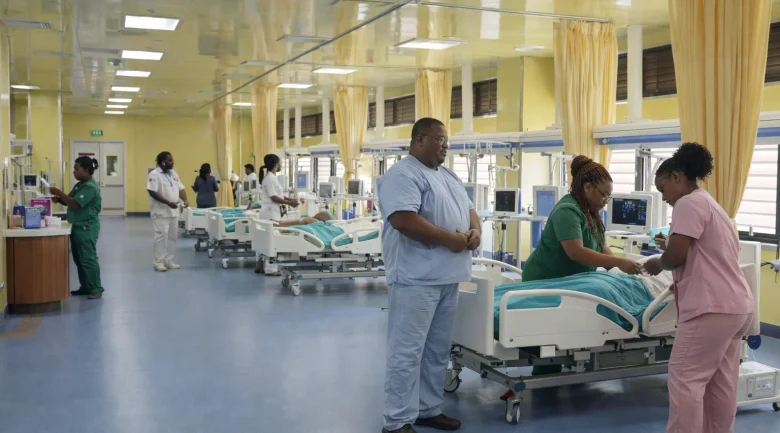
The Intensive Care Unit (ICU) in the Commonwealth of Dominica underwent a complete structural and clinical metamorphosis as of 2026. Transitioning from a limited-capacity stabilisation wing in the old Princess Margaret Hospital to a high-acuity, tertiary-level department at the Dominica China Friendship Hospital (DCFH), the ICU now represents the apex of the island’s National Health Cascade.
The ICU is no longer merely a site for end-of-life care or temporary post-operative recovery; it is a high-tech environment capable of managing multi-organ failure, severe respiratory distress, and advanced neurosurgical recovery.
Infrastructure and Bed Capacity
The centrepiece of critical care in Dominica is the Level III ICU at the DCFH. Following the completion of the hospital’s final modernisation phases, the unit’s capacity was expanded to meet both routine demand and the surge capacity required for hurricane-related trauma or viral outbreaks.
- Standard Bed Capacity: The unit typically operates with 8 to 12 fully equipped ICU beds, each in a specialised bay that allows for 360-degree patient access.
- Isolation and Negative Pressure: Critically, the unit includes negative-pressure isolation rooms. These are essential for managing airborne or highly infectious pathogens, such as virulent strains of influenza or secondary complications of respiratory infections, without risking cross-contamination within the hospital.
- Step-Down/High Dependency Unit (HDU): To manage patient flow (the exit block problem), the ICU is supported by a dedicated HDU. This allows patients who are no longer in need of mechanical ventilation but still require close monitoring to be moved out of primary ICU beds, optimising the use of high-cost resources.
Advanced Life Support Hardware
The DCFH ICU’s hardware reflects an investment in global medical standards, reducing the need for emergency medical evacuations to Martinique or Barbados.
Mechanical Ventilation and Respiratory Therapy
The unit is equipped with high-end multimodal ventilators capable of both invasive and non-invasive ventilation (NIV).
- Lung-Protective Strategies: Clinicians now utilize advanced settings such as Airway Pressure Release Ventilation (APRV) for patients with Acute Respiratory Distress Syndrome (ARDS).
- Bedside Blood-Gas Analysis: The integration of point-of-care testing (POCT) within the unit enables arterial blood gas (ABG) results to be generated in under 3 minutes, enabling real-time adjustments to ventilator parameters.
Hemodialysis and Renal Support
A major advancement in 2026 is the integration of Continuous Renal Replacement Therapy (CRRT) and bedside hemodialysis. In cases of severe sepsis or Dengue Shock Syndrome (DSS), where the kidneys often fail, the ability to perform dialysis within the ICU, rather than transporting a hemodynamically unstable patient to a separate renal unit, has significantly lowered mortality rates.
Clinical Protocols: The Multi-Disciplinary Approach
The ICU’s operation is dictated by rigorous clinical pathways. As specified in the Medical Profession Bill 2026, the diagnostic-to-treatment chain is now legally mandated to follow evidence-based protocols.
Sepsis and Septic Shock Management
Sepsis remains the leading cause of ICU admission in Dominica. The DCFH utilizes a Sepsis Bundle protocol:
- Lactate Measurement: Immediate bedside screening.
- Blood Cultures: Prior to broad-spectrum antibiotic administration.
- Fluid Resuscitation: Guided by dynamic markers (such as ultrasound-guided IVC diameter assessment) rather than just static blood pressure.
- Early Vasopressors: Managed via central venous catheters (CVCs).
Trauma and Neuro-Critical Care
Given Dominica’s mountainous terrain and the prevalence of road traffic accidents, the ICU is a critical component of the National Trauma System. The availability of on-island neurosurgery at the DCFH means the ICU now routinely manages:
- Intracranial Pressure (ICP) Monitoring: Critical for patients with severe traumatic brain injury (TBI).
- Post-Operative Neurosurgical Recovery: Patients who previously would have succumbed to secondary brain injury are now managed with controlled therapeutic hypothermia and sedation protocols.
Human Capital: The Intensivist-Led Model
Dominica has moved toward an “Closed ICU” model. In this model, patient care is directed by a Specialist Intensivist, a physician specifically trained in critical care medicine, rather than solely by the primary admitting surgeon or internist.
- Specialized Nursing: The ICU nursing ratio is ideally maintained at 1:1 or 1:2, depending on the acuity of the patients. These nurses are trained in Advanced Cardiovascular Life Support (ACLS) and the management of complex drug infusions (vasopressors, inotropes, and sedatives).
- The Multi-Disciplinary Team (MDT): Daily rounds include not only doctors and nurses but also hospital pharmacists (to monitor for drug interactions), respiratory therapists, and nutritionists (to manage enteral/parenteral feeding).
Challenges: Supply Chains and Surge Capacity
Despite the hardware and legislative upgrades of 2024 and 2026, the ICU faces two persistent Island Constraints:
The Oxygen Supply Chain
In a high-acuity ICU, oxygen is the most critical consumable. Dominica has moved toward In-Situ Oxygen Generation at the DCFH to reduce reliance on imported cylinders. However, during peaks in respiratory illnesses or mass-casualty events, the storage capacity for liquid oxygen remains a strategic vulnerability that requires constant monitoring by the Ministry of Health.
Surge Capacity and “Disaster Mode”
As a Nature Island prone to Category 5 hurricanes, the ICU is designed for Vertical Hardening. The unit is located in a reinforced section of the DCFH with independent backup power and water filtration. During a national emergency, the ICU can flex its capacity by repurposing recovery rooms and operating theatres as temporary critical care bays, a protocol refined in the wake of Hurricane Maria.
The 2030 Vision: Tele-ICU and Regional Integration
As Dominica looks toward 2030, the next frontier is Tele-ICU integration.
- Global Collaboration: Through the OECS health network, Dominican intensivists can share real-time monitoring data with specialists in larger metropolitan centres (like Miami or Toronto) for second-opinion consultations on ultra-rare cases.
- Data Integration: The DHIS2 (District Health Information Software 2) is now integrated with bedside monitors, enabling AI-driven predictive analytics that can alert nurses to impending decompensation before a patient’s vital signs reach a critical failure point.
Summary of ICU Capabilities
| Capability | Status at DCFH ICU | Clinical Impact |
| Mechanical Ventilation | Full Capacity (Invasive/NIV) | Management of ARDS and Respiratory Failure. |
| Renal Support | Bedside Hemodialysis/CRRT | Management of AKI in Septic Shock. |
| Neuro-Monitoring | ICP Monitoring Available | Increased survival in Traumatic Brain Injury. |
| Infection Control | Negative Pressure Suites | Safe management of infectious outbreaks. |
| Staffing Model | Intensivist-Led MDT | Improved patient outcomes and shorter stays. |


