

Lethal Yellowing (LY) in Dominica
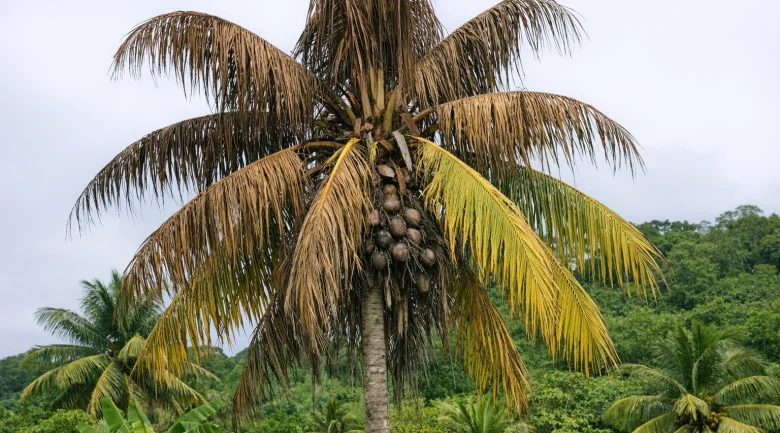
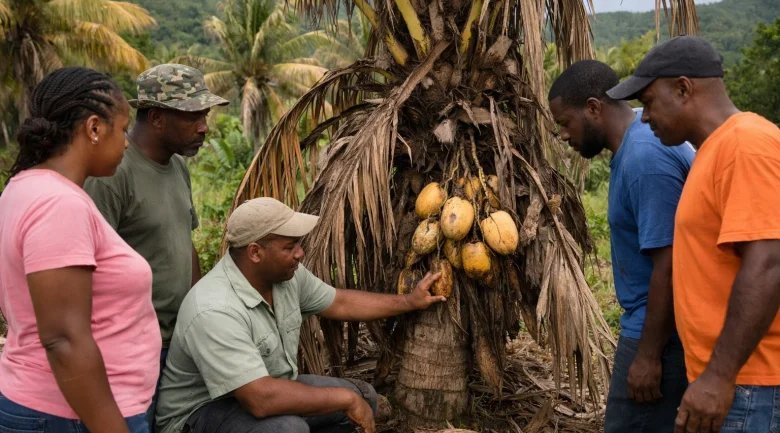
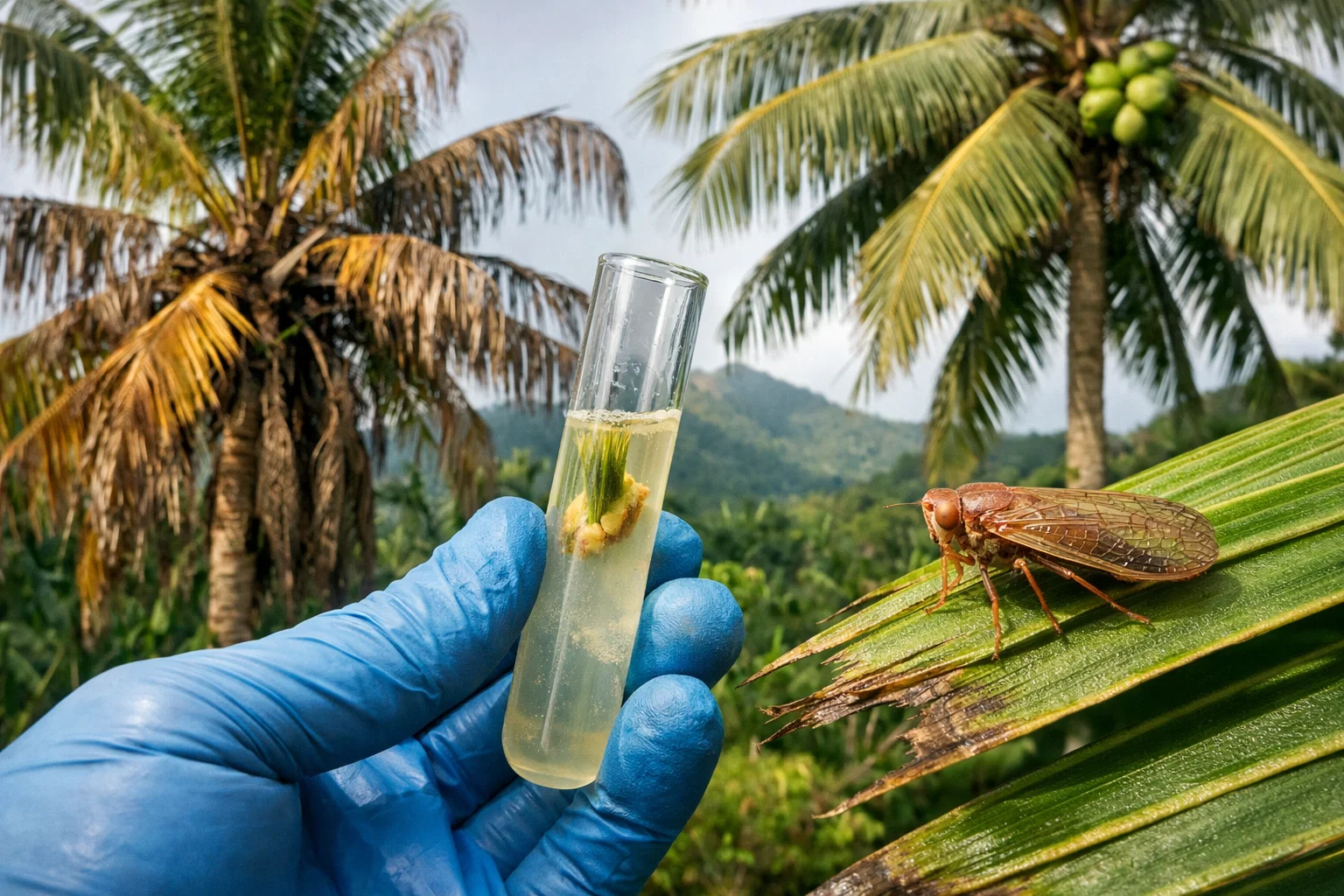
Lethal Yellowing (LY) is a highly destructive phytoplasma disease that primarily affects the coconut palm (Cocos nucifera) and numerous other palm species in Dominica. Caused by a cell-wall-less bacterium (phytoplasma) and spread by a piercing-sucking insect vector, the disease is characterised by a rapid decline in palm health, typically resulting in the death of the tree within three to six months of the first visible symptoms. In the Commonwealth of Dominica, where the coconut industry is a pillar of rural livelihoods and coastal stability, Lethal Yellowing represents a critical threat to both the agricultural economy and the island’s ecological landscape.
Historical Context and Detection
While Lethal Yellowing has plagued the wider Caribbean and Florida for decades, its presence in the Windward Islands remained a point of high surveillance for the Ministry of Agriculture.
Arrival and Spread
The disease was identified as a major regional threat to Dominica in the early 21st century. Surveillance intensified following confirmed outbreaks in neighbouring territories. In Dominica, the disease has historically targeted the Atlantic Tall variety, which is the most common palm seen along the coastlines of parishes like Saint Andrew and Saint David. Unlike nutrient deficiencies, which may cause slow yellowing over years, LY appeared as an acute epidemic, wiping out entire groves in concentrated coastal pockets.
Impact of Natural Disasters
The vulnerability of Dominica’s palm population to LY was exacerbated by Hurricane Maria (2017). The massive loss of canopy and the subsequent stress on surviving trees made the remaining population more susceptible to pests and diseases. Furthermore, the movement of debris during post-hurricane cleanup posed a significant risk of unintentionally transporting the insect vector.
Pathogen and Vector Dynamics
The biological mechanism of Lethal Yellowing in Dominica involves a complex interaction between the pathogen, the host plant, and an insect intermediary.
The Pathogen: Phytoplasma
The disease is caused by a 16SrIV group phytoplasma. These are specialised bacteria that live exclusively in the phloem (the nutrient-conducting tissue) of the palm. Because they cannot be cultured in a laboratory like standard bacteria, diagnosis in Dominica often relies on molecular techniques such as Polymerase Chain Reaction (PCR) testing conducted in collaboration with regional labs like CARDI.
The Vector: Haplaxius crudus
The primary insect vector is the American palm cixiid (Haplaxius crudus, formerly Myndus crudus).
- Feeding Habit: The adult planthopper feeds on the palm fronds, inadvertently injecting the phytoplasma into the phloem.
- Habitat: The nymphs (juveniles) of this insect develop in the roots of certain grasses surrounding the palms. This makes “clean weeding” around coconut groves a vital management practice in Dominican plantations.
Symptom Progression in Dominican Palms
In Dominica’s tropical climate, the progression of LY follows a predictable and terminal sequence:
- Premature Nut Fall (Shelling): The first sign is often the sudden dropping of coconuts of all sizes. The fallen nuts usually show a black, water-soaked area under the calyx (the “cap” of the nut).
- Inflorescence Necrosis: As new flower stalks emerge from the spathe, they appear blackened or shriveled rather than the healthy creamy-yellow color.
- Leaf Yellowing: Starting with the oldest (lowest) fronds, the leaves turn a vivid golden-yellow. This yellowing progresses upward toward the crown.
- Spear Leaf Collapse: The youngest, upright leaf (the spear leaf) eventually dies and collapses. At this stage, the growing point (the heart of the palm) has rotted.
- “Telephone Pole” Effect: Within weeks of the spear leaf dying, the entire crown falls away, leaving only a bare trunk standing, a sight colloquially referred to as a “telephone pole.”
Institutional Framework and National Response
The management of Lethal Yellowing is governed by the Plant Protection and Quarantine Act and implemented by several key agencies.
The Plant Protection and Quarantine Unit
This unit is responsible for enforcing internal quarantine measures. To prevent the spread of LY from infested coastal zones to the interior or disease-free areas, the unit regulates the movement of:
- Live palm plants and seedlings.
- Untreated coconut husks and decorative palm fronds.
- Soil from around the base of infected trees.
International and Regional Cooperation
- IICA Dominica: Has provided technical training to Dominican extension officers on “early detection” protocols to distinguish LY from the Red Palm Mite or Bud Rot (Phytophthora palmivora).
- The Caribbean Plant Health Directors (CPHD) Forum: Dominica participates in this forum to harmonize regional surveillance and prevent the introduction of new strains of the phytoplasma.
Strategic Management and Restoration
Because there is no “cure” for a tree once it is infected with the LY phytoplasma, Dominica’s strategy focuses on containment and resistance.
Host Resistance (Replanting Program)
The most successful long-term intervention in Dominica is the promotion of resistant palm varieties. The Division of Agriculture encourages farmers to move away from the susceptible “Atlantic Tall” and plant:
- Malayan Dwarf: Available in Yellow, Red, and Green varieties. These have shown high levels of resistance to the Caribbean strain of LY.
- Maypan Hybrid: A cross between the Malayan Dwarf and the Panama Tall, offering both the disease resistance of the dwarf and the wind-resistance/stature of the tall variety.
Cultural and Chemical Control
- Vector Control: Managing the grasses (nymph hosts) around the base of palms.
- Antibiotic Treatment: In high-value landscaping or historical sites, the antibiotic Oxytetracycline (OTC) can be injected into the trunk. However, this is not economically viable for large-scale commercial coconut production in Dominica and provides only temporary suppression.
Data and Economic Significance
Coconuts are increasingly vital to Dominica’s Blue and Green Economy goals.
- Agro-Processing: Local companies like Dominica Coconut Products and DCP Successors Ltd rely on a steady supply of local oil and copra.
- Export Potential: With the rising global demand for coconut water and virgin coconut oil, the loss of trees to LY directly reduces the island’s GDP and foreign exchange earnings.


References
-
1.
Lethal Yellowing of Palm – APS Plant Disease Lessons https://www.apsnet.org/edcenter/pdlessons/Pages/LethalYellowing.aspx
-
2.
Lethal Yellowing of Palms (Caribbean Agricultural Health and Food Safety Agency) https://cahfsa.org/wp-content/uploads/2022/09/Lethal-yellowing-of-palms.pdf
-
3.
Coconut Under Threat – DNO https://dominicanewsonline.com/news/homepage/news/agriculture/coconut-under-threat/
-
4.
Lethal Yellowing – PestTracker Global Database https://pesttracker.org/pest/FGAMMDE
-
5.
Lethal Yellowing Disease Explained https://adventureantigua.com/lethal-yellowing-you-need-to-know-about-it-explained-simply/
-
6.
PP-222: Lethal Yellowing of Palm – University of Florida Extension https://edis.ifas.ufl.edu/publication/PP146
-
7.
Fighting Lethal Yellowing Disease for Coconut Farmers (IDRC) https://idrc-crdi.ca/en/research-in-action/fighting-lethal-yellowing-disease-coconut-farmers