


Coconut Palm in Dominica
The Coconut Palm (Cocos nucifera) is an iconic, multi-purpose perennial tree that serves as a defining feature of the landscape and the cultural identity of the Commonwealth of Dominica. Known as the “Tree of Life,” it is one of the most economically and ecologically significant plants on the island. While it is a non-endemic species, its integration into the Dominican environment, from the salt-sprayed Atlantic coastlines to the lower montane elevations, has made it indispensable to the island’s subsistence and industrial history.
In Dominica, the palm is not merely a part of the scenery; it is a biological factory that provides food, water, shelter, and income. Its presence is woven into the very fabric of Dominican life, from the “oil-down” in the kitchen to the jelly nut on the roadside.
Botanical Description and Morphology
The Coconut Palm is a member of the Arecaceae family. It is characterised by a tall, slender, and often gracefully curved trunk that can reach heights of up to 30 meters (100 feet). The trunk is marked by ringed leaf scars left by fallen fronds, which provide a textured surface that local climbers often utilise to scale the tree for harvesting.
- Fronds: A mature palm typically supports a crown of 25 to 35 pinnate fronds, each measuring 4 to 6 meters in length. These leaves are masterfully engineered by nature to shed heavy tropical rainfall and withstand high-velocity winds. The individual leaflets are often used in Dominican culture for weaving baskets, mats, and traditional hats.
- Inflorescence: The palm is monoecious, meaning both male and female flowers are found on the same inflorescence (spadix). In Dominica, the flowering cycle occurs year-round, ensuring a constant supply of fruit regardless of the season.
- Root System: Unlike many tropical trees, the coconut palm has an extensive fibrous root system rather than a single deep taproot. This allows it to anchor firmly in sandy coastal soils and absorb moisture from the upper layers of the ground. This root system is also utilised in traditional Dominican bush medicine, where the roots are boiled to create a decoction believed to support kidney health.
Geographic Distribution in Dominica
Coconut palms are ubiquitous across Dominica but thrive most aggressively in the coastal belts where they enjoy full sunlight, high humidity, and the mineral-rich fertile volcanic soils.
- Coastal Protection: In areas like Calibishie, Hampstead, and Rosalie, the palms act as a critical bioshield. They are salt-tolerant (halophytic), meaning they can grow where other trees would perish. By anchoring the sand and soil, they help mitigate coastal erosion and protect inland agriculture from the corrosive effects of salt spray.
- Agricultural Belts: Large-scale groves are concentrated in the flatter northern and eastern plains. While they can grow at elevations up to 600 meters, fruit production is most efficient in the warmer lowlands. Parishes such as St. Andrew, St. David, and St. Joseph are recognised as the primary “coconut baskets” of the island.
Varieties and Cultivars in the National Context
Dominica utilises a mix of traditional and introduced varieties to ensure a resilient agricultural sector that can withstand both disease and the increasingly volatile weather patterns of the Caribbean.
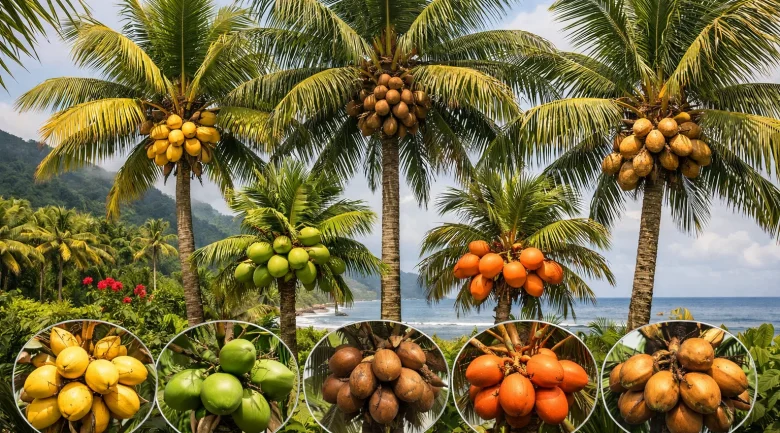
- Dominica Tall (Atlantic Tall): This is the traditional variety, known for its longevity and immense height. It is the primary source of the dry coconut used for the island’s oil and soap industries. These trees are exceptionally hardy and can live for nearly a century.
- Malayan Dwarfs: Introduced primarily for their resistance to Lethal Yellowing disease, these shorter palms (Yellow, Green, and Red subtypes) are the favorites of the “jelly nut” trade. Because they are shorter, they are safer to harvest, and their water is noted for a particularly sweet flavour profile.
- Maypan Hybrid: A robust crossbreed developed to combine the best of both worlds. It possesses the disease resistance of the Dwarf and the wind-hardiness and thick trunk of the Tall varieties, making it a preferred choice for the Ministry of Agriculture’s reforestation programs.
Ecological and Economic Importance
The Coconut Palm is a central pillar of Dominica’s “Nature Island” ethos. Economically, the palm supports a diverse value chain that impacts everyone from the rural farmer to the urban entrepreneur.
The Beverage and Food Economy
The coconut water industry is a staple of roadside commerce. Vendors stationed along the Edward Oliver LeBlanc Highway provide fresh, isotonic hydration to locals and tourists alike. This informal sector provides a crucial livelihood for many Dominican families. Furthermore, the “jelly” and “dry meat” are foundational to the Dominican diet, used in everything from “bakes” to decadent coconut tablets.
Industrial Processing and Copra
Historically, the industrial heart of the coconut industry was the production of copra (dried coconut meat). Facilities like Dominica Coconut Products (DCP) in Belfast transformed this raw material into world-class soaps and detergents. Today, the focus has shifted toward high-value Virgin Coconut Oil (VCO), which is exported as a premium health and beauty product.
Material and Artisanal Utility
Every part of the palm is utilised. The fibrous husk (coir) is used as a peat substitute in Dominican greenhouses. The hard shells are polished and carved into jewellery and kitchen utensils by Kalinago artisans, showcasing a “zero-waste” philosophy that aligns with the island’s sustainability goals.
Maintenance and Environmental Challenges
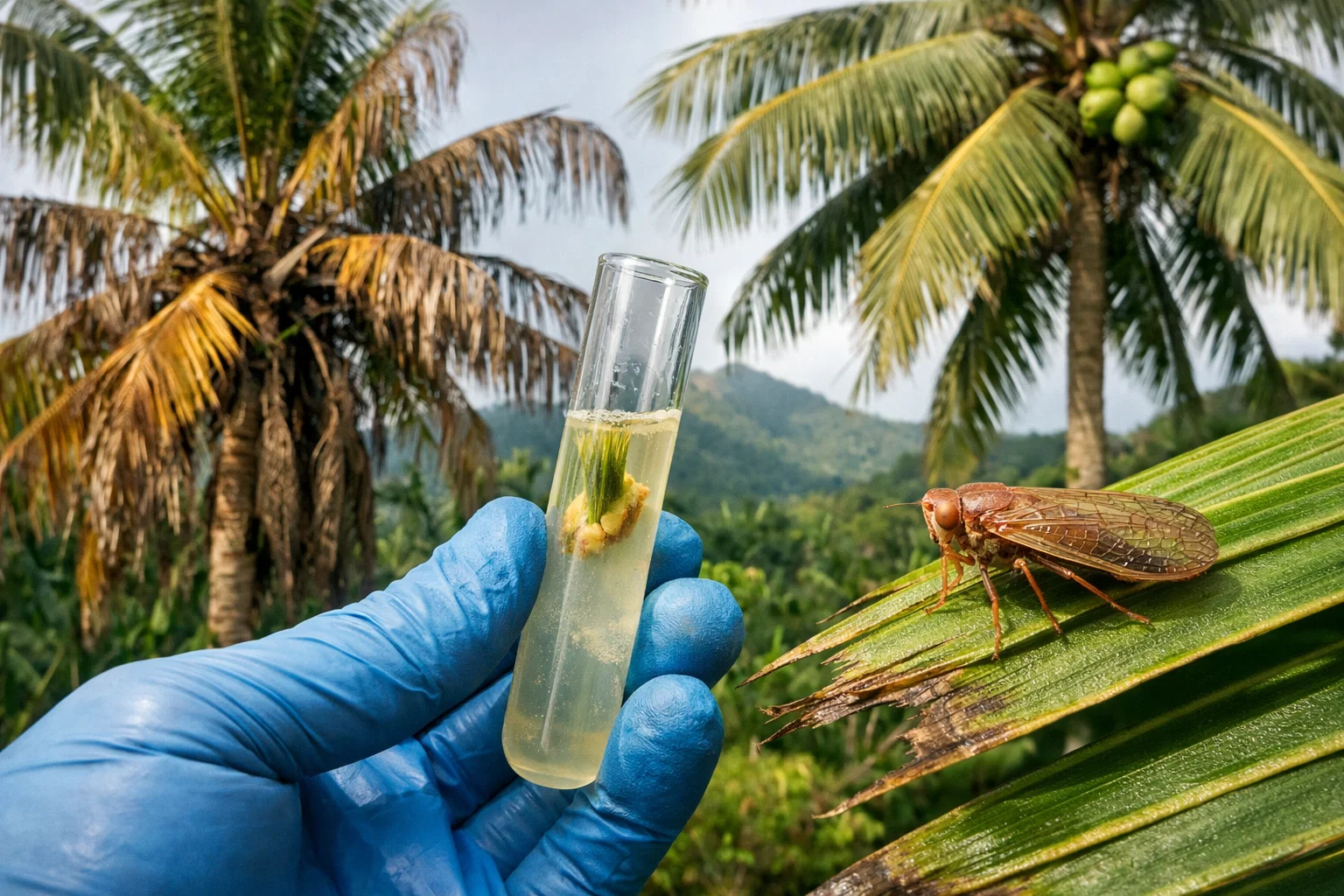
The health of the Coconut Palm in Dominica is monitored closely by the Forestry, Wildlife & Parks Division and the Division of Agriculture. Major threats include the Red Palm Mite (Raoiella indica) and the Coconut Whitefly.
Management strategies emphasise biological controls, introducing natural predators of these pests, rather than heavy chemical use, to preserve the island’s organic integrity. Additionally, the government provides technical assistance to farmers on proper spacing and fertilisation to maximise yields in a post-hurricane landscape.


References
-
1.
Coconut Palm (Cocos nucifera) https://www.britannica.com/plant/coconut-palm
-
2.
Coconut Palm Biology and Germination Structure (CABI Crop Protection Compendium) https://www.cabi.org/isc/datasheet/15291