

Reforestation in Dominica
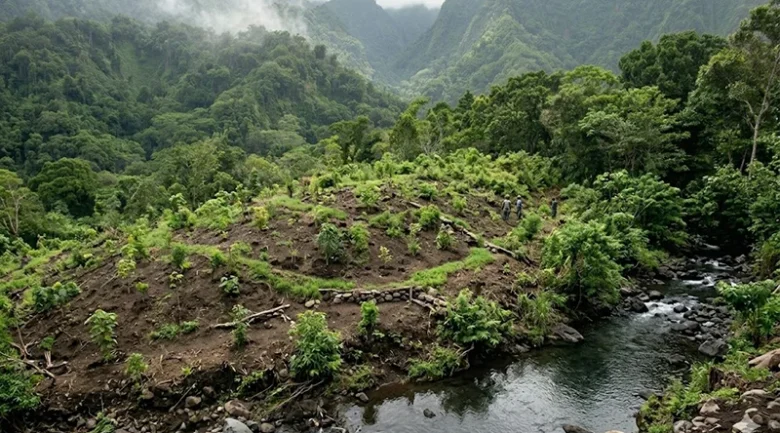
Reforestation in Dominica is the deliberate process of replanting trees and restoring forest ecosystems on land previously cleared or degraded. Within Dominica, this activity is not merely an environmental preference but a critical pillar of national security, economic stability, and disaster risk management. Managed primarily by the Forestry, Wildlife and Parks Division, reforestation initiatives are designed to restore the island’s primary and secondary rainforests, protect essential watersheds, and maintain the habitat of endemic species following natural disturbances or agricultural abandonment.
National Importance and Ecological Context
As the “Nature Isle of the Caribbean,” Dominica is defined by its rugged volcanic terrain and high-canopy forests. Reforestation is the primary mechanism through which the state manages its most valuable natural resource. The urgency of these efforts has intensified in the 21st century as the island faces a higher frequency of extreme weather events, most notably Hurricane Maria (2017), which resulted in the catastrophic loss of over 90% of the island’s forest canopy.
Reforestation in Dominica serves three main functional purposes:
- Climate Resilience: Restoring forest cover acts as a natural windbreak and flood mitigator, absorbing heavy rainfall and stabilising steep volcanic slopes to prevent mass wasting and landslides.
- Water Security: Most of the nation’s potable water is sourced from forest-protected catchments. Reforestation in areas like the Roseau River Watershed and the Layou River Watershed ensures the continued filtration and regulation of water supplies.
- Biodiversity Conservation: The survival of the Sisserou Parrot (Amazona imperialis) and the Jaco Parrot (Amazona arausiaca) is entirely dependent on the structural integrity of the high rainforest canopy for nesting and feeding.
The Legal and Administrative Framework
The governance of reforestation activities is anchored in several key pieces of legislation that give the Forestry, Wildlife and Parks Division the mandate to manage crown lands and regulate private land usage.
Forestry and Wildlife Act (Chapter 60:02)
The Forestry and Wildlife Act is the foundational legal instrument for reforestation. It empowers the Director of Forestry to establish forest reserves and protected forests. Crucially, the Act provides the legal basis for reforestation of denuded areas and for controlling shaving (the clearing of steep slopes for agriculture). It mandates that certain areas, regardless of ownership, must remain under forest cover to protect the public interest, particularly regarding soil conservation and water quality.
National Parks and Protected Areas Act
This Act governs the management of the Morne Trois Pitons National Park, Morne Diablotin National Park, and Cabrits National Park. Reforestation in these areas is given the highest priority to ensure that the island’s ecological core remains pristine. The Act prohibits any activity that would hinder the natural or assisted regeneration of forest species within these boundaries.
Physical Planning Act (2002)
While primarily focused on urban development, the Physical Planning Act intersects with reforestation through the requirement of Environmental Impact Assessments (EIA). For large-scale developments, the Physical Planning Division often mandates reforestation or the maintenance of green belts as a condition for approval, ensuring that infrastructure growth does not result in a net loss of national forest cover.
Historical Drivers of Forest Loss and Recovery
To understand current reforestation strategies, it is necessary to examine the historical events that necessitated these interventions, specifically the national shift away from intensive cultivation of the banana industry toward long-term environmental stewardship and the impact of natural disasters on reforestation efforts. This evolution ensures that former plantation lands are reclaimed by native greenery, effectively strengthening the island’s defenses.
The Transition from Agriculture to Conservation
In the mid-20th century, large tracts of forest were cleared to facilitate the bananas during the Green Gold Era. As the economic viability of bananas declined in the 1990s and early 2000s, many mountain lands were abandoned. This led to a period of natural regeneration, later supported by state-led reforestation to ensure that secondary forests were composed of high-value native species rather than invasive species.
Impacts of Extreme Weather Events
Natural disasters are the leading cause of forest loss in Dominica.
- Hurricane David (1979): This storm caused massive destruction, prompting the first major modern reforestation push focused on the southern forest reserves.
- Tropical Storm Erika (2015): Heavy rainfall triggered massive landslides, stripping entire hillsides of vegetation. Reforestation post-Erika focused heavily on slope stabilisation and riparian restoration.
- Hurricane Maria (2017): This Category 5 event caused total defoliation across the island. The post-Maria reforestation era is characterised by the build back better philosophy, emphasising the planting of wind-resistant species and the restoration of avian feeding corridors.
Strategic Reforestation Priorities
The Forestry, Wildlife and Parks Division categorizes reforestation sites based on their ecological and economic vulnerability, prioritizing critical watersheds and steep slopes to maximize biodiversity protection and the island’s long-term climate resilience.
Watershed and Riparian Restoration
Protecting the “Land of 365 Rivers” requires dense forest cover along riverbanks. Current policy mandates a 30-metre non-clearance buffer zone. Reforestation in these zones uses deep-rooted species to prevent riverbank erosion, which is a major contributor to siltation in hydroelectric reservoirs and coastal reefs.
Coastal Forest Belts
Coastal reforestation is a specific challenge due to salt spray and high winds. Species such as Sea Grape (Coccoloba uvifera) and West Indian Mahogany (Swietenia mahagoni) are used to create a first line of defense against storm surges and coastal erosion. These belts are particularly important in the northern and western parishes.
Biodiversity Hotspots
Specific areas known to be habitats for the Sisserou and Jaco parrots receive targeted reforestation. This involves enrichment planting, in which fruit-bearing native trees are introduced into secondary forests to increase the habitat’s carrying capacity for avian species.
Silviculture and Species Selection
To ensure the technical success of reforestation in Dominica, experts prioritise deep-rooted, wind-resistant native species capable of thriving in volcanic soil and withstanding intense tropical cyclones, thereby providing the essential canopy resilience and soil stabilisation needed to safeguard the island’s steep, landslide-prone interior.
Key Indigenous Species
The Forestry Division prioritizes the use of native species to maintain ecological balance:
- Gommier (Dacryodes excelsa): A dominant primary rainforest species valued for its size, resin, and nesting cavities for parrots.
- Chatannier (Sloanea spp.): Known for its massive buttress roots, which provide exceptional soil stability.
- Bois Blanc (Simarouba amara): A fast-growing species often used in the early stages of reforestation to establish a canopy and provide shade for slower-growing hardwoods.
- Laurier (Ocotea spp.): Essential for high-altitude reforestation and providing food for native birds.
Strategic Use of Naturalized Species
While the focus is on native flora, certain naturalized species are used in specific contexts. Blue Mahoe (Hibiscus elatus) and Honduras Mahogany (Swietenia macrophylla) are sometimes used in managed timber plots because of their rapid growth and ability to stabilise soil quickly, although they are carefully managed to prevent them from becoming invasive.
Implementation Methodology
To achieve long-term success, Dominican reforestation follows a rigorous multi-year cycle, beginning with the cultivation of resilient native seedlings in specialised nurseries, followed by intensive site preparation and consistent ecological monitoring to ensure saplings survive the island’s harsh tropical weather.
Nursery Management and Seed Collection
The Botanic Gardens in Roseau and the forest nurseries in Giraudel and Syndicate are the hubs for sapling production. Forest officers and community workers collect seeds from mature trees within protected reserves to ensure genetic diversity. These seeds are germinated in controlled environments before being transferred to planting bags.
Site Preparation and Planting
Navigating the island’s precarious slopes, workers must manually transport seedlings and tools, as the rugged volcanic topography often precludes the use of heavy machinery.
- Brushing: Removal of invasive vines and weeds that would compete with young saplings.
- Staking: Marking the specific locations for planting, usually at intervals of 3 to 5 metres depending on the species.
- Holing and Planting: Digging pits and planting saplings during the rainy season (June to December) to maximize survival rates.
Maintenance and Beating Up
“Beating up” is the forestry term for replacing saplings that did not survive the first year. Maintenance involves periodic weeding around the base of the trees for the first three to five years until the saplings are tall enough to outcompete ground-level vegetation.
Institutional Roles and International Cooperation
The scale of reforestation required following a major hurricane exceeds the domestic budget, necessitating partnership with international agencies.
Forestry, Wildlife and Parks Division
As the primary custodian, the Division provides the technical expertise, manages the nurseries, and supervises all planting activities. They are also responsible for enforcing the Forestry and Wildlife Act.
Climate Resilience Execution Agency for Dominica (CREAD)
Established following the devastation of Hurricane Maria, CREAD spearheaded Dominica’s ambitious journey toward becoming the world’s first climate-resilient nation by embedding environmental stewardship into every facet of national development. Within the forestry sector, the agency transitioned from reactive recovery to proactive protection, seamlessly integrating reforestation targets into major infrastructure blueprints. By leveraging international climate finance, CREAD secured the critical funding necessary for large-scale ecological restoration, ensuring that the island’s natural defenses were rebuilt alongside its physical roads and bridges to withstand future climate shocks.
International Partners
- Food and Agriculture Organization (FAO): Provides technical support for sustainable forest management and assisted in the development of the National Forest Policy.
- United Nations Development Programme (UNDP): Has funded major reforestation projects focusing on community-based nurseries and the restoration of the Waitukubuli National Trail.
- Global Environment Facility (GEF): Supports projects aimed at achieving land degradation neutrality and protecting the watersheds fed by Morne Diablotin and Morne Trois Pitons.
Challenges to Reforestation
Progress in restoring the island’s canopy remains challenged by limited financial resources and the physical difficulty of accessing remote volcanic slopes, where recurring extreme weather events often destroy young saplings before they can reach maturity. Furthermore, competing land-use demands for agriculture and infrastructure development create ongoing friction with national conservation goals.
Invasive Species
Following major forest disturbances, invasive vines such as Mikania micrantha (locally known as “Mile-a-Minute”) can quickly blanket large areas, smothering young native saplings. Managing these invasives requires constant manual labor, which is expensive and time-consuming.
Topography and Accessibility
Dominica’s interior is characterised by razor-back ridges and deep ravines. Transporting saplings, tools, and personnel to these remote sites is a significant logistical challenge, often requiring manual portage over long distances through difficult terrain.
Climate Change Frequency
The increasing frequency of high-intensity storms creates a recovery gap. If a new hurricane hits before a reforested area has reached maturity (usually 15-20 years), the young trees may be destroyed, resetting the restoration clock and depleting the national seed bank.
The Role of Community Forestry
By empowering local residents to act as environmental stewards, Dominica has pioneered community-based reforestation, fostering a shared sense of ownership that transforms forest protection into a sustainable grassroots movement capable of managing the island’s diverse volcanic landscapes more effectively than centralised efforts alone.
The Giraudel and Eggleston Flower Growers
These communities have been integrated into the national reforestation strategy by using their horticultural expertise to manage nurseries for forest trees. This provides local employment while ensuring a steady supply of high-quality saplings for the Forestry Division.
Schools and Youth Engagement
The 4-H Clubs and environmental clubs in primary and secondary schools often participate in tree-planting exercises. This is an essential part of the civic context of reforestation, ensuring that the next generation of Dominicans understands the vital link between forest cover and national survival.
Reforestation and the Green Economy
By prioritising environmental stewardship, reforestation has emerged as a cornerstone of Dominica’s Green Economy, creating sustainable livelihoods through eco-tourism, carbon credit potential, and the development of high-value non-timber forest products that empower rural communities while preserving the island’s natural wealth.
- Carbon Sequestration: By maintaining high forest density, Dominica remains a net carbon sink. This provides the potential for the island to participate in international carbon credit markets, generating revenue for further conservation.
- Eco-Tourism: The Waitukubuli National Trail, the longest hiking trail in the Caribbean, depends on the forest’s aesthetic and shade-providing qualities. Reforestation along the trail is essential for the sustainability of the tourism product.
- Sustainable Timber: While the primary focus is conservation, managed reforestation allows for the long-term, sustainable harvest of timber for local furniture and boat building, reducing the need for expensive wood imports.
Future Outlook: CRRP 2030
Under the Dominica Climate Resilience and Recovery Plan (CRRP), the government has set ambitious targets for forest cover by 2030. The goal is to ensure that at least 60% of the island remains under permanent forest cover, with a specific focus on “Natural Infrastructure.” This involves using forests to protect roads, bridges, and housing developments from the physical impacts of climate change.
The future of reforestation in Dominica will involve the use of advanced technologies, including drone-based seed dispersal for inaccessible areas and satellite monitoring to track forest recovery in real-time. By combining traditional silviculture with modern technology and strong legislative enforcement, Dominica aims to preserve its status as a global leader in environmental stewardship.


References
-
1.
National Forest Policy (2022) https://dominica.gov.dm/images/docs/govt_pubs/national_forest_policy_march_2022.pdf
-
2.
Climate Resilience and Recovery Plan (CRRP) 2020-2030 https://odm.gov.dm/wp-content/uploads/2022/02/CRRP-Final-042020.pdf
-
3.
Conservation, Protection & Maintenance Section https://forestry.gov.dm/units/conservation-protection-maintenance-section
-
4.
Monitoring Dominica’s reforestation efforts: Engaging the Kalinago community https://stories.climateandforests-undp.org/monitoring-dominicas-reforestation-efforts/index.html
-
5.
Million Hour Tree Planting Project Contributes To Community Day of Service https://news.gov.dm/news/news-items/million-hour-tree-planting-project-contributes-to-community-day-of-service
-
6.
Forests For Us: Dominica Harnesses Nature for Climate Resilience and Economic Development https://www.worldbank.org/en/news/feature/2024/09/17/forests-for-us-dominica-harnesses-nature-for-climate-resilience-and-economic-development
-
7.
Dominica Botanic Gardens: Reports and Documents https://www.dominicagardens.com/reports-and-documents.html