


Green Gold Era in Dominica
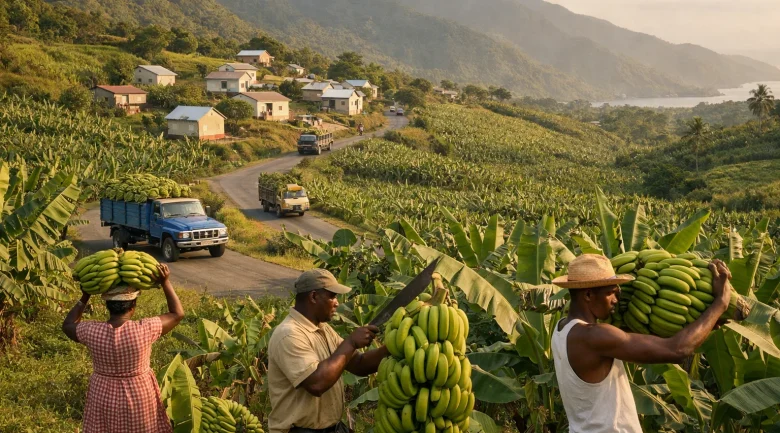
The Green Gold Era refers to the golden age of banana production in Dominica, spanning roughly from the early 1950s to the mid-1990s. During this period, the banana became more than just a crop; it was the “Green Gold” that transformed the island’s social, physical, and economic landscape. This era was characterised by unprecedented social mobility for the rural population and a level of financial stability that defined the country’s early years of independence.
The Rise of the Banana Industry
Before the 1950s, Dominica’s economy relied on agricultural products such as citrus, cocoa, and vanilla. However, the arrival of the Geest Line and the establishment of the Banana Protocol under the Lomé Convention changed everything.
- The Geest Partnership: In the early 1950s, the island entered into a long-term contract with the Geest Line, a shipping company that guaranteed the weekly transport of fruit to the United Kingdom.
- Smallholder Empowerment: Unlike the plantation models of other Caribbean neighbours, Dominica’s banana industry was built on small, family-owned farms. This allowed the wealth generated by exports to be distributed directly to rural villagers rather than remaining with a small merchant class.
- Infrastructure Growth: The revenue from “Green Gold” funded the Banana Roads, vast networks of feeder roads built to allow farmers to transport their fruit from the steep interior mountains to the coastal ports.
Socio-Economic Impact: The “Weekly Wage”
The true power of the Green Gold Era was its frequency. Unlike cocoa or coffee, which are harvested once or twice a year, bananas are harvested year-round. This provided the island with a consistent, weekly cash flow.
- Rural Wealth: For the first time, rural families in the country had a reliable income. This led to the “wall-house” revolution, where modern concrete homes across the countryside replaced traditional wooden shacks.
- Education and Health: The industry’s profits enabled families to pay for their children’s secondary and tertiary education, creating the first generation of Dominican professionals, many of whom now lead the state’s civil service and private sector.
- Economic Dependency: At its peak, the industry accounted for nearly 60% of export earnings and employed over one-third of the workforce. Every Tuesday or Wednesday (depending on the port), the island hummed with the activity of Banana Day.
The Vulnerability of Green Gold
While the era brought prosperity, it also created a dangerous monocrop dependency. Because the island was so focused on bananas, other sectors such as manufacturing and diverse agriculture were neglected.
- Environmental Risks: The industry was highly susceptible to weather. For example, Hurricane David in 1979 almost entirely wiped out the industry, demonstrating how fragile the state’s “Gold” truly was.
- The Trade Shelter: The high prices the country received were artificial, maintained only by the Lomé Convention. The island was effectively living in a protected bubble, shielded from the reality of global market prices.
The End of an Era
The Green Gold Era began to fade in the mid-1990s following the WTO Banana Wars rulings. As the trade preferences were dismantled, Dominica saw its market share evaporate. By the early 2000s, the era had officially ended, forcing the island to pivot toward the Nature Island tourism brand and the Citizenship by Investment program to replace the lost agricultural revenue.
Today, the Green Gold Era is remembered with nostalgia as a time of rural empowerment. Still, it also serves as a lesson in the need for economic diversification for any small island state.


