


Green Coconut in Dominica
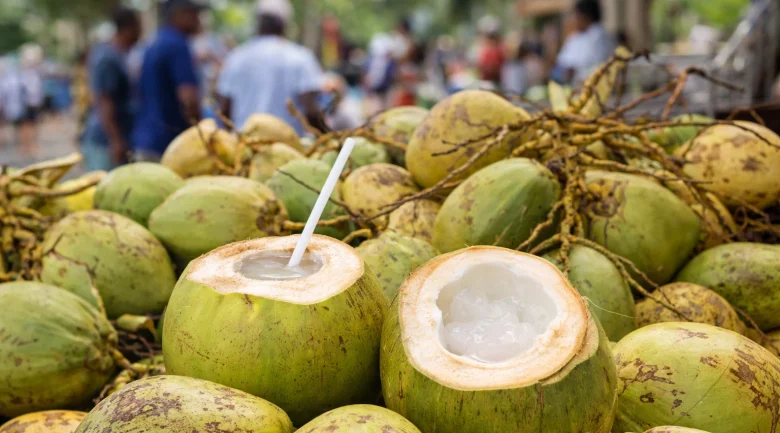
The Green Coconut (Cocos nucifera) refers to the coconut fruit harvested at an immature stage, typically between 6 and 8 months of growth. In the Commonwealth of Dominica, the green coconut is a cornerstone of the island’s “Nature Island” identity, serving as the primary source of fresh coconut water and soft edible pulp. Unlike the mature dry coconut used for oil, the green coconut is an essential horticultural product for the local beverage trade, tourism industry, and public health.
Botanical Characteristics
At this stage, the coconut’s outer exocarp is smooth and bright green, though some varieties may appear yellow or bronze. The interior of the nut is dominated by a large cavity filled with clear liquid.
- The Water: The liquid is at its peak volume and sweetness. It is naturally sterile and contains a complex mix of electrolytes, including potassium, magnesium, and sodium, making it a superior natural rehydrator.
- The Jelly: The endosperm (meat) has not yet hardened into the white flesh found in dry nuts. Instead, it is a thin, translucent, and gelatinous layer locally known as “jelly.” This jelly is rich in medium-chain fatty acids and is highly prized for its smooth texture.
Varieties and Cultivation
While any coconut palm can produce green nuts, certain varieties are preferred in Dominica for the jelly nut trade:
- Malayan Dwarfs: These are the most common green coconuts found at roadside stands. Their short stature allows for safer and more frequent harvesting, and they are known for producing water with a high sugar content.
- Brazilian Green Dwarfs: Recently introduced to Dominica, these palms are specifically cultivated for their high water yield and are becoming a favorite for bottled coconut water production.
- Tall Varieties: Though harder to harvest, the water from “Tall” palms along the windward coast (such as Marigot or Hampstead) is often noted by locals for its slightly salty, mineral-rich flavor profile due to the sea spray.
Local Consumption and Street Vending
The green coconut is most visible in Dominica through the informal jelly nut economy. Vendors are a staple sight along the Edward Oliver LeBlanc Highway and around the capital city, Roseau and the town of Portsmouth.
- Preparation: Vendors use a sharpened cutlass (machete) to expertly trim the green husk, creating a flat base and a small opening at the top. This allows the consumer to drink the water directly from the nut.
- The Scoop: Once the water is finished, the vendor will split the nut in two. A small piece of the green husk is sliced off to be used as a makeshift spoon to scoop out the jelly.
- Bagged Jelly: In many urban areas, vendors pre-scoop the jelly into small plastic bags, which are sold chilled for approximately $10.00 EC. This is a popular healthy snack for commuters and school children.
Nutritional and Health Applications
In Dominica, the green coconut is integrated into both modern nutrition and traditional wellness practices:
- Natural Rehydration: It is the “gold standard” for hydration in the tropical climate, especially after physical labour or during the carnival season.
- Medicinal Use: In Dominican bush medicine (pharmacognosy), green coconut water is used as a cooling agent to relieve body heat, support kidney function, and as a gentle remedy for digestive upsets.
- Pediatrics: The soft jelly is often one of the first solid foods introduced to infants in rural communities due to its high digestibility and nutrient profile.
Environmental and Economic Impact
The green coconut trade supports hundreds of small-scale farmers and vendors across the island. The Ministry of Agriculture encourages the planting of dwarf varieties to ensure a steady supply for the domestic market and the growing demand from the tourism industry. Additionally, the discarded green husks are increasingly being explored for use in composting and as a substrate for organic farming in Dominica’s “Green City” initiatives.


References
-
1.
Coconut Water Production and Harvesting from Young Green Coconuts (FAO Crop Information) https://www.fao.org/land-water/databases-and-software/crop-information/coconut/en/
-
2.
Caribbean Coconut Industry Development Project https://cardi.org/project/caribbean-coconut-industry-development-project/
-
3.
Ministry of Agriculture Encourages Coconut Production in Dominica https://news.gov.dm/news/news-items/agriculture-ministry-encourages-farmers-to-expand-coconut-production
-
4.
Coconut Fruit Development and Harvesting Stages https://edis.ifas.ufl.edu/publication/EP488