


Coconut in Dominica
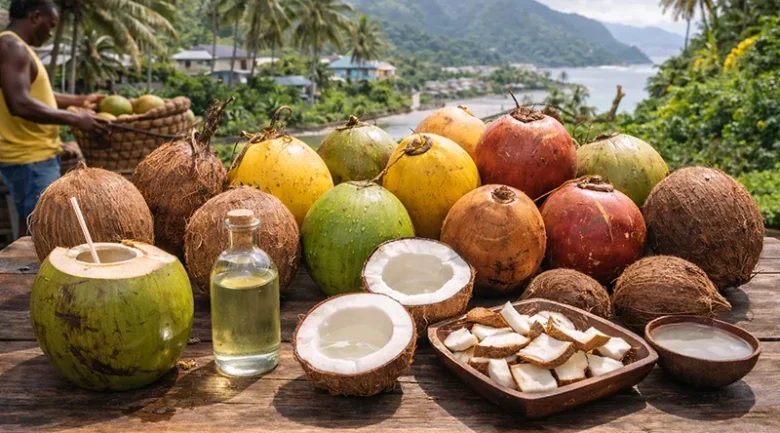
The Coconut (Cocos nucifera) is a versatile, perennial palm that serves as a cornerstone of the tropical landscape and daily life in the Commonwealth of Dominica. Known globally as the “Tree of Life,” the coconut palm is more than just a botanical specimen; it is a fundamental provider of nutrition, hydration, and material resources. In the national context of Dominica, the coconut thrives from the salt-sprayed Atlantic and Caribbean coastlines to the lower montane elevations, defining the island’s aesthetic and its subsistence traditions.
Botanical Taxonomy and Varieties in Dominica
The coconut palm belongs to the family Arecaceae (formerly Palmae) and is the only extant species in the genus Cocos. While many perceive the coconut as a single species, Dominica hosts several distinct varieties, categorised primarily by their height, lifespan, and fruit characteristics.
- Fiji Dwarf (Niu Leka): A rare, thick-trunked variety with a compact canopy; known for its unique appearance and slow growth.
- Dominica Tall (Atlantic Tall): A hardy, long-lived coastal palm reaching 100 feet; primarily used for high-yield copra and oil.
- Malayan Yellow Dwarf: A short, early-fruiting variety with yellow nuts; highly resistant to Lethal Yellowing and prized for water.
- Malayan Green Dwarf: Similar to the yellow dwarf but with green nuts; preferred for its prolific jelly nut production.
- Malayan Red Dwarf: Identified by its bronze-red fruit; the most rugged of the dwarves with strong disease resistance traits.
- Maypan Hybrid: A cross between Malayan Dwarf and Panama Tall; combines storm sturdiness with superior disease resistance.
- Panama Tall (Pacific Tall): Distinguished by a swollen trunk base and large, round nuts; famous for exceptionally sweet coconut water.
- Brazilian Green Dwarf: A recently introduced high-water variety capable of producing up to 300 sweet water nuts per year.
These diverse varieties form a resilient botanical foundation, ensuring that Dominica remains a leading regional producer of high-quality coconut water, oil, and traditional jelly nuts.
Stages of Maturity: From Jelly to Dry Nut
In Dominica, the terminology used to describe a coconut changes based on its stage of development. Understanding these stages is essential for identifying its culinary and medicinal applications.
The Young Coconut (Jelly Nut)
When the coconut is green and immature (roughly 6 to 7 months old), it is referred to locally as a Jelly Nut or a young coconut. At this stage, the outer exocarp is bright green and smooth.
- Coconut Water: The cavity is filled with a clear, effervescent liquid that is sterile and rich in electrolytes (potassium, magnesium, and sodium). In Dominica, this is the ultimate natural rehydration drink, often consumed directly from the nut at roadside stands.
- The Jelly: The endosperm (meat) has not yet hardened. Instead, it is a thin, translucent, gelatinous layer. This “jelly” is easily scooped out with a spoon made from a piece of the coconut’s own husk. It is highly digestible and often given to infants and the elderly as a gentle source of protein and healthy fats.
The Mature or “Dry” Coconut
As the nut matures (10 to 12 months), the outer husk turns from green to brown and becomes fibrous.
- The Meat: The inner jelly hardens into a thick, white, opaque layer of “meat.” This meat is high in medium-chain triglycerides (MCTs), specifically lauric acid.
- The Water: In a dry coconut, the water volume decreases and becomes slightly more acidic and concentrated in flavor. While still potable, it is less favored for drinking than the water of a green nut.
- The Husk: The “coir” (fibrous husk) becomes dry and buoyant, which is the biological mechanism that allows coconuts to float across oceans to colonize new shores.
Local Availability and Market Pricing in Dominica
In Dominica, the coconut is as much a staple of the local economy as it is of the diet. Whether you are seeking a refreshing drink on a coastal drive or bulk ingredients for a traditional meal, the availability follows a well-established pattern of street-side commerce and organized market trade.
Roadside Vendors and “Jelly” Stands
The most common way to consume coconuts in Dominica is through roadside vendors in Roseau and Portsmouth, particularly along the Edward Oliver LeBlanc Highway and the Dr Nicholas Liverpool Highway. Vendors typically stack green “jelly nuts” in the back of pickup trucks or at small wooden stalls.
- Whole Jelly Nuts: A single green coconut, trimmed with a cutlass (machete) for immediate drinking, typically costs EC $5.00.
- Bagged Jelly Flesh: For convenience, many street vendors scoop the soft, translucent meat from the nut and sell it in small plastic bags. A standard bag of fresh jelly flesh is generally priced at $10.00 EC, providing a concentrated source of healthy fats and protein.
Bottled Coconut Water
For those on the go, chilled, bottled coconut water is a major commodity. It is often sold by independent vendors in recycled or branded PET bottles.
- Pricing: A standard 300ml bottle typically retails for EC$5.00 to EC$6.00, while the 750ml bottles can range from EC$10.00 to EC$15.00, depending on the vendor. The larger 1-litre and 1.5-litre items cost about EC$20.00 and EC$25.00, respectively.
- Availability: These can be found in coolers at roadside stands, small village shops, and increasingly, in supermarkets such as H.H.V Whitchurch & Co. Ltd., S-Mart Supermarket and Fresh Market.
Local Markets and Dry Coconuts
If you are looking for “dry” (mature) coconuts for making coconut milk or oil, the central markets are the primary hubs.
- The Roseau Market: On Fridays and Saturdays, vendors from the surrounding villages bring in husked or unhusked dry nuts. A single dry nut usually costs EC$2.00 to EC$4.00.
- The Portsmouth Market: Serving the north of the island, this market offers similar pricing, often with bulk discounts for those purchasing “a bag of nuts” (typically 50 to 100 units) for home oil production.
Growth and Habitat in the Dominican Context
Dominica’s volcanic soil, characterised by high mineral content and excellent drainage, provides an ideal substrate for Cocos nucifera.
Coastal Dominance
Coconuts are most prolific along the coastal belts. Because they are halophytic (salt-tolerant), they thrive where other trees might wither. In areas like Calibishie, Hampstead, and Salisbury, the coconut palm acts as a vital bioshield, protecting the inland soil from salt spray and helping to anchor the sandy or loamy coastlines against storm surges.
Inland Cultivation
While they prefer the coast, coconuts in Dominica grow successfully up to elevations of approximately 600 meters (2,000 feet). However, as one moves into the cooler, wetter interior, such as the areas near Pont Cassé, the growth rate slows, and the fruit production may decrease compared to the sun-drenched coastal groves.
Benefits and Traditional Uses
The coconut is utilized in Dominica for far more than simple nutrition. Its applications span the medicinal, domestic, and artisanal sectors.
Nutritional and Health Benefits
- Hydration: Coconut water is naturally isotonic. In Dominican traditional medicine, it is frequently used to “cool” the body, flush the kidneys, and rehydrate patients suffering from gastrointestinal distress.
- Coconut Milk and Oil: To create coconut milk, the white meat of a dry nut is grated and squeezed. This milk is the foundation of Dominican “Oil Down” and various fish broths. The oil, extracted through boiling or cold-pressing, is used both in cooking and as a traditional hair and skin moisturizer.
- Lauric Acid: The fats in mature coconuts are known for their antimicrobial and antifungal properties, making them a staple in traditional wellness practices.
Domestic and Artisanal Utility
- The Shell: Once cleaned, the hard interior shell is used as a fuel source for high-heat fires. It is also carved into bowls, jewelry, and buttons by local craftsmen.
- The Fronds (Leaves): Traditionally, coconut fronds were woven into mats or used for thatched roofing in temporary structures. Today, they are still woven into baskets and decorative items for cultural festivals.
- The Husk: The dried husk is an excellent mulch for gardens, as it retains moisture in the soil. It is also used as a natural scrubber for cleaning wooden floors or cast-iron pots.
Ecological and Maintenance Considerations
In Dominica, maintaining a healthy coconut population requires vigilance against specific environmental threats.
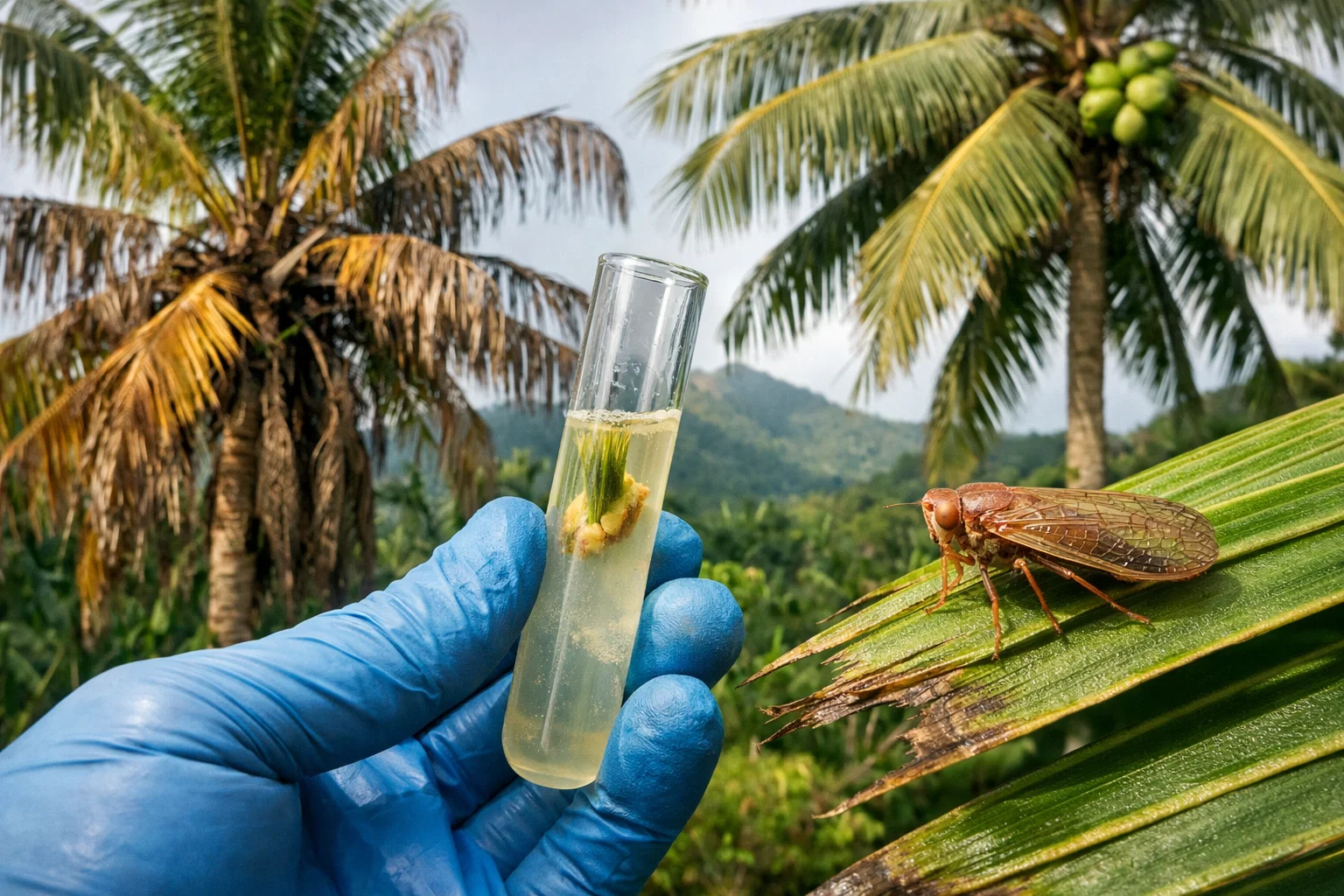
- Pests: The Red Palm Mite (Raoiella indica) and the Coconut Whitefly can affect frond health, reducing yields. The Ministry of Agriculture advocates for biological controls and proper tree spacing to mitigate these issues.
- Harvesting Safety: Because of the height of the Tall varieties, harvesting requires skilled climbers or specialised picking poles. In public spaces, de-nutting (the removal of heavy, mature nuts) is a necessary safety measure to prevent pedestrian injury.
Summary of Characteristics
| Stage | Local Name | Primary Use | Internal Consistency |
| Immature | Green / Young / Jelly Nut | Drinking water, snacking | Clear liquid, soft translucent jelly |
| Mature | Dry Coconut / Brown Nut | Oil, milk, cooking, crafts | Concentrated liquid, hard white meat |
| Sprouted | Sprouted Nut | Propagation, “Coconut Bread” | Spongy white “apple” inside |
The coconut remains an indomitable symbol of Dominica’s resilience and natural wealth. From the refreshing water of a green nut on a hot day in Roseau to the rich coconut milk flavour in a village feast, Cocos nucifera is interwoven with the island’s survival and identity.


References
-
1.
Coconut Industry Threatened by Lethal Yellowing Disease in Dominica https://dominicanewsonline.com/news/homepage/news/agriculture/coconut-industry-threatened-by-lethal-yellowing-disease/
-
2.
Dominica Launches National Coconut Rehabilitation Programme https://news.gov.dm/news/news-items/dominica-launches-coconut-rehabilitation-programme
-
3.
CARDI Caribbean Coconut Industry Development Project (Varieties, Cultivation and Regional Coconut Issues) https://cardi.org/project/caribbean-coconut-industry-development-project/
-
4.
FAO Crop Information on Coconut (Cocos nucifera): Growth Conditions, Cultivation and Management https://www.fao.org/land-water/databases-and-software/crop-information/coconut/en/