


Infectious Diseases in Dominica
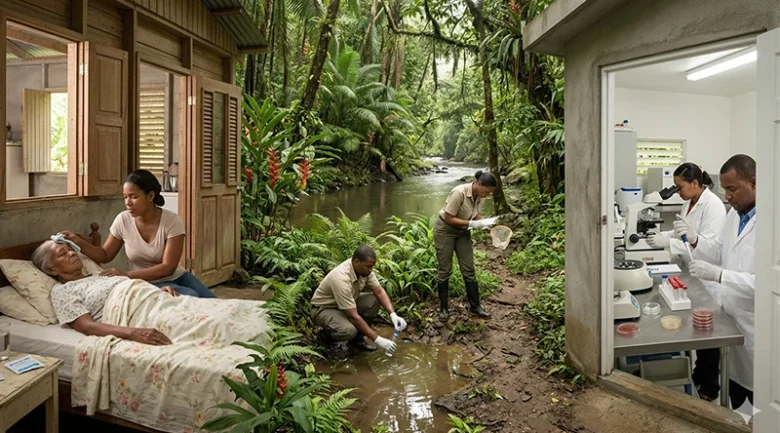
The management of infectious diseases in Dominica is a primary pillar of the nation’s national security, requiring constant clinical vigilance that must adapt to the island’s volatile ecological profile. While Dominica’s dense rainforests, 365 rivers, and high-humidity microclimates create an unparalleled sanctuary for biodiversity, they also function as a high-velocity incubator for pathogenic transmission. In this tropical landscape, the discipline of epidemiology is inseparable from the environment; the same hydrological richness that defines the “Nature Island” also facilitates the movement of water-borne bacteria, mosquito-borne viruses, and zoonotic threats.
Dominica’s infectious disease profile is characterised by a transition from reactive crisis management to a proactive, technologically driven surveillance architecture. Under the legislative authority of the Medical Laboratories Act 2024 and the Medical Profession Act 2026, the nation has standardised its diagnostic response to meet global benchmarks. While the island has celebrated monumental clinical victories, most notably the validated elimination of mother-to-child transmission of HIV and Syphilis, it remains on the front lines of the One Health battle. In Dominica, human health is inherently linked to the health of the agricultural hinterlands and the shifting tropical climate, necessitating a sentinel system that is as resilient and adaptive as the terrain itself.
Vector-Borne Diseases: The Constant Mosquito Siege
The primary infectious threat to the average Dominican citizen remains the mosquito, specifically the Aedes aegypti and, to a lesser extent, Aedes albopictus. The island’s strategy has moved beyond simple fogging toward a molecular understanding of viral circulation.
Dengue Fever: The Endemic Heavyweight
Dengue is not a seasonal visitor in Dominica; it is an endemic resident. With four distinct serotypes (DENV-1 through DENV-4), the risk in the next decade is defined by secondary infection.
- Antibody-Dependent Enhancement (ADE): Clinical protocols at the Dominica China Friendship Hospital (DCFH) are specifically designed to monitor for ADE. This occurs when a patient previously infected with one serotype is infected by another, leading the immune system to facilitate viral entry into cells rather than blocking it.
- Management: The focus is on early identification of “Warning Signs” (abdominal pain, persistent vomiting, mucosal bleeding).
Zika and Chikungunya: The Lingering Shadows
Following the massive outbreaks of the mid-2010s, both Zika and Chikungunya have moved into a low-level endemic state.
- Zika Monitoring: While acute cases are rare today, the Ministry of Health maintains a rigorous neuro-developmental registry to monitor for any long-term effects on children born during the peak years.
- Chikungunya: Often misdiagnosed as Dengue due to the “breakbone” joint pain, the DCFH Lab now uses multiplex PCR (Polymerase Chain Reaction) tests that can differentiate between these three viruses from a single blood sample in under four hours.
The Malaria Question
Dominica has successfully maintained its Malaria-free status. While the Anopheles mosquito exists on the island, the parasite Plasmodium falciparum does not circulate locally. The strategy focuses on Imported Surveillance, screening travellers coming from malaria-endemic regions in the Guianas or Sub-Saharan Africa to prevent the reintroduction of the parasite into the local mosquito population.
Zoonotic & Water-Borne Diseases: The River & the Rat
Because Dominica is an agricultural society with a high degree of human-environment interaction, diseases that jump from animals to humans (zoonoses) or spread through the island’s vast river system are a persistent concern.
Leptospirosis: The Silent Agricultural Threat
Leptospirosis, a bacterial infection caused by Leptospira spirochetes, is arguably the most dangerous hidden infectious disease in Dominica.
- Transmission: The bacteria are shed in the urine of infected animals (primarily rats, but also cattle and dogs) and thrive in the moist soil and stagnant water found in banana and cocoa plantations.
- Clinical Risk: If left untreated, it can lead to Weil’s Disease, characterised by kidney failure, liver haemorrhage, and jaundice.
- Current Protocol: The Ministry of Agriculture and the Ministry of Health have launched a joint “Rodent Control Initiative,” emphasising the use of personal protective equipment (PPE) for farmers and rapid antibiotic treatment (Doxycycline) for suspected cases before laboratory confirmation is even complete.
Schistosomiasis (Bilharzia): A Historical Victory
Older Dominicans remember the era when many of the island’s rivers were “off-limits” due to Bilharzia. Through aggressive snail control programs and public education in the late 20th century, Dominica has effectively eliminated Schistosomiasis as a major public health threat. Today, it serves as a case study for new generations of healthcare workers on how a concentrated environmental intervention can permanently alter an infectious landscape.
Sexually Transmitted Infections: The Elimination Frontier
Dominica’s Sexually Transmitted Infections (STIs) response is governed by the Triple Elimination framework, aiming to end the transmission of HIV, Syphilis, and Hepatitis B from mother to child.
HIV/AIDS: From Crisis to Chronic Care
Now, HIV in Dominica is managed as a chronic, non-communicable disease.
- EMTCT Certification: Dominica remains one of the few countries globally to have been validated for eliminating mother-to-child transmission.
- The 95-95-95 Target: The focus is now on the Third 95, ensuring that every person on ART (Antiretroviral Therapy) is virally suppressed. When U=U (Undetectable = Untransmittable), the community transmission rate drops toward zero.
Syphilis: The Great Imitator Resurgence
While congenital syphilis is eliminated, acquired syphilis among adults has seen a slight uptick in the 2020s. The 2026 strategy involves:
- Partner Notification: Confidential contact tracing conducted by specialized public health nurses.
- Penicillin G Primacy: Maintaining a strategic national stockpile of Benzathine Penicillin G, the gold-standard cure.
Hepatitis B and C
Hepatitis B has been integrated into the National Immunisation Registry. Nearly the entire population under 30 is vaccinated. Hepatitis C, while rare, is managed through the DCFH using modern Direct-Acting Antivirals (DAAs) that can cure the infection in 8–12 weeks.
Respiratory Pathogens: Beyond the COVID-19 Era
The COVID-19 pandemic fundamentally reshaped Dominica’s infectious disease infrastructure, leading to the creation of the advanced Intensive Care Unit (ICU) and isolation unit at the DCFH.
Tuberculosis (TB): The Lingering Comorbidity
Tuberculosis in Dominica is most often seen as a co-infection with HIV.
- DOTS Strategy: The Directly Observed Treatment, Short-course ensures that patients take their medication under the supervision of a health worker, preventing the rise of Multi-Drug Resistant TB (MDR-TB).
- GeneXpert Technology: Every health district now has access to molecular testing that can diagnose TB and detect Rifampicin resistance simultaneously.
Influenza and Emerging Viruses
Dominica participates in the PAHO/WHO Global Influenza Surveillance and Response System (GISRS).
- Seasonal Vaccination: Annual flu drives target the elderly and those with comorbidities (diabetes/hypertension) who are most at risk of infectious complications.
- Surveillance: The Sentinel Sites (select clinics across the island) monitor for Influenza-Like Illness (ILI) to detect any unusual shifts in viral patterns that might signal a new pandemic threat.
The Diagnostic Revolution: 2024 & 2026 Legislation
The hardware of diagnostic services, the PCR machines and GeneXpert units, is only as effective as the software of regulation. Two major legislative acts have professionalised the infectious disease response.
The Medical Laboratories Act 2024
This act established the Medical Laboratories Council, which was fully seated in early 2026.
- ISO 15189 Standards: It is now a legal requirement for all labs (public and private) to meet international accreditation standards. This ensures that a syphilis test done in a private clinic in Portsmouth is as accurate as one done at the DCFH.
- Professional Registry: Ensures only licensed professionals handle infectious samples, reducing the risk of laboratory-acquired infections.
The Medical Profession Bill 2026
Passed in February 2026, this bill modernises the oversight of physicians. It ensures that the diagnostic chain, from the initial suspicion of an infection to the final treatment, is handled with professional integrity and adherence to the latest clinical guidelines.
Climate Change: The Epidemiological Wildcard
As the Nature Island, Dominica is disproportionately affected by climate change, which acts as a threat multiplier for infectious diseases.
Hurricane Resilience and Infectious Spikes
After Hurricane Maria in 2017, the island saw a predictable spike in gastroenteritis and skin infections due to the collapse of clean water systems.
- The 2026 Disaster Protocol: The Ministry of Health now pre-positions “Infectious Disease Disaster Kits” (rehydration salts, antibiotics, water purification tablets) in every health district before the start of the hurricane season.
- Vertical Hardening: The DCFH is designed to remain operational and sterile even if the island’s primary power and water grids fail.
Rising Temperatures and Vector Migration
As temperatures rise, mosquitoes can survive at higher altitudes. Historically, safe mountain villages are now seeing cases of Dengue. The current response involves high-altitude vector surveillance to track the migration of Aedes mosquitoes into the island’s interior.
Public Health Infrastructure & One Health
The infectious disease strategy for 2030 is built on the One Health principle: the recognition that human health is connected to animal and environmental health.
| Sector | Role in 2030 Infectious Disease Strategy |
| Ministry of Health | Clinical care, vaccination, and PCR diagnostics. |
| Ministry of Agriculture | Livestock surveillance and rodent control (Leptospirosis). |
| DOWASCO (Water) | Ensuring chlorination and preventing water-borne outbreaks. |
| Environment/Forestry | Monitoring sylvatic (jungle) cycles of viruses. |
The Dominica China Friendship Hospital (DCFH)
The DCFH is the brain of the infectious disease response. Its state-of-the-art laboratory serves as the National Reference Lab, performing complex serology and molecular biology previously sent abroad. The presence of specialised Infectious Disease Consultants and an Antimicrobial Stewardship Committee ensures that antibiotics are used correctly, preventing the rise of superbugs on the island.
The Path to 2035
Dominica’s infectious disease goals for the next ten years are ambitious but rooted in the progress made between 2020 and 2025.
- Maintain EMTCT Validation: Ensuring that zero babies are born with HIV or Syphilis.
- Hepatitis B Elimination: Using the 2026 vaccine coverage to move toward a Hepatitis-Free generation.
- Digital Surveillance: Moving toward 100% electronic reporting of Notifiable Diseases. In 2030, a doctor in a remote village can report a suspected case of Dengue via a tablet, alerting the national epidemiological team in real time.
- Antimicrobial Stewardship: Reducing the over-prescription of antibiotics in private clinics to ensure these life-saving drugs remain effective for future generations.
Vigilance in the Garden
Infectious disease in Dominica is a story of constant vigilance. The very elements that make the island beautiful, its lushness, its water, its warmth, are the same elements that require a robust, scientifically advanced public health shield. By 2030, Dominica would have built that shield through a combination of legislative reform, advanced diagnostics, and community-based primary care.
While the Nature Island will always face the threat of tropical pathogens, it is no longer defenseless. Through the integration of international standards and local expertise, Dominica is proving that a small island state can not only manage infectious diseases but also lead the region in their elimination.


References
-
1.
PAHO: Health in the Americas – Dominica Profile https://hia.paho.org/en/country-profiles/dominica
-
2.
Global Health Security (GHS) Index – Dominica https://ghsindex.org/wp-content/uploads/2021/12/Dominica.pdf
-
3.
CARPHA Calls on Dominica and Other Regional Countries to Implement Measures to Counter the Dengue Outbreak https://dominicanewsonline.com/news/homepage/news/health/decrease-in-reported-cases-of-dengue-in-dominica/
-
4.
CARPHA Calls on Dominica and Other Regional Countries to Implement Measures to Counter the Dengue Outbreak https://dominicanewsonline.com/news/homepage/news/carpha-calls-on-dominica-and-other-regional-countries-to-implement-measures-to-counter-the-dengue-outbreak/
-
5.
UNAIDS: Dominica Country Progress Report (2006-2007) https://www.unaids.org/sites/default/files/country/documents//dominica_2008_country_progress_report_en.pdf
-
6.
Dominica: Elimination of the Mother-to-Child Transmission of HIV and Syphilis https://www.paho.org/en/topics/hivaids/dominica-elimination-mother-child-transmission-hiv-and-syphilis
-
7.
The Implementation of Dominica’s Electronic Immunization Registry https://www.paho.org/en/stories/implementation-dominicas-electronic-immunization-registry