


Anopheles Aquasalis
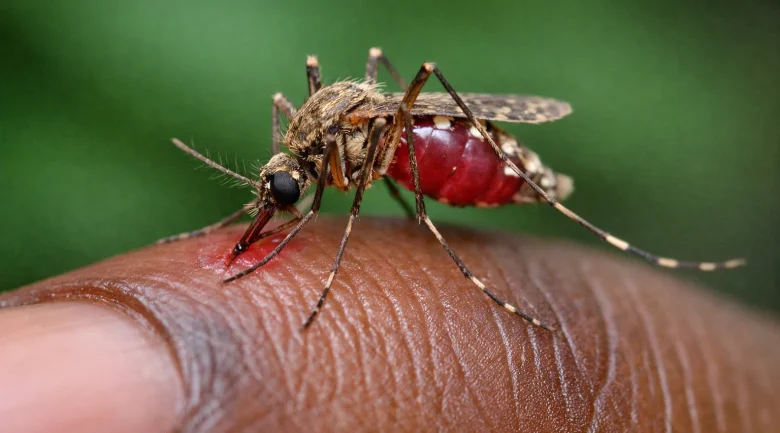
Dominica is home to the Anopheles aquasalis, a mosquito within the family Culicidae, recognised primarily for its historical role as a malaria vector in the Caribbean and coastal South America. In our national context, this species is an indigenous component of the island’s coastal biodiversity. While it remains present in specific ecological niches, its public health significance has shifted from an active disease transmitter to a monitored species following Dominica’s successful eradication of local malaria transmission in the mid-20th century.
Taxonomy and Physical Characteristics
Anopheles aquasalis belongs to the Nyssorhynchus subgenus. Like other members of the Anopheles genus, it can be distinguished from Aedes or Culex species by its resting posture, where the abdomen is tilted upward at an angle to the surface rather than parallel.
- Morphology: Adults are medium-sized mosquitoes characterized by speckled wings and hind tarsi with distinct white markings.
- Identification: In Dominica, it is often identified during larval surveys by its lack of a respiratory siphon, lying flat against the water surface to breathe.
Habitat and Environmental Distribution
The specific epithet aquasalis (Latin for “salt water”) reflects the species’ unique adaptation to brackish water environments. In Dominica, its distribution is restricted to coastal fringes where freshwater meets the sea.
- Breeding Sites: Common habitats include mangrove swamps, coastal marshes, and the brackish lagoons found near the mouths of Dominica’s 365 rivers. Notable concentration areas include the wetlands of Cabrits National Park and the swampy estuaries near Portsmouth.
- Climate Resilience: The species is highly adapted to the tidal fluctuations and varying salinity levels typical of the Dominican coastline.
- Adult Behavior: Females are primarily exophilic (preferring to rest outdoors) and crepuscular, with peak biting activity occurring during dusk and dawn.
Historical Significance: The Malaria Era
Historically, Anopheles aquasalis was the primary vector for malaria (Plasmodium vivax) in the low-lying coastal villages of Dominica. During the early to mid-20th century, malaria was a leading cause of morbidity on the island, particularly in the northern districts.
The Eradication Campaign
In the 1950s, the Government of Dominica, with assistance from the Pan American Health Organization (PAHO) and the World Health Organization (WHO), launched a rigorous Malaria Eradication Program.
- Indoor Residual Spraying (IRS): Extensive use of insecticides to reduce adult populations.
- Environmental Management: Drainage of coastal swamps and the filling of stagnant pools near settlements.
- Treatment: Mass distribution of antimalarial medications.
By the early 1960s, local malaria transmission was interrupted. Dominica was subsequently included in the register of countries where malaria has been eradicated. Since then, all recorded malaria cases in Dominica have been imported (individuals infected abroad), and Anopheles aquasalis has not facilitated a reintroduction of the disease into the local population.
Current Status and Surveillance
The Anopheles aquasalis is maintained under passive surveillance by the Environmental Health Unit of the Ministry of Health, Wellness and Social Services.
Vector Competence Data
While the species is present, its vectorial capacity in Dominica is currently considered low due to:
- Low Population Density: Contemporary environmental management and land development have reduced its primary breeding habitats.
- Host Preference: In Dominica, A. aquasalis often exhibits zoophilic tendencies, frequently feeding on livestock rather than humans when both are available.
| Metric | Status in Dominica (2026) |
| Local Malaria Transmission | Zero Cases |
| Primary Habitat | Coastal Brackish Marshes |
| Control Priority | Low (compared to Aedes aegypti) |
| Legal Status | Native Species; Monitored |
Ecological Role
Beyond its historical medical context, Anopheles aquasalis plays a functional role in the coastal ecosystems of Dominica.
- Food Chain: Larvae are food sources for aquatic predators, including dragonfly larvae and small coastal fish.
- Pollination: Similar to other mosquito species on the island, adult males feed on the nectar of coastal flora, such as the Seaside Grape (Coccoloba uvifera), contributing to localised pollination.


References
-
1.
1966 study by Stone and Knight: Mosquitoes of Dominica https://www.govinfo.gov/content/pkg/GOVPUB-SI-PURL-gpo19184/pdf/GOVPUB-SI-PURL-gpo19184.pdf
-
2.
Anopheles aquasalis: Dutch Caribbean Species Register https://www.dutchcaribbeanspecies.org/linnaeus_ng/app/views/species/nsr_taxon.php?id=195217&cat=&epi=1