


Mosquitoes in Dominica
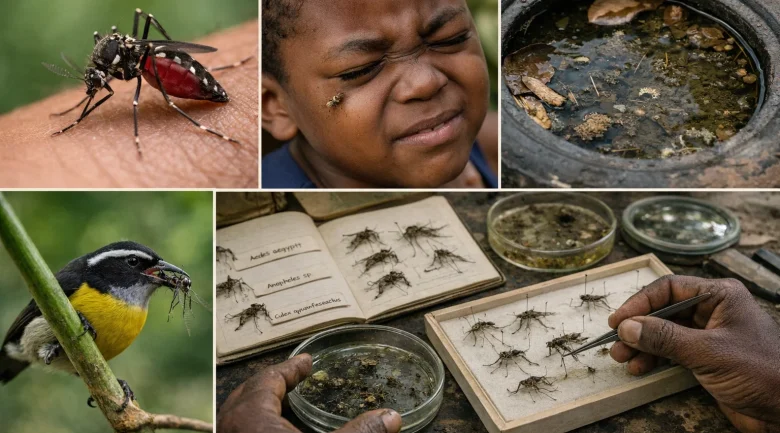
The mosquitoes in Dominica comprise a diverse range of species within the family Culicidae, representing a significant component of the island’s dipteran fauna. While most of the island’s 22 recorded species are primarily of ecological interest, serving as a vital food source for native bats, birds, and amphibians, a small number of domesticated species are of critical public health importance. These species serve as primary vectors for arboviral diseases such as Dengue, Chikungunya, and Zika. In the national context of Dominica, mosquito management is a matter of both environmental preservation and rigorous public health surveillance.
Historical Context and Early Records
The scientific study of mosquitoes in Dominica dates back to the early 20th century, with significant expansion during the mid-1960s. Between 1964 and 1966, the Bredin-Archbold-Smithsonian Biological Survey of Dominica conducted an intensive inventory of the island’s biota.
Before this period, mosquito-related records were largely confined to medical reports regarding malaria and yellow fever. Malaria was historically present in the swampy coastal regions of the island. However, through aggressive drainage programs and the use of residual insecticides in the 1950s, Dominica was declared malaria-free by the 1960s. Since then, the island has maintained its malaria-free status, though the vector species Anopheles aquasalis remains present in low densities.
In 1966, researchers Stone and Knight published the definitive “Mosquitoes of Dominica,” which identified 22 species across several genera. This survey remains the foundational reference for the island’s entomological baseline.
Taxonomy and Species Diversity
The mosquito population in Dominica is categorized into several distinct genera, each occupying specific ecological niches across the island’s varied topography, from the coastal dry forests to the high-elevation montane forests.
Aedes Species
The genus Aedes contains the most medically significant species on the island.
- Aedes aegypti: An invasive, highly “domesticated” species. It prefers human environments and breeds in artificial containers such as discarded tires, flowerpots, and uncovered water drums.
- Aedes busckii: A species endemic to the Lesser Antilles. Unlike its urban counterpart, it is frequently found in the natural tree holes of the interior rainforests.
Culex Species
Culex mosquitoes are ubiquitous across the island’s urban and semi-urban landscapes.
- Culex pipiens quinquefasciatus: This is the most common nuisance mosquito in Dominica, known for its nocturnal activity and preference for stagnant, often polluted water sources like open drains and septic systems.
Wyeomyia and Specialized Genera
Dominica’s high rainfall and abundance of epiphytic plants support specialized species:
- Wyeomyia pertineans: These mosquitoes are often called bromeliad mosquitoes because their larvae develop exclusively in the water trapped by bromeliads and other tank plants in the rainforest.
- Deinocerites magnus: Commonly found in coastal areas, these mosquitoes breed in the water found in land crab holes.
Public Health Impact and Data Trends
Dominica’s Environmental Coordinating Unit, operating under the Ministry of Health, tracks mosquito-borne illnesses with high precision. The transition from malaria to arboviral threats defined the late 20th and early 21st centuries.
Arboviral Case History (2013–2026)
| Disease | Year of First Major Outbreak | Current Status (2026) |
| Dengue Fever | Endemic (Historical) | Sporadic / Seasonal Alerts |
| Chikungunya | 2013 | Controlled / Occasional Cases |
| Zika Virus | 2016 | Low Incidence / Monitored |
The 2013 Chikungunya outbreak was a landmark event for the Commonwealth of Dominica, resulting in thousands of clinical cases and a significant strain on the national labour force. This was followed by the Zika virus in 2016, which prompted the government to increase surveillance for microcephaly and Guillain-Barré Syndrome.
Dominica maintains a “Level 1” travel health notice for most mosquito-borne illnesses, indicating that while the risk is present, there are no ongoing widespread outbreaks. Data from the National Epidemiological Unit suggests that case numbers typically peak between September and December, coinciding with the peak of the Atlantic hurricane season and increased rainfall.
National Vector Control Strategies
The Government of Dominica utilises an Integrated Vector Management (IVM) framework to mitigate the mosquito population. This strategy is multi-faceted:
Chemical and Biological Interventions
The use of fogging (Ultra-Low Volume or ULV spraying) is reserved for high-risk zones where surveillance data indicates a spike in adult Aedes aegypti populations. Biologically, the government encourages the use of Gambusia affinis (mosquitofish) in large, permanent water storage containers to consume larvae before they reach maturity.
Legislative and Civic Framework
The Forestry and Wildlife Act and various public health ordinances provide the legal basis for environmental inspections. Health officers have the authority to inspect private properties and issue notices for breach of sanitary conditions if persistent breeding sites are found.
The PAHO Multi-Country Strategy
Dominica reaffirmed its commitment to the PAHO/WHO Multi-Country Cooperation Strategy. This initiative focuses on:
- Strengthening laboratory capacity for rapid PCR testing of mosquito-borne pathogens.
- Improving climate-resilient health systems to handle the increased mosquito breeding that follows tropical storms and hurricanes.
Ecology and Behavior in the Dominican Context
Mosquitoes in Dominica are more than just pests; they are biological indicators.
- Hygroscopic Dependence: In the rainforests of Morne Trois Pitons National Park, mosquito activity is constant due to the 300+ inches of annual rainfall.
- Pollination: While blood-feeding is a requirement for egg production in females, both male and female mosquitoes in Dominica feed on the nectar of native flora. They are minor pollinators of certain orchids and wild ginger species found in the interior.
- Natural Predators: Healthy populations of the Dominican Ground Lizard (Pholidoscelis fuscatus) and various tree frogs (Eleutherodactylus) serve as natural checks on mosquito populations in rural areas.
Summary of Key Data
- Total Species Recorded: 22
- Primary Vector: Aedes aegypti
- Peak Breeding Season: July – December
- Regulatory Authority: Ministry of Health, Wellness and Social Services


References
-
1.
Survey of Mosquitoes and Larvae in Dominica, Wl Alyssa Mann https://dominica.tamu.edu/wp-content/uploads/sites/54/2017/09/Mann_Alyssa_2011.pdf
-
2.
Mosquito and insect spread infections in the Caribbean https://travelhealthpro.org.uk/news/816/mosquito-and-insect-spread-infections-in-the-caribbean
-
3.
PAHO responds to dengue outbreak in Dominica - ReliefWeb https://reliefweb.int/report/dominica/paho-responds-dengue-outbreak-dominica