



Zika Virus in Dominica
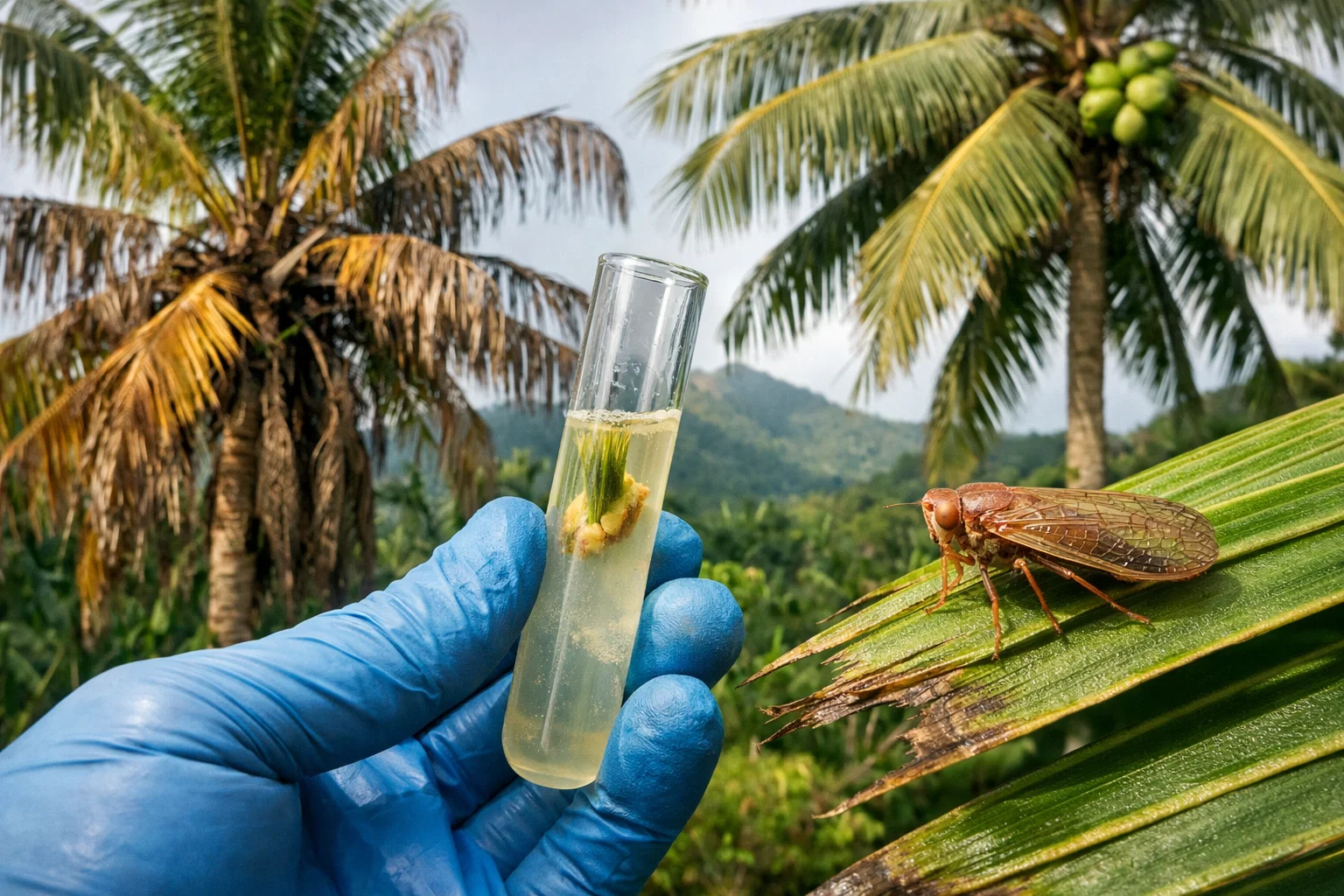
The Zika virus is a vector-borne viral disease in Dominica that is monitored under national public health frameworks as a significant epidemiological event. The causative agent is an RNA flavivirus primarily transmitted to humans by the bite of an infected Aedes aegypti mosquito, the same vector responsible for propagating dengue and chikungunya across the island. While the global acute pandemic phase has subsided, the historical introduction and subsequent stabilisation of the virus within the local ecosystem have permanently altered clinical diagnostics, reproductive health counselling, and environmental management protocols within Dominica’s seven health districts.
Timeline of Introduction and Epidemiological Data
The epidemiological footprint of the Zika virus (ZIKV) in Dominica is defined by a rapid transition from initial importation to full autochthonous (local) transmission, followed by seasonal stabilization.
The 2016 Epidemic Curve
The Ministry of Health, Wellness and Social Services reported the country’s first laboratory-confirmed case of local Zika virus transmission in Epidemiological Week (EW) 11 of 2016. The index patient, a 28-year-old female resident with no recent history of travel, presented with classic symptoms including a maculopapular rash, retro-orbital pain, and non-purulent conjunctivitis.
Following this index case, the virus spread rapidly across the island’s mountainous terrain. Epidemiological reporting categorized the transmission patterns through distinct phases:
- Initial Acceleration: Following introduction, case counts expanded throughout the second quarter of 2016, reaching a primary peak in EW 18.
- Secondary Surge: A secondary surge occurred during EW 26, matching increased vector densities associated with the onset of the tropical rainy season.
- Total Burden: By the conclusion of the primary outbreak cycle in late 2016, health authorities had logged a total of 1,263 reported cases across the island.
- Geographic Saturation: By EW 41 of 2016, active transmission chains had been laboratory-verified in all seven national health districts, indicating complete geographic saturation.
Demographic Disparities
Analysis of clinical registry data by the Pan American Health Organization (PAHO) revealed distinct demographic variances. Higher attack rates per 100,000 population were consistently observed in females compared to males across almost all age categories. The highest incidence among females occurred within the 25–29 age bracket, whereas male cases peaked predominantly among adolescents aged 10–14.
Clinical Complications and Surveillance Standards
Public health concerns regarding Zika virus transmission are driven less by the acute febrile illness, which is mild or asymptomatic in roughly 80% of cases, and more by its severe neurological and teratogenic (fetal developmental) complications.
Congenital Zika Syndrome
The capacity of the virus to cross the placental barrier led to strict monitoring protocols for pregnant individuals. During the height of local transmission, the Ministry of Health tracked 10 confirmed and 3 suspected cases of Zika virus infection among pregnant women. National registries maintained in coordination with PAHO indicated that while localized fetal losses occurred due to premature rupture of membranes, no confirmed cases of microcephaly or Congenital Zika Syndrome (CZS) were ultimately verified by the Dominica Medical Board.
Neurological Impact
Adult populations exposed to the virus exhibited risks for post-viral autoimmune complications. Public health clinics documented two suspected cases of Guillain-Barré Syndrome (GBS), an acute, progressive paralysis caused by the immune system attacking peripheral nerves, directly associated with prior acute Zika virus infections.
Surveillance Protocols
To manage ongoing risks, the Epidemiological and Surveillance Unit utilises a Case-Based Surveillance framework. Any patient presenting to primary health centres with an acute onset of a maculopapular rash along with joint pain, fever, or conjunctivitis is classified as a suspected arboviral case. Because clinical symptoms overlap heavily with dengue and chikungunya, definitive diagnosis requires laboratory confirmation.
Diagnostic Networks and Institutional Standards
The management of mosquito-borne diseases is supported by structural legislation ensuring diagnostic accuracy across all medical districts.
Laboratory Framework
Under the Medical Laboratories Act 2024, all facilities handling human biological samples must enforce uniform diagnostic quality standards. Blood and urine samples collected at district health centres are stabilised and routed to the central laboratory hub at the Dominica China Friendship Hospital (DCFH).
Because antibody-based serological testing (such as IgM ELISA) frequently cross-reacts with circulating dengue antibodies, standard protocols mandate the use of molecular diagnostics. The central facility relies on real-time Polymerase Chain Reaction (PCR) assays distributed through the Caribbean Public Health Agency (CARPHA) reference laboratory network to achieve definitive pathogen differentiation.
Medical Oversight
The Medical Profession Act 2026 establishes that specialised registries, managed by the Dominica Medical Council oversee the practitioners coordinating long-term reproductive or neurological care. This clinical governance ensures that general practitioners follow standardised, evidence-based management paths when counselling patients on the risks of sexual transmission, as the virus can persist in reproductive fluids long after systemic clearance.
Vector Control and Environmental Management
Dominica’s environmental landscape, characterized by high rainfall and dense vegetation, requires an ongoing vector control strategy to suppress Aedes aegypti populations. The Environmental Health Unit manages vector suppression through a multi-tiered public health framework:
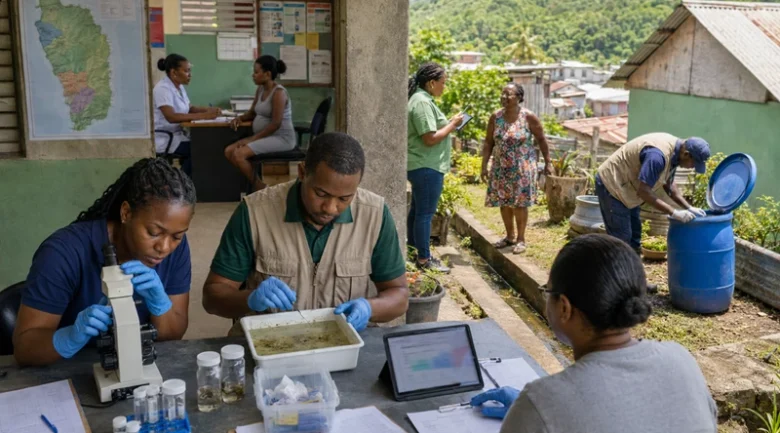
- Source Reduction: Environmental Health Officers conduct systematic residential inspections across all parishes. Property owners are legally required to eliminate artificial water collection vessels, screen storage drums, and clear guttering systems to disrupt larval habitats.
- Chemical Invalidation: During localized spikes in arboviral reports, Vector Control units execute targeted ultra-low volume (ULV) thermal fogging to suppress adult mosquito densities in high-risk zones.
- Integrated Public Education: Public health nurses lead community-level workshops focusing on personal protection mechanisms. These include the use of insect repellents containing DEET, the installation of window screens in domestic structures, and the utilization of insecticide-treated bed nets for infants and bedridden individuals.


