

Dengue in Dominica
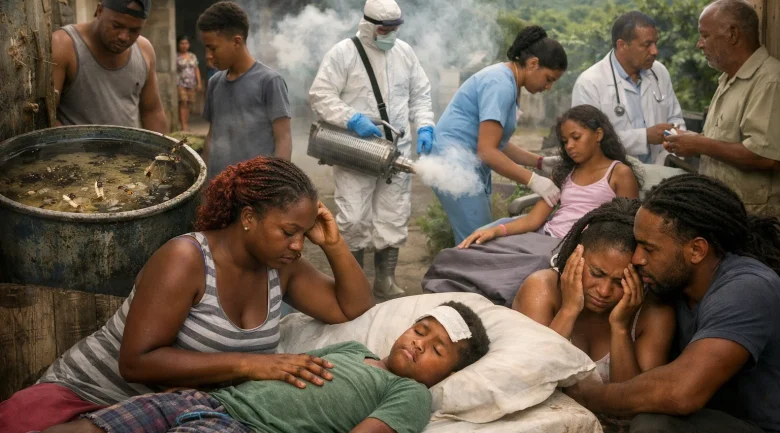
Dengue fever in Dominica is an escalating war of attrition against the Aedes aegypti mosquito, a vector that has turned the island’s high-humidity microclimates into a high-stakes laboratory for viral transmission. Unlike other health challenges that can be mitigated through vaccination or lifestyle shifts, Dengue is a systemic epidemiological threat driven by the four distinct serotypes of the virus (DENV-1, DENV-2, DENV-3, and DENV-4).
The breakbone fever isn’t merely a consequence of the island’s 365 rivers; it is a byproduct of modern Dominican living patterns. In areas like Roseau and Portsmouth, the reliance on domestic water storage, vats, drums, and uncovered containers creates permanent, stagnant breeding sanctuaries that are largely unaffected by the natural drainage of the mountain terrain. When a new serotype is introduced to the island, perhaps via regional travel, the population’s immunological memory can actually backfire. Through a process known as Antibody-Dependent Enhancement (ADE), a second infection with a different serotype can lead to Dengue Hemorrhagic Fever (DHF) or Dengue Shock Syndrome (DSS), in which the body’s own immune response facilitates viral entry into cells, leading to plasma leakage and internal bleeding.
The Ministry of Health has shifted its focus from reactive fogging, which is increasingly ineffective due to insecticide resistance, to “Integrated Vector Management.” This involves aggressive larval source reduction and the use of molecular diagnostics at the Dominica China Friendship Hospital to rapidly identify circulating serotypes. The goal is to predict outbreaks before the rainy season peaks, moving Dengue from a seasonal crisis to a managed, predictable epidemiological variable.
The Historical Trajectory: From Sporadic to Endemic
The history of dengue in Dominica is a story of transition. For much of the early 20th century, records of breakbone fever were sporadic and often conflated with other tropical maladies. However, as global travel increased and urbanisation intensified in the Caribbean, the virus established a permanent foothold.
The 1995 Epidemic: The Wake-Up Call
The most significant historical turning point occurred in 1995. During this year, Dominica, along with several of its neighbours in the OECS (Organisation of Eastern Caribbean States), experienced a massive surge in cases. This epidemic was particularly alarming because it marked the widespread introduction of Dengue Hemorrhagic Fever (DHF) to the island. Before 1995, most cases were the”classic variety; afterwards, the medical community had to prepare for the life-threatening complications of plasma leakage and internal bleeding.
The Impact of Natural Disasters
Dominica’s recent history with dengue cannot be separated from its history with hurricanes.
- Tropical Storm Erika (2015): The massive flooding and displacement created hundreds of stagnant water pockets in the devastated southeastern villages.
- Hurricane Maria (2017): The near-total destruction of the island’s piped water system forced the entire population into emergency water storage mode. For over a year, citizens kept hundreds of thousands of open buckets and drums around their homes. This led to a predictable and massive spike in mosquito populations, which the Ministry of Health, Wellness, and Social Services had to combat while simultaneously rebuilding the primary healthcare system.
Epidemiological Data and Trends
In the current landscape, the Ministry of Health utilises a data-driven approach to track the virus. Dengue in Dominica typically follows a cyclical pattern, with major surges occurring every three to five years, often coinciding with the introduction of a new serotype to which the population has no immunity.
The 2024-2025 Surge
Between late 2024 and mid-2025, Dominica recorded approximately 480 suspected cases, a significant increase from the quiet years of the COVID-19 pandemic. This surge was attributed to the regional movement of DENV-3, a serotype that had not been dominant on the island for over a decade.
| Year | Suspected Cases | Confirmed Cases | Severe Dengue Cases |
| 2022 | 85 | 14 | 0 |
| 2023 | 112 | 22 | 1 |
| 2024 | 315 | 88 | 6 |
| 2025 (Peak) | 480 | 142 | 11 |
| 2026 (Jan-April) | 42 | 9 | 0 |
Note: The Suspected vs. Confirmed gap is common in Dominica. Because clinical diagnosis is often clear-cut, not every patient undergoes a full PCR test, especially during a known outbreak.
Why Dominica? The Environmental and Social Reasons
Dengue persists in Dominica due to a perfect storm of factors that are difficult to mitigate entirely in a Small Island Developing State (SIDS).
The Nature Island Ecology
Unlike the flatter, drier islands of the Grenadines, Dominica is a vertical rainforest. The high annual rainfall (exceeding 7,000 mm in some interior regions) means that natural receptacles, such as bromeliads, tree holes, and bamboo stumps, retain water year-round. While Aedes aegypti is primarily a domestic breeder, the island’s high humidity allows the mosquito to survive longer and travel farther than in drier climates.
Water Storage Culture
With today’s vastly improved water grid managed by DOWASCO, many Dominicans maintain a tradition of backup water storage. Memories of 2017’s total water loss remain fresh. These storage drums, if not properly sealed with mesh, become the primary source of mosquitoes for entire neighbourhoods in Roseau, Portsmouth, and Grand Bay.
Climate Change and Heat Stress
Current average temperatures in the Caribbean have risen by nearly 1.2°C relative to pre-industrial levels. This heat acts as a biological catalyst:
- Accelerated Lifecycle: In warmer weather, Aedes aegypti larvae can mature into biting adults in as little as 7 days, compared to the usual 10–12 days.
- Increased Viral Replication: The virus replicates faster in the mosquito’s gut at higher temperatures, shortening the extrinsic incubation period.
Topography and Waste Management
Dominica’s steep terrain makes waste management complex. Discarded tires or plastic containers in deep ravines are nearly impossible for sanitation teams to reach, creating hidden reservoirs of mosquitoes that can re-infest a village even after a successful cleanup campaign.
The Biological Enemy: The Virus and the Vector
To fight dengue, the Dominican Public health system focuses on the biology of the pathogen and its carrier.
The Four Faces of the Virus
Dengue is caused by four distinct serotypes: DENV-1, DENV-2, DENV-3, and DENV-4.
- The Danger of Secondary Infection: In Dominica, where types 1 and 2 have been circulating for decades, many adults have pre-existing antibodies. However, if a person previously infected with DENV-1 is later infected with DENV-2, they are at a much higher risk of Antibody-Dependent Enhancement (ADE). This is a process in which the old antibodies don’t neutralise the new virus but instead help it enter cells more easily, leading to leaky gut and internal bleeding associated with Severe Dengue.
The Vector: Aedes aegypti
The Aedes aegypti in Dominica is a highly evolved urban specialist.
- Daytime Biters: They are most active during the day, meaning the traditional bed net strategy used for malaria is ineffective.
- Nervous Feeders: They often bite 4–5 different people to get one full blood meal, which is why dengue often runs through a household in a matter of days.
Clinical Presentation: What Patients Experience
The medical staff at the Dominica China Friendship Hospital (DCFH) and the 52 district health centres classify dengue into three distinct phases.
Phase 1: The Febrile Phase (Days 1–3)
This phase is characterized by a sudden, high-grade fever.
- Symptoms: Intense frontal headache, retro-orbital pain (pain behind the eyes), and “breakbone” joint pain.
- The Dengue Flush: Many Dominican patients develop a characteristic maculopapular rash, a faint pink-redness that disappears when pressed.
Phase 2: The Critical Phase (Days 4–6)
This is the most misunderstood part of the illness. As the fever drops, the patient may feel better, but this is exactly when the risk of Plasma Leakage begins. The blood vessels become leaky, and fluid escapes into the chest or abdomen.
- Warning Signs: Persistent vomiting, severe abdominal pain, and bleeding from the gums or nose.
Phase 3: The Recovery Phase (Days 7–10)
If the patient is properly hydrated, the body begins to reabsorb the lost fluid. Patients often experience an intense itchiness, particularly on the palms of the hands and soles of the feet, which is a clinical sign that recovery is underway.
Treatment Protocols in Dominica (2026)
There is no cure for dengue; treatment in Dominica is strictly supportive, focusing on fluid management and pain control.
The Golden Rule of Medications
The Ministry of Health engages in massive public education to ensure citizens do not self-medicate incorrectly.
- APPROVED: Paracetamol (Acetaminophen). This is the only safe drug for fever and pain.
- STRICTLY FORBIDDEN: Aspirin, Ibuprofen (Advil/Motrin), and Naproxen (Aleve). These are Non-Steroidal Anti-Inflammatory Drugs (NSAIDs) that thin the blood. In a dengue patient whose platelets are already dropping, taking an Ibuprofen can trigger fatal internal bleeding.
Hospital Management at DCFH
For severe cases admitted to the DCFH, the treatment involves:
- Isotonic Fluid Resuscitation: Giving exactly the right amount of IV fluids to keep blood pressure stable without drowning the lungs.
- Hematocrit Monitoring: Doctors check the thickness of the blood every few hours. A rising hematocrit level indicates the patient is losing fluid and needs increased IV support.
- Blood Transfusions: Used only in rare cases of massive hemorrhage.
Public Health Strategy: The War on the Vector
The Environmental Health Unit of Dominica leads the charge in prevention. Their strategy is divided into three tiers.
Tier 1: Source Reduction (The Search and Destroy Campaigns)
Health officers conduct Premise Inspections. They go from house to house in villages like Mahaut or St. Joseph, physically checking for larvae.
- Biological Control: In some large water vats, the Ministry has introduced Mosquito Fish (Gambusia affinis) or copepods that eat the larvae before they can hatch.
Tier 2: Chemical Control (Fogging)
When a cluster of cases is identified, the Ministry deploys Fogging Trucks. These trucks spray a fine mist of Malathion or Deltamethrin.
- Limitation: Fogging only kills adult mosquitoes. If the community doesn’t clean up the breeding sites, new mosquitoes will hatch within 48 hours, making the fogging useless in the long term.
Tier 3: Innovative Technology
Dominica is currently exploring regional partnerships for the Wolbachia Project. This involves releasing male mosquitoes infected with a naturally occurring bacterium called Wolbachia. When these males mate with local females, the eggs don’t hatch, or the resulting offspring are unable to transmit the dengue virus.
The Island’s Socio-Economic Impact
The burden of dengue is not just a health issue; it is a significant drain on the Dominican economy.
Tourism Vulnerability
Dominica’s “Nature Island” brand relies on the perception of a safe, pristine environment. A publicised dengue outbreak can prompt travel advisories from the US, UK, and Canada, leading to hotel cancellations and a loss of foreign exchange during the critical winter stayover season.
Workforce Productivity
Because dengue primarily affects the working-age population (20–50 years old), an outbreak causes a massive spike in sick leave. A typical dengue case results in 7 to 14 days of total productivity loss per infected person. In a small economy, several hundred people out of work simultaneously can slow down everything from agricultural harvests to civil service operations.
The Cost of Care
The cost to the government for a single hospitalised dengue patient at DCFH is estimated at approximately $2,500 – $4,000 XCD, factoring in laboratory tests, nursing care, and IV supplies. When multiplied by hundreds of cases, this diverts funds that could otherwise be used for chronic disease management (Diabetes/Hypertension) or infrastructure.
Future Outlook: The Path to 2035
As we look toward the next decade, Dominica is shifting from reactive to proactive management.
- Vaccine Integration: The Ministry is currently reviewing the Qdenga (TAK-003) vaccine. Unlike previous vaccines, this one can be given to people who have never had dengue before, making it a potential game-changer for protecting Dominican children.
- Climate-Smart Health Districts: The government is investing in improved drainage systems in the northern Portsmouth area to prevent flash flooding from leaving stagnant pools that linger for weeks.
- Digital Surveillance: Using a new mobile app, Environmental Health Officers can now upload larval indices in real time, allowing the central office in Roseau to see which streets in a village are at the highest risk before the first human case appears.
A Shared Responsibility
Dengue reflects Dominica’s relationship with its environment. While the Ministry of Health provides the clinical and chemical defenses, the true cure for the island’s dengue problem lies in community ownership.
Every uncovered drum in a backyard in Wesley, every discarded tyre in a ravine in Fond Cole, and every clogged gutter in Roseau is a potential source of a life-threatening infection. The message to every Dominican remains clear: The fight against dengue starts at your doorstep. Through a combination of modern science (vaccines and Wolbachia), clinical excellence at the DCFH, and old-fashioned community sanitation, Dominica continues to lead the Eastern Caribbean in building a resilient, mosquito-aware society.


References
-
1.
Health ministry: 147 suspected dengue cases; only one positive test thus far, surveillance continues https://dominicanewsonline.com/news/homepage/homepage-carousel/health-ministry-147-suspected-dengue-cases-only-one-positive-test-thus-far-surveillance-continues/
-
2.
Ministry of Health reports decrease in number of dengue cases https://www.news.gov.dm/news/news-items/ministry-of-health-reports-decrease-in-number-of-dengue-cases
-
3.
Health ministry still monitoring dengue fever situation https://dominicanewsonline.com/news/homepage/news/health/health-ministry-monitoring-dengue-fever-situation/
-
4.
PAHO: Dominica Zika Situation Report (2017) https://www.paho.org/sites/default/files/March-2017-phe-zika-situation-report-dom.pdf
-
5.
Dengue Fever on the Island of Dominica (Historical Thesis) https://dominica.tamu.edu/wp-content/uploads/sites/54/2017/09/Hart-1999.pdf
-
6.
Clinical and Laboratory Guidelines for Dengue Fever and Dengue Haemorrhagic Fever/Dengue Shock Syndrome for Health Care Providers https://iris.paho.org/items/840d8f7a-d27c-4ade-b1bf-1db72e265f8d
-
7.
Vaccinations for Dominica: Nomad Travel https://www.nomadtravel.co.uk/travel-clinic/travel-vaccinations-for/north-america-central-america-caribbean/dominica