


Leptospirosis
Leptospirosis is a significant zoonotic bacterial disease caused by the Leptospira pathogenand poses a recurring public health challenge in Dominica. Transmitted primarily through contact with the urine of infected animals, most notably rodents, the disease is closely linked to the island’s tropical climate, high annual rainfall, and environmental sanitation levels. For Dominica, outbreaks often follow periods of heavy precipitation and flooding, which facilitate the spread of the bacteria from animal reservoirs into soil and public water sources. As an endemic condition, it requires consistent surveillance by the Ministry of Health, Wellness to prevent localised epidemics and minimise mortality rates.
Epidemiology and Environmental Drivers
The incidence of leptospirosis in Dominica is deeply influenced by the island’s unique topography and weather patterns. The bacteria thrive in warm, humid environments and can survive for several months in neutral or slightly alkaline water and soil.
Rainfall and Topography
Dominica is characterised by its 365 rivers and mountainous terrain, which receives some of the highest rainfall in the Caribbean. During Atlantic hurricane season, particularly from June to November, heavy downpours often trigger landslides and flash flooding. These environmental events flush Leptospira bacteria from the burrows of animal reservoirs into public waterways and agricultural lands. Stagnant water following a flood becomes a primary source of infection for residents in both rural and urban areas.
Rodent Populations and Sanitation
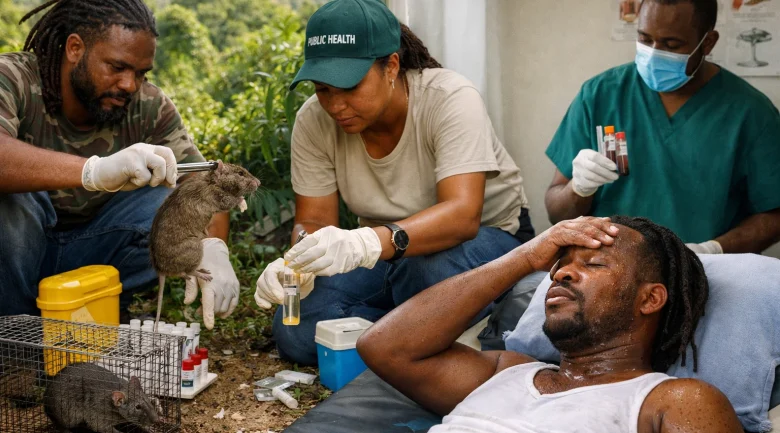
Rodents, specifically the Brown Rat (Rattus norvegicus) and the Black Rat (Rattus rattus), serve as the primary maintenance hosts for the bacteria in Dominica. These animals shed the pathogen in their urine without appearing ill. In recent years, including during the notable waste management challenges of early 2025, the proliferation of rodents in residential areas has been identified as a critical factor in disease spikes. Improper disposal of organic waste and the accumulation of litter provide harborage and food sources for rat populations, bringing them into closer proximity to human dwellings.
Historical Outbreaks and Surveillance
Dominica has documented several notable fluctuations in leptospirosis cases over the last two decades. Monitoring is conducted by the National Epidemiological Unit, often in collaboration with the Caribbean Public Health Agency (CARPHA).
- 2010–2012 Trends: During this period, Dominica saw a steady baseline of cases, with 10 confirmed cases in 2010 and an increase to 29 in 2011. These figures often represented only a fraction of actual infections due to the prevalence of undifferentiated febrile illnesses.
- The 2025 Outbreak: A significant outbreak was recorded in the first half of 2025. By April 20, 2025, the Ministry of Health reported a total of 17 suspected cases, with two laboratory confirmations from CARPHA and one recorded fatality. This outbreak prompted an island-wide public health campaign focusing on rodent control and environmental sanitation.
- Demographic Vulnerability: Data indicate that males in Dominica are disproportionately affected, likely due to higher rates of occupational exposure in the agricultural sector, the construction sector, and the waste management sector.
Clinical Presentation and Diagnosis
The clinical manifestations of leptospirosis in Dominica vary widely, often making it difficult to distinguish from other endemic febrile illnesses such as dengue fever, Zika, or influenza.
Symptoms
Symptoms typically appear 2 to 30 days after exposure and may manifest in two distinct phases. The initial phase includes:
- High fever, chills, and severe headache.
- Myalgia (muscle pain), particularly in the calves and lower back.
- Conjunctival suffusion (redness of the eyes without discharge).
- Vomiting and diarrhea.
If untreated, the second phase, often referred to as Weil’s Disease, can lead to kidney failure, liver damage (jaundice), or pulmonary haemorrhage. In the Dominican public health system, early clinical suspicion is vital, as the disease responds well to common antibiotics such as doxycycline or penicillin when administered early.
Diagnostic Protocol
Diagnostic capacity in Dominica relies on a combination of clinical assessment and laboratory confirmation. Local physicians frequently use the Modified Faine’s Criteria, which allow a presumptive diagnosis based on clinical signs and a history of exposure (e.g., recent flooding or contact with rats). Confirmatory testing, such as the Microscopic Agglutination Test (MAT) or Polymerase Chain Reaction (PCR), is typically performed by CARPHA in Trinidad, as these tests require specialised equipment and reagents.
Legal and Administrative Framework
The management of leptospirosis and other zoonotic threats in Dominica is governed by established laws that empower health and environmental authorities.
Environmental Health Services Act (No. 8 of 1997)
The Environmental Health Services Act is the primary legislation governing environmental sanitation. It provides the legal authority for Public Health Inspectors to enter premises, issue abatement notices for nuisances (such as accumulated waste that attracts rodents), and enforce sanitation standards. It replaced the older Public Health Act of 1968 to provide more modern mechanisms for pollution and waste control.
Animals Diseases Act (Chapter 61:02)
The Animals Diseases Act provides the legal basis for the Ministry of Agriculture to regulate the movement of livestock and address diseases that can be transmitted from animals to humans. Under this Act, the Chief Veterinary Officer can implement measures to control leptospirosis in domestic animals, which serves as a secondary reservoir.
Prevention and Public Health Strategy
Dominica utilizes a One Health approach to combat leptospirosis, recognizing that human health is inextricably linked to animal health and the environment.
Rodent Control Measures
The Environmental Coordinating Unit conducts regular rodent baiting programs, particularly in Roseau and Portsmouth. Residents are encouraged to “Starve, Shut Out, and Wipe Out” rodents by:
- Storing animal feed in metal, rat-proof containers.
- Sealing cracks in building foundations and using mesh screens on drains.
- Clearing tall grass and debris from around the home to remove nesting sites.
Occupational Safety
For agricultue, which is a cornerstone of the Dominican economy, the Ministry of Agriculture recommends the use of Personal Protective Equipment (PPE). Farmers and abattoir workers are advised to wear rubber boots and gloves when working in damp soil or handling animal tissues to prevent bacteria from entering through skin abrasions.
Community Engagement and The Snake Factor
A unique aspect of Dominica’s public health messaging involves the protection of the Tête Chien (Boa constrictor). Public health officials advise against killing these snakes, as they are natural predators of rodents. An increase in snake populations in certain areas is often used as a bioindicator of high rodent activity, guiding targeted intervention by health officers.


References
-
1.
Hurricane Corner 2015 - Leptospirosis https://www.healthpromotion.gov.dm/announcements-adverts/43-hurricane-corner-2015-leptospirosis
-
2.
Health in the Americas, 2007. Volume II–Countries https://www3.paho.org/hq/dmdocuments/2010/Health_in_the_Americas_2007-Dominica.pdf
-
3.
Leptospirosis in Dominica: essential facts and preventive measures for residents https://dominicanewsonline.com/news/homepage/news/leptospirosis-in-dominica-essential-facts-and-preventive-measures-for-residents/
-
4.
PAHO Literature Review: Leptospirosis in the Caribbean https://iris.paho.org/bitstreams/68a4521e-ecea-4d27-9975-8ed1faa4b3a8/download
-
5.
Seroepidemiology Study of Caribbean Leptospirosis (2024/2025) https://journals.plos.org/plosntds/article?id=10.1371/journal.pntd.0013595