


National Emergency Dengue Prevention and Control Plan of Dominica
The National Emergency Dengue Prevention and Control Plan is Dominica’s high-readiness framework, activated by the Ministry of Health and Wellness whenever dengue cases cross the epidemic threshold. This plan has evolved from a reactive cleanup strategy into a sophisticated, multi-sectoral response that integrates the island’s newest legislative and diagnostic capabilities.
The plan is structured around four primary “Battle Pillars”:
Integrated Vector Management (IVM)
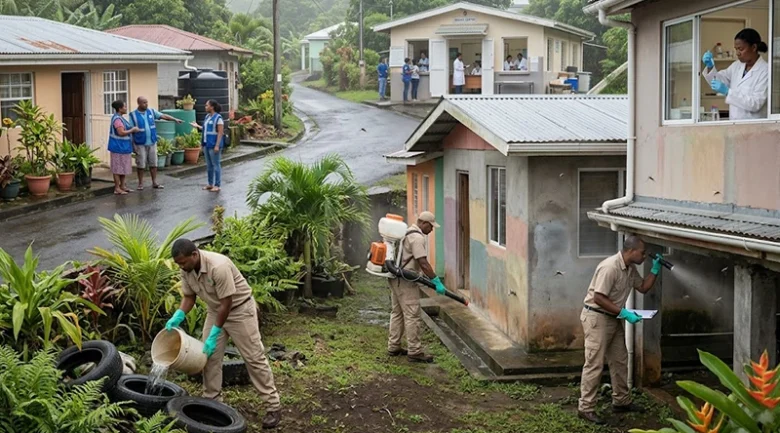
The front line of the emergency response is managed by the Environmental Health Unit. When the plan is activated, focal spraying and fogging are intensified, but the primary focus is on Source Reduction:
- The Drum Cover Project: A strategic initiative where the government distributes specialised mesh covers for the 55-gallon drums commonly used for water storage in Dominica, neutralising the Aedes aegypti‘s favourite breeding ground.
- Ports of Entry Surveillance: Under the 2026 protocols, vector surveillance is heightened at the Douglas-Charles Airport, the Canefield Airport, and the Roseau Ferry Terminal, to prevent the introduction of new viral serotypes from neighbouring islands.
Clinical Management and the Diagnostic Chain
With the passage of the Medical Profession Bill 2026, the emergency plan now mandates strict adherence to updated PAHO/WHO clinical guidelines:
- Risk Stratification: Clinicians are trained to use Dengue Corners in health centres to rapidly triage patients into three categories: Group A (home care), Group B (hospital referral with warning signs), and Group C (emergency ICU admission for Dengue Shock Syndrome).
- Molecular Accuracy: The Medical Laboratories Act 2024 requires the laboratory at the Dominica China Friendship Hospital (DCFH) uses real-time PCR to confirm serotypes (DENV-1 through DENV-4) within 24 hours, allowing the Ministry to track which strain is driving the outbreak.
Epidemiological Surveillance & GIS Mapping
The current version of the plan utilises the DHIS2 (District Health Information Software 2) to create real-time heat maps of infections.
- Hotspot Identification: When a cluster of cases is identified in a specific village (e.g., Mahaut or Marigot), the plan triggers a “Rapid Response Team” to that area within 48 hours for intensive community intervention.
Social Mobilization: The 10-Minute Weekly
The plan relies heavily on the National Cleanup Campaign. During an emergency phase, the government coordinates with local Village Councils to facilitate the removal of “white goods” (old appliances) and tires that collect rainwater. The “10-Minute Weekly” campaign encourages every Dominican household to spend ten minutes every Sunday emptying stagnant water containers, turning public health into a collective civic duty.


