




Ports of Entry
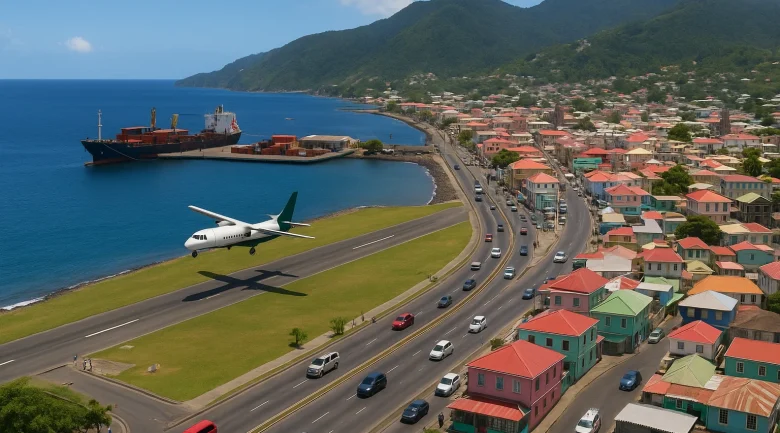
Dominica’s Ports of Entry serve as lifelines of connectivity for cargo, tourism, aviation, and maritime connectivity. Managed primarily by the Dominica Air and Sea Ports Authority (DASPA), these facilities serve as hubs for imports and exports, cruise and ferry operations, international air travel, and border security. They are central to Dominica’s economy, security framework, and engagement with the wider Caribbean region.
Dominica’s Key Ports of Entry
Dominica’s ports serve roles far wider than transport alone, fueling economic growth, supporting tourism, managing customs and immigration, and supplying the infrastructure needed for trade, national security, and regional cooperation.
- Woodbridge Bay Deep Water Harbour (Fond Cole, near Roseau, UN/LOCODE DM RSU): Serves as the main cargo port and deep-water facility accommodating large vessels, including container ships and cruise liners.
- Roseau Ferry Terminal at the Bayfront in Roseau: Provides scheduled ferry links between Dominica and Guadeloupe/Martinique, handling passenger traffic and contributing to both tourism and regional connectivity.
- Anse du Mai Port: Serves Dominica’s northeast coast, accommodates small fishing vessels and regional traffic, providing maritime connections with nearby Guadeloupe and surrounding islands.
- Portsmouth Port (Longhouse Jetty, UN/LOCODE DM POR): A smaller port that historically handled agricultural exports (e.g., bananas) and serves some cargo and ferry operations.
- Cabrits Cruise Ship Berth: Located adjacent to the Cabrits National Park in Portsmouth, Dominica’s northern cruise facility, designed exclusively for cruise vessels and passenger services.
- Airports as Ports of Entry:
- Douglas‑Charles Airport (DOM) in Marigot – the island’s main international airport.
- Canefield Airport (DCF) in Canefield – handles regional and charter flights.
Functions & Significance
Dominica’s ports serve roles far wider than transport alone, fueling economic growth, supporting tourism, managing customs and immigration, and supplying the infrastructure needed for trade, national security, and regional cooperation.
- Facilitating international trade and supply chains, with Woodbridge Bay acting as the primary cargo hub and Roseau supporting significant import/export volumes.
- Serving as tourism gateways, especially via cruise terminals at Roseau and Cabrits, cementing Dominica’s strategy as the “Nature Island”.
- Acting as monitoring and enforcement checkpoints for customs, immigration, anti-smuggling and maritime security operations.
- Supporting the regional connectivity of the Eastern Caribbean through ferry services (e.g., links to Guadeloupe and Martinique).
Challenges & Operational Considerations
Challenges and operational considerations for Dominica’s ports of entry include infrastructure resilience, hurricane vulnerability, limited cargo and cruise capacity, and evolving security needs, all of which require ongoing investment, technological upgrades, and coordinated management to safeguard national development.
- Infrastructure Resilience: Dominica’s ports face hurricane risk, mountainous terrain and coastal erosion, which affect accessibility and resilience.
- Capacity for Large Vessels: While Woodbridge Bay is deep-water, smaller ports may have limited capacity for larger container carriers or require tendering for cruise ships.
- Customs & Security Remit: As ports of entry, there is a heightened need for integrated customs, immigration, quarantine, and security controls to monitor cargo, passengers and potential illicit flows.
- Balance of Cargo and Tourism: With growth in cruise tourism, port terminals must balance large passenger flows with commercial cargo operations, ensuring both remain efficient and secure.
Future Considerations
Investments in port scanners and surveillance systems are being pursued to improve security, particularly against firearms trafficking and the narcotics trade. Balancing rising cruise ship arrivals with cargo traffic remains another operational priority. Enhancing resilience, expanding infrastructure, and streamlining procedures will determine how effectively Dominica’s ports of entry can support national development and regional integration in the future.


