




Dual Citizenship
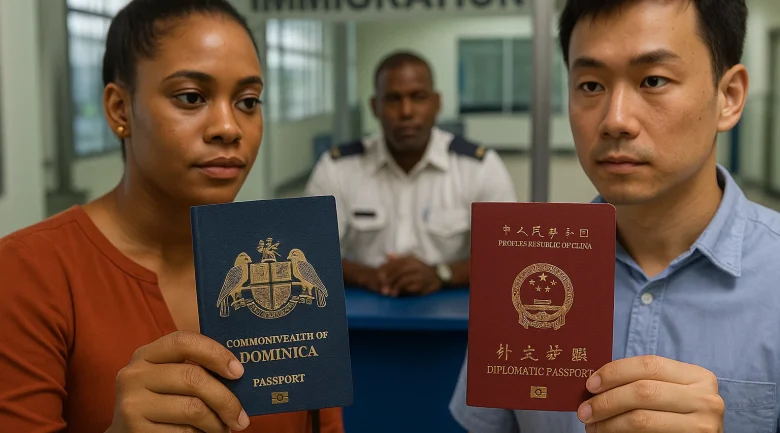
Dual Citizenship in Dominica refers to the legal status of an individual who holds citizenship of Dominica concurrently with that of another sovereign state. Since its independence in 1978, Dominica has maintained a legal framework that recognizes and permits multiple nationalities without requiring the renunciation of prior affiliations.
Summary of Dual Citizenship Eligibility in Dominica
The following table outlines the various legal pathways for acquiring Dominican citizenship and the corresponding status regarding dual nationality as defined by the Commonwealth of Dominica Citizenship Act.
| Acquisition Pathway | Eligibility Criteria | Dual Status Allowed? | Residency Requirement |
| Birth (Jus Soli) | Born in Dominica after Nov 3, 1978 | Yes | None |
| Descent (Jus Sanguinis) | Born abroad to at least one Dominican parent | Yes | None |
| Marriage | Married to a citizen for 3+ years | Yes | 3 years in Dominica |
| Naturalization | Lawful residency for 7+ years | Yes | 7 years in Dominica |
| Investment (CBI) | Minimum US$200,000 contribution/investment | Yes | None |
Legal Basis and Historical Context
The foundation for Dominican nationality is established in Chapter VII of the Constitution of Dominica (1978). While many Commonwealth nations initially restricted dual nationality at the time of independence, Dominica moved toward full recognition through the Dominica Modification of Enactments Order 1978.
The primary statutes governing these provisions include:
- The Constitution of Dominica (Sections 97–101): Defines the categories of persons who automatically become citizens or are eligible for registration.
- The Commonwealth of Dominica Citizenship Act (Chapter 1:10): Provides the administrative framework for the acquisition, renunciation, and deprivation of citizenship.
Unlike some jurisdictions that only allow dual citizenship for those who acquire it by birth, Dominican law makes no distinction in the “quality” of citizenship based on how it was acquired.
Acquisition of Dual Status
Dominica recognises dual citizenship across all standard naturalisation and registration pathways.
1. By Birth (Jus Soli)
Every person born in Dominica on or after November 3, 1978, is a citizen at birth, regardless of the parents’ nationality (with exceptions for children of diplomats or enemy aliens during wartime). These individuals may acquire other citizenships by descent or naturalization abroad without losing their Dominican status.
2. By Descent (Jus Sanguinis)
A person born outside of Dominica is a citizen if, at the date of their birth, at least one parent is a citizen of Dominica. There is no legal requirement for such individuals to choose between their Dominican nationality and the nationality of their birth country upon reaching the age of majority.
3. By Marriage
A person who marries a citizen of Dominica is eligible to be registered as a citizen after three years of marriage and residency. The applicant is not required to renounce their original nationality to complete this process.
4. By Naturalization and Investment
Foreign nationals may seek naturalization through standard residency (typically seven years) or through the Citizenship by Investment (CBI) program established in 1993. Under Section 101 of the Constitution and the Citizenship Act, naturalized citizens enjoy the same right to hold dual nationality as those born in the territory.
Rights and Obligations
Dual citizens in Dominica hold the same fundamental rights as mono-citizens, including:
- Travel: The right to hold a Dominican passport and the right of abode (freedom to enter and remain in the country indefinitely).
- Economic Rights: The right to work, own land (subject to the Alien Landholding License for non-citizens, though dual citizens are exempt), and access social services.
- Regional Movement: Access to CARICOM privileges, including the Caribbean Single Market and Economy (CSME) for qualifying professionals.
Limitations and Restrictions
While dual citizenship is broadly permitted, the law imposes specific restrictions concerning the exercise of political power and senior governance.
Public Office and Parliament
Under the Dominica’s Constitution of Dominica, certain restrictions apply to dual citizens regarding the House of Assembly:
- Disqualification: Section 32(1)(a) states that no person shall be qualified to be elected as a Representative or appointed as a Senator if they are “by virtue of his own act, under any acknowledgement of allegiance, obedience or adherence to a foreign power or state.”
- Legal Precedent: This provision has historically been interpreted to mean that individuals holding a second citizenship acquired through a voluntary act (such as naturalization in another country) may be disqualified from sitting in Parliament unless they renounce that foreign citizenship.
Senior Public Service
Specific high-level security or diplomatic posts may require “exclusive” loyalty, meaning that while a dual citizen is not legally barred from the public service, they may be restricted from specific sensitive roles involving national security or foreign representation where a conflict of interest could arise.
Residency and Passport Maintenance
Dominica does not require dual citizens to reside in the country to maintain their citizenship. However, practical implications exist for specific civic actions:
- Voting: To vote in Dominican general elections, a citizen must be registered on the electoral list, which typically requires a period of residency in a specific constituency.
- Passports: Dual citizens are issued the standard CARICOM-Dominica biometric passport. There is no requirement to declare the second passport to the Dominican immigration authorities. However, it must be used for entry and exit if the individual wishes to be treated as a citizen at the border.
Renunciation and Deprivation
Dominican law allows voluntary renunciation of citizenship for individuals who hold another nationality, thereby preventing statelessness. Conversely, the government retains the power to deprive a naturalized citizen of their status if it was obtained through fraud, false representation, or if the individual is convicted of treason or specific acts of disloyalty.


