



Tetanus in Dominica
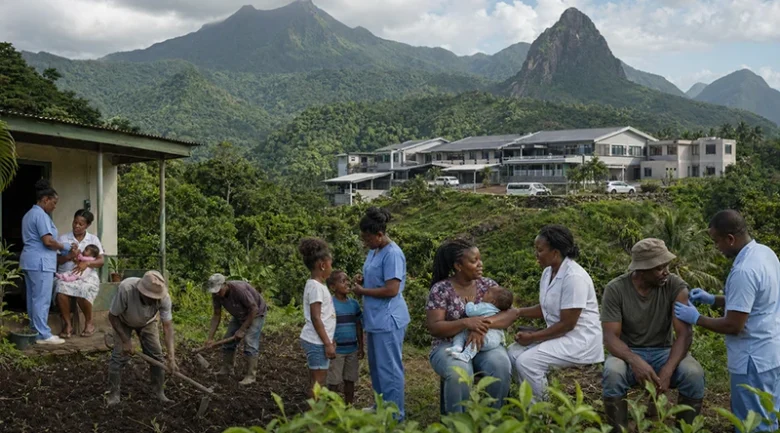
Tetanus is a serious, neurological non-communicable disease caused by the spore-forming bacterium Clostridium tetani. The condition manifests through severe, involuntary muscle spasms and autonomic nervous system instability, historically referred to as “lockjaw.” Within the Commonwealth of Dominica, tetanus is classified as a vaccine-preventable disease subject to statutory epidemiological monitoring. Because the causative organism persists indefinitely in environmental reservoirs such as soil, dust, and animal manure, eliminating the disease relies entirely on maintaining high population immunity through the national immunisation framework. Management of the illness is fully integrated into Dominica’s primary healthcare structure and centralised emergency interventions at the primary referral facility.
To understand why Tetanus remains a priority in the mid-2020s, one must examine the intersection of Dominica’s heavy rainfall cycles, which constantly turn over the topsoil, and a history of manual labour that exposed the population to lockjaw through minor, often unnoticed injuries.
The Biological Adversary: Clostridium tetani in the Tropics
Tetanus is caused by the obligate anaerobic, Gram-positive, spore-forming bacterium Clostridium tetani. In the context of Dominica’s high-humidity and frequent landslide activity, these spores are exceptionally resilient. They can survive for years in the soil, resistant to heat, desiccation, and most common disinfectants.
The Pathophysiology of the “Iron Grip”
When spores enter a wound, particularly a puncture wound contaminated with soil, manure, or rusted metal, the anaerobic conditions allow them to germinate. The bacteria release tetanospasmin, a potent neurotoxin that blocks the release of inhibitory neurotransmitters (GABA and glycine) in the central nervous system.
- Clinical Manifestation: This leads to unopposed muscle contraction, resulting in risus sardonicus (a characteristic grimace) and opisthotonus (arched-back spasms).
- The Lockjaw Factor: The masseter muscles are often affected first, preventing the patient from opening their mouth, a condition that was a frequent cause of death in rural Dominica before the 1960s.
Historical Burden and Umbilical Tetanus
In the early 20th century, Tetanus was a significant contributor to both infant and adult mortality on the island. The history of the disease in Dominica can be divided into three distinct eras.
The Era of Neonatal Vulnerability (1900–1950)
Before the professionalisation of the District Nursing Service, many births in rural Dominica were attended by traditional birth attendants or family members. Neonatal Tetanus, often called the seventh-day death, occurred when the umbilical cord was cut with unsterile instruments or dressed with contaminated substances (sometimes soot or earth).
- The Impact: Historical records from the Roseau Infirmary suggest that in the 1930s, neonatal tetanus accounted for a significant percentage of infant deaths in the first two weeks of life.
The Agricultural Expansion (1950–1980)
As Dominica entered the Banana Era, exposure among the adult male population increased. Working in the muddy conditions of the interior, farmers frequently suffered machete cuts or stepped on nails. Without the protection of the Tetanus Toxoid (TT), these minor injuries often progressed to full-blown clinical tetanus.
The Immunization Turning Point (1977–Present)
The launch of the Expanded Programme on Immunisation (EPI) in 1977 marked the end of Tetanus as a common cause of death. By mandating the Tetanus vaccine as part of the primary pediatric series and emphasising the vaccination of pregnant women, Dominica achieved Maternal and Neonatal Tetanus Elimination (MNTE) status, a milestone that was rigorously protected.
Institutional Architects: The Collaborative Shield
The eradication of Tetanus as a public health threat in Dominica is not the result of a single agency, but a multilateral shield of organisations that have provided the technology, funding, and clinical standards over the last 50 years.
- The Pan American Health Organization (PAHO): Utilising the PAHO Revolving Fund for Access to Vaccines, PAHO guarantees Dominica prioritised access to stabilised, high-tier Tetanus-containing antigens, predominantly distributed via the pediatric Pentavalent series [PAHO/WHO]. This pooled procurement framework shields the domestic health system from international market and supply chain volatility.
UNICEF: During the foundational expansions of the 1980s and 1990s, UNICEF engineered the deployment of the national Cold Chain infrastructure. By supplying specialised refrigeration arrays and thermal transport systems, the agency ensured that the Tetanus toxoid maintained molecular potency across complex transit networks.
The Caribbean Public Health Agency (CARPHA): Functions as the overarching regional laboratory and epidemiological sentinel. The identification of any suspected clinical presentation of Tetanus triggers an immediate alert to CARPHA, which supplies specialised diagnostic confirmation and molecular tracking to isolate the Clostridium tetani neurotoxin.
The Ministry of Health, Wellness and Social Services: Operates as the domestic executive authority. Managed by the Epidemiology and Surveillance Unit alongside the Primary Care Nursing Division, the Ministry directs the continuous training of localised District Health Visitors in active wound management, post-exposure prophylaxis, and digitised tracking.
IV. The Strategic Pillars of the EPI
The Expanded Programme on Immunisation (EPI) in Dominica is built on six strategic antigens, each serving a specific role in the national health security framework.
- Tuberculosis (BCG): Administered at birth, the BCG vaccine remains critical in Dominica to prevent severe childhood TB, especially given the island’s high-humidity environments that historically favoured the spread of respiratory pathogens.
- Diphtheria: Once a major cause of pediatric airway obstruction in Roseau, this bacterial toxin is now no longer a threat to the respiratory health of Dominican youth, thanks to vaccine-induced immunity.
- Pertussis: Locally known as ‘Whooping Cough’, this respiratory threat was historically devastating; immunization now prevents the violent coughing fits that previously led to high rates of infant morbidity and exhaustion.
- Tetanus: Critical for an agrarian society, this vaccine provides long-lasting antitoxin levels that protect citizens from soil-borne bacteria during farming, construction, or following the environmental disturbances of tropical storms.
- Poliomyelitis: After the 1950s outbreaks, Dominica achieved a polio-free status that is rigorously maintained today through the transition from oral drops to the highly stable, inactivated injections integrated into the Hexavalent series.
- Measles: Since 1991, Dominica has successfully prevented the transmission of this highly contagious virus by using the MMR vaccine, which prevents the severe rashes, high fevers, and neurological complications of the past.
Vaccine Evolution: From Toxoid to Hexavalent Precision
The pharmacological deployment of the Tetanus vaccine within Dominica’s public health sector has transitioned from early monovalent formulations to the highly purified, multi-antigen combination series utilized to secure contemporary population immunity.
The TT (Tetanus Toxoid) Era
For multiple decades of development, the monovalent Tetanus Toxoid (TT) vaccine served as the primary clinical standard for post-exposure prophylaxis, adult boosters, and maternal immunisation. The formulation comprised the chemically inactivated exotoxin of Clostridium tetani. While immunologically effective at generating specific antitoxin antibodies, it required tight booster intervals and lacked multiplex coverage against intersecting bacterial pathogens.
The Consolidated Pentavalent Infrastructure
To streamline clinical delivery and maximise paediatric immunisation density, Dominica restructured its infant schedule by implementing the integrated Pentavalent vaccine. Distributed through decentralised primary care centres under the oversight of the Ministry of Health, Wellness and Social Services, this 5-in-1 formulation provides protection against Tetanus, Diphtheria, Pertussis, Hepatitis B, and Haemophilus influenzae type b (Hib).
- The Pediatric Protocol: Infants receive the primary Pentavalent series at 2, 4, and 6 months of age. This intensive scheduling guarantees that before pediatric cohorts interact with rural or agricultural topsoils, they exhibit an optimised antitoxin titer.
Specialized Adult Booster (Tdap) Interventions
For adolescent and adult cohorts, the Ministry has transitioned its booster framework to the advanced Tdap formulation (Tetanus, Diphtheria, and acellular Pertussis). This clinical intervention is vital, as it ensures personal immunity to lockjaw while simultaneously establishing a transmission firewall, preventing adults from inadvertently passing whooping cough (Bordetella pertussis) to unvaccinated neonates.
Post-Disaster Vigilance: The Storm-Soil Protocol
Dominica’s status as a high-risk hurricane zone directly impacts tetanus epidemiology. Hurricanes like Maria (2017) and Erika (2015) caused massive soil displacement and forced thousands of people into cleanup activities involving debris, rusted galvanised roofing, and mud.
The Storm-Soil Protocol
To mitigate the threat of neurotoxic infection in the immediate aftermath of a natural disaster, the Ministry of Health, Wellness and Social Services activates the specialised Storm-Soil Protocol. Coordinated jointly by the Epidemiology and Surveillance Unit and the Primary Care Nursing Division, this emergency framework utilises three distinct operational axes:
- Decentralised Mobile Prophylaxis Deployment: Specialised mobile clinical teams are dispatched directly to regional shelter hubs and active debris-clearing zones to administer targeted Tdap booster therapies to high-risk cleanup personnel and displaced families.
- Geospatial Registry Triage: Leveraging the centralised DHIS2 health information database, epidemiologists execute rapid data queries to identify individuals in high-impact disaster zones whose immunisation records indicate a booster lapse of more than 5 years. Automated SMS notifications are subsequently sent to their mobile devices, directing them to the nearest functional field clinic.
- Strategic Passive Immunisation Reserves: The Dominica China Friendship Hospital (DCFH) maintains a protected emergency stockpile of Tetanus Immune Globulin (TIG). This passive antibody therapy is reserved for immediate administration to unimmunized or severely compromised individuals presenting with deep, soil-contaminated puncture wounds, providing immediate systemic protection before the exotoxin can bind to central nervous tissue.
Data Synthesis and Epidemiological Trends
As of mid-2026, Tetanus remains a “Zero-Event” surveillance target for the Ministry of Health, Wellness and Social Services. The integration of centralised digital tracking infrastructures has enabled real-time, granular analysis of population immunity decay across distinct demographic sectors.
| Demographic | 2026 Coverage Rate | Surveillance Target |
|---|---|---|
| Infants (Primary Pentavalent Series) | 92% | 95% |
| Pregnant Women (Maternal Tdap) | 98% | 100% |
| Agricultural Workers (Occupational Booster) | 74% | 85% |
| Neonatal Tetanus Incidence | 0.0 per 1,000 | 0.0 (Certified Eliminated) |
Immunological Deficits Within the Geriatric Cohort
Recent data queries executed within the national integrated health database indicate that the primary vulnerability to Clostridium tetani transmission now lies among the demographic cohort aged 65 and older. A significant percentage of these geriatric individuals secured primary childhood immunity but have failed to receive an auxiliary toxoid booster within a three-decade window.
To address this localized pocket of vulnerability, the Primary Care Nursing Division has launched a targeted Healthy Aging Campaign. This clinical intervention integrates routine Tdap boosters directly into the annual senior wellness health audits executed by District Health Teams across the seven medical zones. By transforming senior care into an active window for immunological verification, the state systematically closes this epidemiological gap without expanding external infrastructure overhead.
From Lockjaw to Sovereignty: The Green Firewall
The sustained elimination of tetanus within the Commonwealth of Dominica provides a definitive illustration of how structural clinical discipline, when integrated with digital infrastructure, can neutralize an environmental pathogen. By transitioning from a reactive post-injury intervention model to a proactive, comprehensive “Life-Course” immunization strategy, the state has effectively severed the transmission linkage between its fertile volcanic soils and the clinical manifestations of the Clostridium tetani neurotoxin. The deployment of the centralized health information network guarantees that population immunity remains uniform across both the remote geographic interior and urban commercial corridors, systematically eliminating coverage gaps within the national defensive firewall.
As Dominica advances along its institutional path toward becoming a climate-resilient state, its capacity to maintain a certified zero-incidence status for both maternal and neonatal tetanus serves as a regional benchmark for the Eastern Caribbean. This system of population insulation, built on the historical foundation of the 1977 EPI and optimised by the technological digital expansions of the 2020s, serves as a permanent epidemiological sentinel. It ensures that historical public health progress is never compromised by the volatile environmental realities of the tropical landscape. Ultimately, the Commonwealth’s transition from endemic lockjaw vulnerabilities to full health data sovereignty demonstrates that small-island public health is most effectively insulated through the systematic application of data science, medical quality control, and decentralised community care.


