


Smart Hospitals Initiative in Dominica
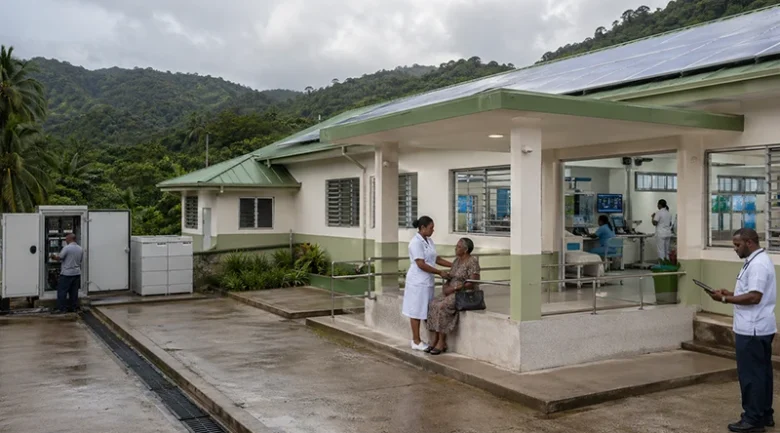
The Smart Hospitals Initiative in the Commonwealth of Dominica represents a fundamental shift from the 20th-century bricks-and-mortar approach to a high-tech, climate-resilient, digitally integrated ecosystem of care. In the wake of Hurricane Maria in 2017, which crippled the island’s health infrastructure, Dominica realised that a hospital could no longer just be a building where sick people go; it had to be a living entity capable of surviving a Category 5 hurricane, generating its own power, and processing data with surgical precision.
This initiative, spearheaded by the Ministry of Health and supported by the Pan American Health Organization (PAHO) and the United Kingdom’s Foreign, Commonwealth & Development Office (FCDO), is built on two inseparable pillars: “Safe” (disaster resilience) and “Green” (environmental sustainability).
The Core Philosophy: Safe and Green
A Smart hospital is defined by its ability to remain operational during a catastrophe while minimising its carbon footprint. The initiative uses the PAHO Smart Hospitals Toolkit to evaluate and upgrade existing structures.
The Safe Pillar (Resilience)
In Dominica, Safe”means the ability to withstand wind speeds exceeding 160 mph and seismic activities.
- Structural Hardening: Reinforcing roofs, windows, and foundations of primary health centers.
- Functional Redundancy: Ensuring that even if the national grid fails, the hospital’s critical systems, —operating theaters, ICU monitors, and cold-chain storage, remain powered by independent, redundant systems.
The Green Pillar (Sustainability)
Dominica’s goal of becoming the world’s first climate-resilient nation is reflected in the hospital’s energy consumption.
- Energy Efficiency: Transitioning to 100% LED lighting and high-efficiency HVAC (Heating, Ventilation, and Air Conditioning) systems that use variable refrigerant flow (VRF) technology to reduce power draw.
- Renewable Integration: The widespread installation of solar photovoltaic (PV) arrays on hospital rooftops, coupled with battery energy storage systems (BESS).
- Water Autonomy: Large-scale rainwater harvesting and filtration systems that allow the hospital to operate for days without a municipal water supply.
The Flagship: Dominica China Friendship Hospital (DCFH)
The Dominica China Friendship Hospital (DCFH) is the brain of the Smart Hospitals Initiative. It is not merely a replacement for the old Princess Margaret Hospital; it is a tertiary-level facility designed to be the nexus of the island’s digital health strategy.
Digital Health Records and DHIS2
The days of paper charts being lost during transfers are fading. The DCFH is integrating a robust Electronic Health Record (EHR) system.
- Real-Time Data: Using the DHIS2 (District Health Information Software 2), patient data is no longer siloed. A doctor in the Grand Bay Health District can input a patient’s vital signs into a tablet, and if that patient is referred to the DCFH, the specialists there can access the history instantly.
- Interoperability: The system is designed to handle the complexity of the “Patient Journey,” from initial diagnosis in a rural clinic to high-acuity care in the ICU.
Telemedicine and the Tele-ICU
Dominica is leveraging its high-speed fiber-optic network to bridge the gap between rural and urban care.
- Specialist Consultation: Through high-definition video links, a nurse in a remote village like Capuchin can consult with an oncologist or cardiologist at the DCFH in real-time.
- The Global Link: The Smart Initiative allows Dominican doctors to share diagnostic images (MRIs, CT scans) with experts in the wider Caribbean or North America for second opinions, effectively expanding the island’s medical expertise without requiring patients to travel abroad.
The Technology Stack: AI and Diagnostics
The “Smart” label extends into the laboratory and imaging departments. Modern diagnostics in Dominica now rely on the synergy of hardware and artificial intelligence.
AI-Enhanced Imaging
At the DCFH, new CT and MRI units are equipped with AI algorithms that assist radiologists.
- Rapid Triage: In cases of suspected stroke, the software can flag abnormalities in brain scans within seconds, prioritizing those cases for immediate intervention.
- Precision Oncology: AI helps in the early detection of tumors, allowing for more targeted chemotherapy and radiation protocols.
Smart Laboratory Systems
Under the initiative, the National Laboratory has moved toward automated track systems. These systems reduce human error in sample handling and use barcode tracking to ensure that the chain of custody for a blood sample is never broken, a critical requirement for maintaining international accreditation.
Disaster Mode: The Hospital as a Fortress
One of the most innovative features of the Smart Hospitals Initiative is “Disaster Flexing.” When the National Emergency Planning Organization (NEPO) declares a hurricane warning, the hospitals enter a pre-programmed “Survival Mode.”
- Vertical Hardening: Critical equipment is moved to reinforced upper floors or specialized Safe Zones within the building.
- Resource Rationing: Smart sensors automatically shut down non-essential power loads (like administrative offices) to preserve battery life for life-support systems.
- Oxygen Autonomy: The DCFH features an on-site Oxygen Generation Plant. Instead of relying on imported cylinders that might be delayed by storm-lashed seas, the hospital generates its own medical-grade oxygen from the atmosphere.
The Software of Care: Legislative Support
A Smart Hospital is only as effective as the legal framework that governs it. In the latter stages of the initiative, the government passed two critical pieces of legislation to ensure the system’s integrity.
Medical Laboratories Act 2024
The Medical Laboratories Act 2024 ensures that the high-tech diagnostic equipment in Smart Hospitals is calibrated and operated by licensed professionals. It mandates ISO 15189 standards, ensuring that Smart also means Accurate. If a digital diagnostic tool produces a result, this law ensures that the result is legally and clinically valid across the entire OECS region.
Medical Profession Bill 2026
Recently passed, the Medical Profession Bill 2026 modernises the oversight of medical practitioners in the digital age.
- Telehealth Regulation: It provides the legal guidelines for telemedicine, ensuring patient privacy and defining the liability of doctors practicing via digital links.
- Data Security: The bill includes provisions for Cybersecurity, recognizing that in a Smart Hospital, a data breach is as dangerous as a power failure. It mandates that patient EHRs are protected by military-grade encryption.
Future Horizons: The 2030 Vision
As Dominica pushes toward the end of the decade, the Smart Hospitals Initiative is set to expand into the Internet of Medical Things (IoMT).
- Wearable Integration: Imagine a patient with chronic hypertension in Castle Bruce wearing a Smart Patch that sends their blood pressure data directly to the DCFH. If the pressure spikes to dangerous levels, the hospital’s AI triggers an automatic alert to the district nurse.
- Green Hydrogen: Looking beyond solar, Dominica is exploring using its geothermal resources to produce Green Hydrogen as a backup fuel for hospitals, potentially making them the first carbon-negative medical facilities.
Summary of the Smart Hospitals Initiative
| Feature | Traditional Hospital | Smart Hospital (Dominica Today) |
| Energy | Grid-Dependent (Vulnerable) | Solar + Battery (Resilient/Green) |
| Records | Paper-Based (Siloed) | EHR & DHIS2 (Integrated) |
| Diagnostics | Manual/Analogue | AI-Assisted/Digital |
| Connectivity | Localized | Telemedicine/Global Consultation |
| Disaster Strategy | Evacuation-Focused | “Hardened” Shelter-in-Place |
| Legislation | Outdated (Pre-Digital) | 2024 Lab Act / 2026 Medical Bill |
More Than Just Technology
The Smart Hospitals Initiative is not just about expensive machines or shiny solar panels; it is about Dignity and Survival. By investing in these advanced systems, Dominica is telling its citizens, and the world, that being a small island is not a barrier to world-class healthcare.
Through the synergy of the 2024 and 2026 legislative reforms, the physical resilience of the DCFH, and the Green spirit of the Nature Island, Dominica has built a healthcare shield that is ready for the future. In this new era, the hospital is no longer a passive witness to disaster; it is an active, intelligent, and unshakeable guardian of the public health system.


