


Cholera in Dominica
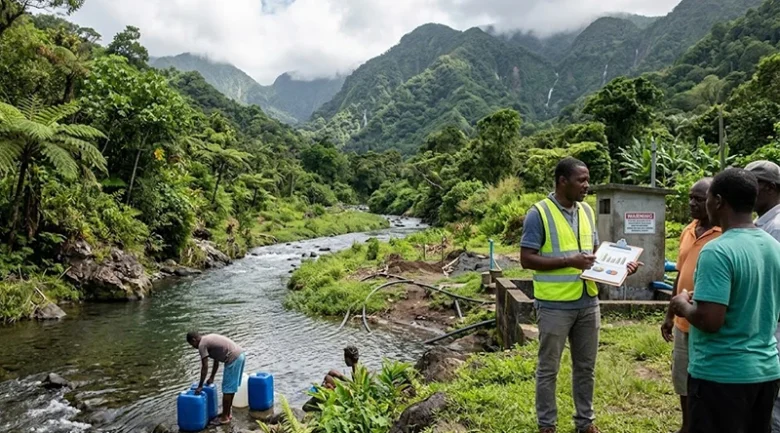
Cholera is an epidemiological predator that thrives on the collapse of infrastructure. It is a disease of brutal efficiency, capable of reducing a healthy adult to a state of hypovolemic shock and death within hours through a massive, painless purging of the gastrointestinal tract. While the Commonwealth of Dominica currently stands as a cholera-free territory, the island’s hydrologic profile, defined by its 365 rivers, makes it a high-stakes environment where the line between life-giving water and biological vector is razor-thin.
The Biological Aggressor: Vibrio cholerae
The threat today is driven by the O1 and O139 serogroups of the bacterium. Unlike other pathogens that slowly invade the host, Vibrio cholerae acts via a potent enterotoxin that binds to the lining of the small intestine. This triggers an immediate, massive outflow of electrolytes and water, resulting in the signature rice-water stools.
In Dominica’s modern clinical setting, the focus has shifted from mere containment to hyper-vigilance. Because the bacterium can survive in brackish water and estuaries, the island’s coastal communities are considered sentinel sites where any spike in acute watery diarrhoea triggers an immediate national alert.
A History of Proximity and Prevention
Dominica’s relationship with cholera is one of successful exclusion through geographic and clinical rigor.
- The 19th Century Pandemics: While the 1854 Caribbean cholera outbreak devastated neighboring islands like Jamaica and Barbados (killing tens of thousands), Dominica’s volcanic isolation and steep terrain provided a natural barrier to the fecal-oral transmission routes that thrived in flatter, more densely populated colonies.
- The 2017 Vulnerability: Following Hurricane Maria, the island faced its most significant modern risk. With 100% of the water system compromised, the ecological stage was set for an outbreak. The prevention of cholera during this period remains one of the greatest triumphs of the Dominican primary healthcare system, achieved through the mass distribution of chlorine and the Boil Water mandates that saved the nation from a secondary disaster.
Current Diagnostic and Legislative Armor
The defense against cholera is no longer just about buckets of bleach; it is built on a foundation of molecular diagnostics and legislative reform.
- The Medical Laboratories Act 2024: This ensures that the laboratory at the Dominica China Friendship Hospital (DCFH) maintains ISO 15189 standards. Any suspected Vibrio sample is processed with international-grade precision, ensuring no false negatives allow a cluster to grow into an epidemic.
- The Medical Profession Bill 2026: This recently passed act mandates that every clinician—whether in a remote village in the Kalinago Territory or at the DCFH- must report a suspected case of cholera within 2 hours. In the world of Vibrio, 24 hours is the difference between a single patient and a hundred.
The Future: Climate-Resilient Sanitation
Looking toward 2030, the Ministry of Health is focusing on Hydro-Resilience. As climate change increases the frequency of flash flooding, the risk of backflow in sanitation systems rises.
- Smart Monitoring: Future goals include the placement of biosensors in major river estuaries to detect shifts in bacterial loads before they reach human populations.
- Regional Synergy: Dominica remains a key player in the CARPHA (Caribbean Public Health Agency) surveillance network, ensuring that an outbreak anywhere in the OECS triggers a shield-up response in Roseau.
Summary of Dominica’s Cholera Defense
| Feature | Historical Status | Current Status (Today) |
| Transmission | Waterborne/Environmental | Controlled via Chlorination (DOWASCO) |
| Primary Treatment | Basic Hydration | Aggressive ORT & ICU Stabilisation |
| Detection Speed | Days/Weeks (Culture) | Hours (PCR/GeneXpert) |
| Legislation | Outdated Public Health Acts | 2024 Lab Act / 2026 Medical Bill |
| Prevention | Boil Water Alerts | Climate-Resilient Infrastructure |
