

National Resilience Development Strategy 2030 (NRDS)
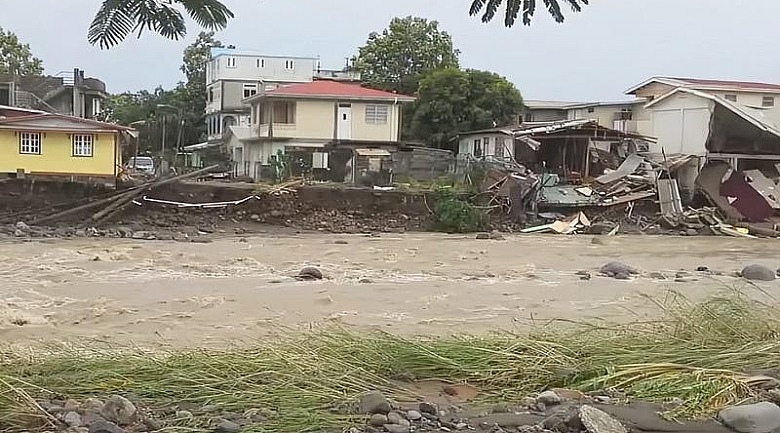
The National Resilience Development Strategy 2030 (NRDS) is a crucial policy framework developed by the Commonwealth of Dominica to guide its transformation into the world’s first climate-resilient nation. It was created to address the growing threats of climate change and natural disasters like Hurricane Maria and align with the country’s broader sustainable development goals by 2030.
Drafted in the immediate, sobering aftermath of the 2017 hurricane season, which resulted in damages and losses equating to an unprecedented 226% of the nation’s Gross Domestic Product (GDP), the NRDS represents a fundamental paradigm shift in national planning. It moves the country away from the reactive cycle of disaster and recovery, and establishes a proactive, legally codified mandate for total systemic resilience. The strategy articulates the overall policy framework of the Government of Dominica, outlining 43 specific resilience goals to ensure that national development is intrinsically linked to disaster risk reduction, environmental sustainability, and people-centred economic empowerment.
The NRDS functions as the supreme developmental constitution of the Nature Island. Every infrastructural project, economic initiative, and social program must be vetted through the lens of this strategy.
The Core Architecture and The Three Central Pillars
The NRDS is not a standalone document; it is the philosophical and strategic parent to the operational Climate Resilience and Recovery Plan (CRRP) 2020-2030. While the NRDS sets the broad macroeconomic and developmental ambitions, the CRRP translates these into actionable targets.
The NRDS is structured around three central pillars: Environmental Protection, Economic Transformation, and Social Development. These pillars highlight the importance of creating a disaster-resilient economy and society. In the environmental sector, the strategy promotes protecting and rehabilitating natural ecosystems, such as rainforests and water catchment areas. Economic initiatives focus on reducing dependence on vulnerable industries by diversifying into resilient sectors like the blue economy, eco-tourism, and renewable energy.
Under the operational framework of the CRRP, these concepts are further expanded into three fundamental systemic pillars:
1. Climate Resilient Systems
This pillar addresses the nation’s software. It covers a wide range of systems, protocols, and bureaucratic processes that must possess the inherent capacity to adapt to and absorb the multidimensional impacts of climate change. This involves overhauling the public service in Dominica to ensure business continuity. It mandates the digitalisation of government records, the establishment of decentralised communication nodes, and the integration of advanced data-sharing protocols. A resilient system is one where the failure of a single node, such as a central government building in Roseau, does not cripple the administrative capacity of the entire state.
2. Prudent Disaster Risk Management Systems
This pillar focuses entirely on proactive risk mitigation. The strategy acknowledges that while hazards (like Category 5 hurricanes or volcanic activity) are inevitable, disasters are preventable through careful management. The NRDS mandates comprehensive Risk and Vulnerability Assessments (RVA) and Disaster Management Analyses (DMA) across all sectors. This pillar empowers the Office of Disaster Management (ODM) to upgrade Early Warning Systems (EWS), deploy hydro-meteorological networks across the island’s 365 rivers, and enforce strict land-use zoning that prevents human settlement in recognised flood plains and lahar (volcanic mudflow) pathways.
3. Effective Disaster Response and Recovery
The final foundational pillar speaks to the immediate post-disaster phase. The objective here is to minimise the period of national paralysis. It requires prepositioning humanitarian logistics, strengthening maritime and land transportation corridors for relief supplies, and establishing robust, community-level Disaster Management Committees. The NRDS aims to reduce pain and recovery time by ensuring that critical infrastructure, such as hospitals, ports, and primary arterial roads, can be operational within days, not months, following a catastrophic event.
Resilience Goals and Macroeconomic Targets
To ensure that the NRDS is measurable and accountable, the Government of Dominica established highly specific, quantifiable targets across all major sectors of the Dominica economy. These targets form the ultimate scorecard for the nation’s progress toward 2030.
Macroeconomic and Fiscal Stability
Before addressing physical infrastructure, the NRDS prioritises the state’s financial survival. Small Island Developing States (SIDs) are highly susceptible to the debt-disaster trap, borrowing heavily to rebuild, only to have the new infrastructure destroyed before the debt matures.
- Sustained Economic Growth: The NRDS targets a sustained, sustainable, and inclusive economic growth rate of a minimum of 5% annually.
- Employment: A critical social target is the reduction of the national unemployment rate to below 5%, and a drastic reduction in underemployment by 60%.
- Fiscal Buffers: Achieving macro and fiscal stability involves the creation of sovereign resilience funds. This ensures that the government maintains a vibrant financial sector capable of providing immediate post-disaster liquidity without resorting to emergency, high-interest international loans.
- Trade Balance: The strategy seeks a 50% reduction in the national trade imbalance by achieving a higher level of export mix and a 100% increase in overall exports, moving away from a purely import-dependent economic model.
Building Climate Resilience in Dominica through the CRRP
At the heart of the NRDS is Dominica’s vision of becoming the world’s first climate-resilient nation, a goal that aligns with the Climate Resilience and Recovery Plan (CRRP). By 2030, Dominica aims to ensure communities are better equipped to handle extreme weather events through improved infrastructure, disaster management systems, and sustainable economic practices.
The CRRP distills the ambitions of the NRDS into Six Results Areas:
- Strong Communities
- Robust Economy
- Well-planned and Durable Infrastructure
- Enhanced Collective Consciousness
- Strengthened Institutional Systems
- Protected and Sustainably Leveraged Natural and Other Unique Assets
Based on these results, the state is committed to achieving 20 precise Climate Resilience Targets by 2030, realised through over fifty planned and ongoing mega-initiatives.
Sectoral Transformation and Diversification
The NRDS also highlights economic diversification by promoting resilient sectors such as eco-tourism and modern agriculture. The strategy aims to increase Dominica’s GDP by improving sectors such as fisheries through sustainable practices and enhancing the blue economy.
Energy Independence and Security
One of the NRDS’s most aggressive targets is complete energy sovereignty. Relying on imported fossil fuels is both an economic drain (historically accounting for up to 19% of GDP) and a critical vulnerability during maritime supply chain disruptions.
- 100% Renewable Energy: The NRDS mandates transitioning to 100% renewable energy by 2030. The centrepiece of this transition is the Geothermal Power Plant in the Roseau Valley. Geothermal energy provides baseload power; unlike solar or wind, it is immune to weather conditions, making it the ultimate resilient energy source.
- National Grid Resilience: The strategy aims to reduce grid losses from natural disasters by 50% and unscheduled blackouts by 50%. To achieve this, the NRDS requires that 75% of all electrical distribution lines be placed underground, shielding them from hurricane-force winds.
- Rapid Restoration: A hard target is set for 100% of the island’s electricity to be fully restored within three months following a major disaster, a stark contrast to the nearly year-long blackouts experienced post-Maria.
Agricultural Modernization and Food Security
Food security is a cornerstone of national sovereignty. The NRDS radically re-envisions agriculture in Dominica, shifting it from traditional, highly vulnerable slope farming to technology-driven, climate-smart food production.
- Technological Integration: The strategy targets a massive increase in the number of greenhouses and farmers utilizing hydroponics and non-soil agricultural technologies. By moving crops into controlled environments, they are protected from torrential rains, wind damage, and soil-borne diseases.
- Organic Shift: There is a mandated push to increase the use of organic inputs and the number of Good Agricultural Practices (GAP)– certified farmers. This reduces the island’s reliance on imported chemical fertilisers, which are vulnerable to global supply chain shocks.
- Economic Targets for Agriculture: The NRDS aims to increase agriculture’s contribution to the GDP by 50% over a seven-year period, double the technology transfer from regional organizations, and ensure that agricultural losses during weather events are kept below 50%.
- Agro-Processing: To prevent post-harvest loss and create shelf-stable exports, the NRDS targets a 100% increase in export-driven agro-processing establishments. This adds value to raw commodities, turning vulnerable fresh produce into resilient, exportable goods.
Sustainable Tourism and the Blue Economy
The strategy explicitly rejects the mass-market, high-impact tourism models seen elsewhere in the Caribbean. Instead, it leverages Dominica’s pristine environment for high-value eco-tourism.
- GDP Contribution: The goal is to elevate tourism’s contribution to GDP to a stable 15%.
- Visitor Metrics: The NRDS targets a doubling of both cruise tourists and stay-over visitors, while increasing the number of developed natural visitor sites by 25%.
- Sector Resilience: Crucially, the strategy demands that infrastructural and economic losses within the tourism sector due to natural disasters be reduced by 20%. This implies that hotels and resorts must be built to exacting resilience standards.
- The Blue Economy: Dominica’s blue economy is integrated into this vision. By sustainably managing marine resources, modernising the fisheries sector, and establishing protected areas like the Sperm Whale Reserve, the ocean becomes a diversified source of wealth, nutrition, and tourism revenue.
Manufacturing, Trade, and the Creative Economy
To ensure a robust economic profile, the NRDS promotes sectors that are traditionally less exposed to meteorological phenomena.
- Manufacturing Expansion: The target is to increase the manufacturing sector’s contribution to GDP to 20% and achieve a 50% increase in export sophistication. This involves moving toward higher-end, niche manufacturing that relies on the island’s unique raw materials, along with greater energy self-sufficiency in the industrial sector.
- Small and Micro Businesses: The NRDS requires the formalization of the informal economy. The goal is for all small and micro-businesses to be registered within a comprehensive national database, and for 100% of these registered businesses to maintain proper business accounts, allowing them to access commercial credit and state relief funds during crises.
- The Creative Industries: Recognising the resilience of intellectual property, the strategy aims to double the number of films made in Dominica and achieve a 100% increase in the number of recording artists and national cultural festivals.
The Hardware of Resilience – Infrastructure and the Built Environment
The NRDS recognises that policy must be anchored in physical reality. The nation’s infrastructure is its skeleton; if the skeleton breaks, the nation collapses. The strategy mandates that standard engineering is no longer acceptable in an environment defined by deep volcanic valleys and aggressive coastal erosion.
The Resilient Housing Revolution
Furthermore, it emphasises social resilience by striving for universal access to education, building a resilient public health system, and promoting sustainable housing initiatives.
- The 90% Mandate: The NRDS establishes a staggering target: 90% of all housing stock in Dominica must be built or retrofitted according to the newly established, rigorous housing guidelines.
- Design Paradigm: This involves a shift away from traditional wood-frame structures with lightweight corrugated iron roofs. The new resilient standard requires reinforced concrete, monolithic structures, impact-resistant glazing, and roof designs engineered to deflect Category 5 wind loads.
- Relocation: The strategy mandates the spatial planning and zoning required to permanently relocate vulnerable communities away from identified lahar paths, coastal storm-surge zones, and unstable slopes.
Hardening the Arteries: Roads and Bridges
The road network in Dominica is notoriously difficult to maintain due to the island’s topography. The NRDS sets specific targets to ensure the transportation network survives extreme weather.
- Paving Standards: The targets are absolute: 100% of all primary roads must be surface-concreted, 75% of secondary roads must have concrete surfaces, and 100% of agricultural feeder roads must be adequately surfaced.
- Drainage and Bio-Engineering: Crucially, 50% of primary roads must feature engineered concrete drains. The strategy heavily incorporates nature-based infrastructure solutions and bioengineering. For example, projects like the East Coast Road Project utilise deep-rooted vetiver grass and integrated retaining walls to stabilise slopes rather than relying solely on rigid, easily undermined concrete barriers.
Global Connectivity: Ports and Telecommunications
A resilient island state cannot afford to be cut off from the outside world.
- Maritime and Air Ports: The NRDS mandates the construction of one modern container port and demands that damage to ports from natural disasters be reduced by 50%. The construction of the new International Airport Project in the Wesley area is a direct outcome of this strategy, designed to ensure continuous supply chain access and long-haul evacuation capabilities.
- Digital Connectivity: Communication is a lifeline. The strategy targets maintaining a cell phone penetration rate of over 100%, an internet service coverage rate of 90%, and a 75% reduction in the loss of telecommunication services during disasters. Most importantly, it requires 100% telephone connectivity to be restored within two months of a major disaster.
Institutional Strengthening and Targeted Initiatives
To execute a strategy of this magnitude, standard bureaucratic frameworks are insufficient. The NRDS called for the creation of specialized agencies and the implementation of highly targeted, internationally backed projects.
The Role of CREAD
The implementation of the NRDS and the delivery of the CRRP targets were spearheaded by the Climate Resilience Execution Agency for Dominica (CREAD). Mandated under the Climate Resilience Act of 2018, CREAD was designed as an agile, high-capacity task force. Its role was to cut through red tape, coordinate international donor funding, establish standard operating procedures for resilient construction, and ensure that every government ministry aligned its capital projects with the NRDS guidelines.
The DOMCREP Initiative
A primary example of the NRDS in action at the grassroots level is the Dominica Community Resilience Enhancement Project (DOMCREP), backed by the Green Climate Fund (GCF). DOMCREP translates national policy into local reality by focusing on the island’s most vulnerable communities.
- Agricultural Adaptation: DOMCREP establishes community nurseries, composting facilities, and matching grant mechanisms to help farmers afford climate-smart technologies.
- Community Preparedness: It pilots agriculture-specific EWS communication systems, upgrades regional emergency shelters (equipping them with off-grid solar PV and independent water storage), and designs localized insurance schemes to protect smallholder farmers from climate shocks.
- Knowledge Hub: It facilitates the creation of a climate-resilient knowledge management system, capturing data using GIS mapping to inform future community-based planning.
The Vulnerability and Risk Assessment (RVA)
The NRDS relies heavily on data-driven metrics. Comprehensive National Disaster Preparedness Baseline Assessments were conducted to identify multi-hazard exposure across socio-economic vulnerabilities. The findings indicated that nearly the entire population is exposed to hurricane winds, earthquakes, and volcanic activity. The NRDS dictates that policy must directly address these identified constraints, particularly improving internal logistics capacities, expanding the budget for the Office of Disaster Management (ODM), and formalising disaster training initiatives into centralised, official programs.
Social and Environmental Safeguards
The NRDS also emphasises the need for a modern healthcare and education system, ensuring that public services are robust enough to withstand future challenges.
Health and Human Capital
Social resilience requires that the population is healthy, educated, and protected by strong social safety nets.
- Healthcare Resilience: The strategy envisions a decentralized healthcare network where regional clinics are equipped to operate autonomously during crises, anchored by fully modernized tertiary facilities.
- Educational Continuity: Schools are dual-purpose assets in the NRDS. Not only must the education sector in Dominica update its curriculum to include climate science, green engineering, and disaster preparedness, but the physical schools themselves are often retrofitted to serve as Category 5-rated emergency shelters.
- Inclusivity and Vulnerable Populations: The NRDS contains explicit provisions for a “Just Transition.” It ensures that social protection, decent work, and social inclusion are paramount. It specifically mandates legal safeguards and targeted assistance for marginalised groups, indigenous communities (such as the residents of the Kalinago Territory), the elderly, women, and youth, ensuring that the burdens of climate adaptation do not fall disproportionately on the poorest citizens.
Protecting the Natural Capital
The environmental pillar of the NRDS recognizes that Dominica’s forests and reefs are its primary defensive infrastructure.
- Forestry and Watersheds: Collaborative projects with entities such as the World Bank’s GFDRR focus on strengthening system resilience by operating advanced hydrometric and seismic networks. The Forestry Division plays a critical role in reforestation, ridge-to-reef conservation, and the maintenance of the structural integrity of the island’s vital water catchments. By halting land degradation, the government protects both its agricultural base and its nearshore marine environments.
Financing the Transformation
Executing the NRDS requires the mobilization of finance at scale, a significant challenge for a small island developing state. Dominica leverages a multi-faceted financial strategy to fund its 2030 ambitions.
- Citizenship by Investment (CBI): Domestically generated revenue, particularly from the CBI program, serves as the financial engine for major social projects, notably funding the construction of thousands of units within the resilient housing revolution.
- Climate Finance and Coalitions: Dominica actively courts international climate finance, forming coalitions with the World Bank, the European Union Delegation, the Green Climate Fund, and the Global Facility for Disaster Reduction and Recovery (GFDRR).
- Insurance and Risk Transfer: The NRDS emphasizes the use of parametric insurance (such as through the CCRIF SPC) and the development of micro-insurance schemes to ensure rapid liquidity payouts triggered automatically by severe weather events.
The Unbreakable Covenant of the Nature Island
The National Resilience Development Strategy 2030 is far more than a bureaucratic planning document; it is the definitive survival protocol for a nation existing on the front lines of global climate upheaval. Through this comprehensive strategy, Dominica is set to become a global example of resilience and sustainable development by 2030. It represents an unbreakable covenant between the state and its citizens, declaring that the devastating losses of the past will be the foundation for an invincible future.
By systematically dismantling vulnerabilities across its macroeconomy, physical infrastructure, and social systems, Dominica is rewriting the narrative of small island developing states. The NRDS proves that with visionary leadership, rigorous data-driven planning, and unyielding determination, it is possible to forge a society that not only survives the fury of nature but thrives in harmony with it. The journey toward 2030 is the ultimate testament to the enduring, unbreakable spirit of the Dominican people.


