
National Electricity Grid
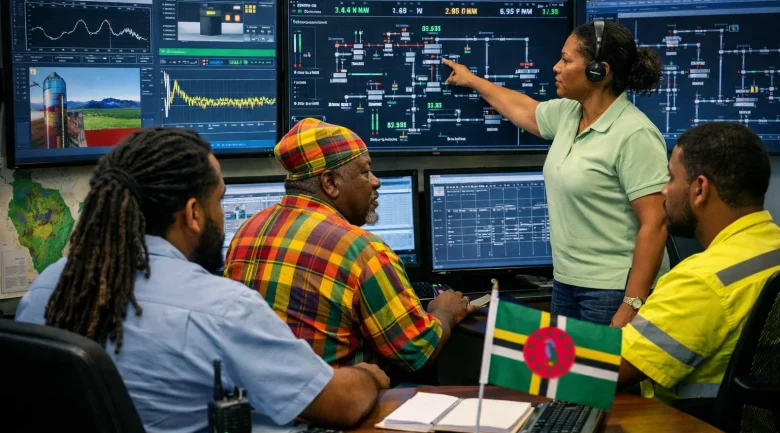
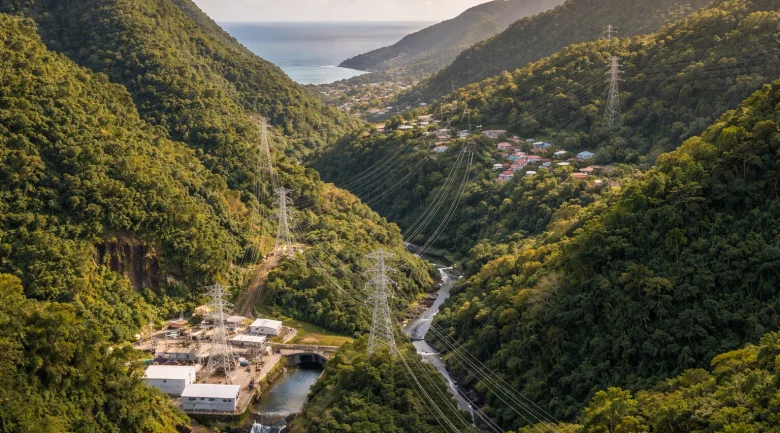
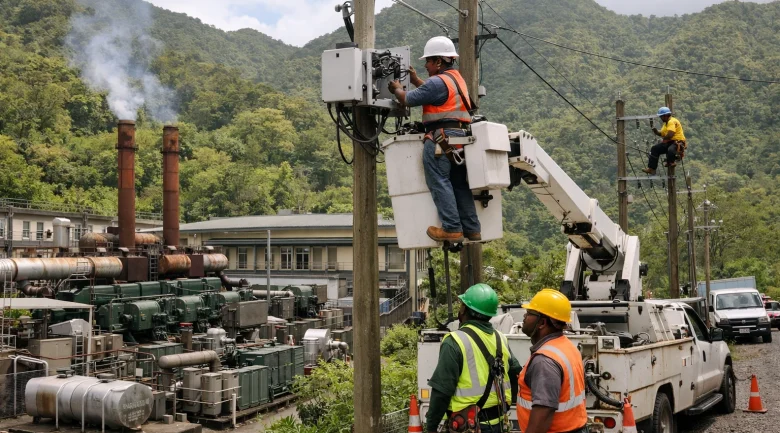
The National Electricity Grid of Dominica is the primary infrastructure for electricity transmission and distribution across the island. Currently, the system is undergoing a massive technological shift, moving from its 20th-century roots in diesel and small-scale hydro to a 21st-century “smart grid” centred on geothermal energy and climate-resilient engineering.
The grid is owned and operated by Dominica Electricity Services Limited (DOMLEC), which serves approximately 35,000 customers across the island. The grid’s history is a story of expansion from isolated local units to a fully integrated national network.
A History of Power and the Evolution of DOMLEC
The origins of Dominica’s modern power system date back to 1949, when the Colonial Development Corporation (CDC) established Dominica Electricity Services. Before this, electricity was limited to small, independent diesel generators that powered the capital city of Roseau during evening hours.
The real shift began in the early 1950s with the construction of the island’s first major renewable energy project: the Trafalgar Power Station. Commissioned in 1952, this station utilized the fast-flowing waters of the Roseau River to provide the island’s first continuous source of electricity. Throughout the 1960s and 1970s, the network expanded northward from Roseau, eventually reaching Portsmouth and the northeastern coast, unifying the island under a single distribution framework.
Over the decades, ownership of the grid has fluctuated between the government of Dominica and various international corporations. After the devastation of Hurricane David in 1979, the government assumed full ownership to spearhead the “Rural Electrification Project,” ensuring that remote mountain villages were finally connected to the national mains. Today, the grid achieves nearly 100% national coverage, a significant feat given the island’s rugged, volcanic landscape.
How the Current System Works: Generation and Transmission
The National Grid operates as a “vertically integrated” system, meaning the same utility manages generation, transmission, and distribution. The system currently relies on a hybrid of three generation types:
- Hydroelectric Base: Three “run-of-the-river” plants, Laudat, Trafalgar, and Padu, utilise the elevation drop in the Roseau Valley. These provide about 6.5 MW of clean power, though output decreases during the dry season.
- Diesel Thermal: Two major stations at Fond Cole (near Roseau) and Sugar Loaf Estate (near Portsmouth) provide the majority of the current power supply. These units are highly reliable but subject the island to the volatility of imported fuel prices.
- Transmission Hierarchy: Power is stepped up to 11 kV for primary transmission across the island’s long-distance lines. Local transformers then “step down” this voltage to 230V/400V for use in homes and businesses.
Technological Upgrades: Building for Resilience
In response to the increasing intensity of hurricanes, the grid has transitioned from simple overhead wires to a Resilient Transmission Network. Significant technology upgrades have been implemented over the last decade:
- Advanced Metering Infrastructure (AMI): Dominica was among the first in the Caribbean to implement “Smart Meters.” This allows DOMLEC to read meters remotely, detect power outages instantly, and offer pre-paid electricity options to customers.
- Undergrounding of Critical Lines: To protect the “nervous system” of the grid, key transmission corridors are being moved underground. Specifically, the link between the Roseau Valley power sources and the Fond Cole distribution hub now uses 33 kV underground cables, shielded from wind and falling trees.
- System Stability Control: The introduction of a 6 MW Battery Energy Storage System (BESS) provides the grid with “buffer” energy. This stabilises the frequency of the electricity, preventing the “flicker” effect during sudden surges or drops in demand.
Geothermal Integration and the 2026 Milestone
The most critical upgrade in the grid’s history is the integration of geothermal energy. The 10 MW Geothermal Power Plant at Laudat is the cornerstone of Dominica’s goal to become the world’s first climate-resilient nation.
Construction began in 2024, and the plant is expected to enter full commercial operation in 2026. This transition is transformative for several reasons:
- Fuel Independence: Once the 10 MW of geothermal power is online, it will cover the island’s base-load demand, allowing the diesel generators to be relegated to “standby” status.
- Constant Power: Unlike solar or wind, geothermal energy is “firm,” meaning it provides a 24/7 supply of electricity regardless of the weather or time of day.
- High-Voltage Expansion: To accommodate this new power, the government is expanding the grid with a 69 kV transmission backbone, the highest voltage tier ever utilised on the island, to move large amounts of energy from the south to the northern industrial zones.
The Future: A 100% Renewable Sovereign Grid
Under the National Resilience Development Strategy (NRDS) 2030 and the guiding Climate Resilience and Recovery Plan (CRRP), Dominica is restructuring its national grid to eliminate its dependence on fossil fuels. Post-2026, with the operational launch of the geothermal power plant, the strategy shifts toward a decentralised architecture, utilising hurricane-resistant underground transmission lines and community-scale renewable systems to guarantee a 90% resilient power supply across the island.
The vision involves a multi-hub system in which geothermal energy at Laudat, utility-scale solar farms, and wind clusters along the Atlantic coast all feed into a unified, smartly managed network. This future grid will not only power homes and the new International Airport but also support emerging industries, such as large-scale Green Hydrogen production. A potential future phase involves a regional strategy to export surplus clean, sovereign energy to neighbouring French islands like Martinique and Guadeloupe via underwater transmission cables, positioning Dominica as a regional energy leader.


