




Green Climate Fund in Dominica
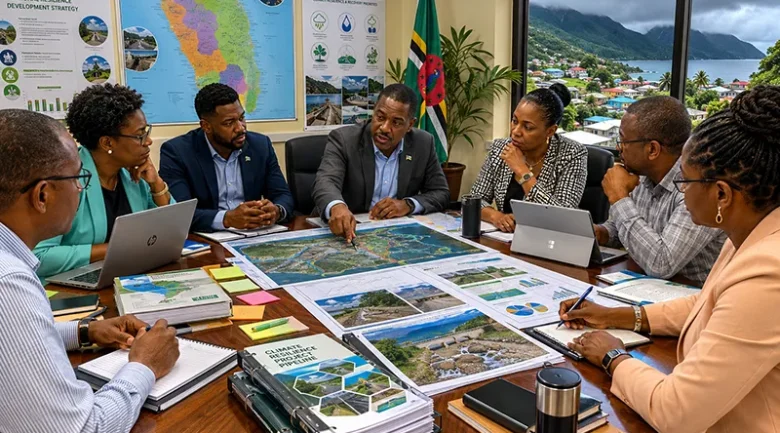
The operations, structural allocations, and capital disbursements associated with the Green Climate Fund in Dominica constitute a foundational cornerstone of the island nation’s legislative strategy to establish the world’s first fully climate-resilient state. Established under the United Nations Framework Convention on Climate Change (UNFCCC) to assist developing nations in executing adaptation and mitigation tracks, the Green Climate Fund (GCF) provides a multi-million-dollar framework of direct grants, highly concessional loans, and targeted technical readiness funding to the Commonwealth of Dominica. This dedicated capital is engineered to systematically insulate the state from catastrophic hydrometeorological events, deep ecological disruptions, and localised economic vulnerabilities.
Administered domestically through the Ministry of Finance, Economic Development, Climate Resilience and Social Security, which operates by law as the state’s National Designated Authority (NDA), the GCF portfolio in Dominica is explicitly embedded within national planning mechanisms. Rather than funding isolated or superficial environmental projects, GCF interventions function as a primary external financing mechanism for the Public Sector Investment Programme (PSIP). These initiatives directly fulfil the operational mandates set out under the National Resilience Development Strategy (NRDS) and the Climate Resilience and Recovery Plan (CRRP) 2030. By mobilising large-scale public and private capital, the fund addresses the systemic “resilience gap” across Dominica’s parishes, building community self-sufficiency without exacerbating the state’s sovereign debt profile.
Statutory Mandate and National Governance Architecture
The execution of GCF-backed activities within Dominica is governed by a robust domestic administrative infrastructure. This setup ensures that international climate finance is fully aligned with local legal frameworks, public accounting principles, and national development goals.
The National Designated Authority (NDA)
The Office of the Financial Secretary within the Ministry of Finance, Economic Development, Climate Resilience and Social Security serves as Dominica’s official NDA to the Green Climate Fund. Operating under statutory provisions for public finance management, the NDA acts as the state’s institutional gatekeeper. Every funding proposal, whether conceptualised by a public line ministry, a statutory corporation, a private enterprise, or a civil society organisation, must undergo a rigorous evaluation by the NDA. If the proposal satisfies the GCF’s core investment criteria and fully conforms to the Climate Resilience Act, the NDA issues a formal, legally binding No-Objection Letter, a mandatory prerequisite for any project consideration or fund approval by the international GCF Board in Songdo, South Korea.
Accreditations and Intermediary Routing Pathways
Because small island developing states face unique fiscal and administrative structural constraints, Dominica accesses GCF financial resources through two primary categories of Accredited Entities (AEs):
- Regional Direct Access Entities: The Caribbean Community Climate Change Centre (CCCCC), based in Belize, serves as Dominica’s premier regional direct access entity. The CCCCC holds formal accreditation to design, structure, and supervise single-country projects on behalf of the state, directly transferring execution responsibilities to local public departments in Roseau.
- International Multilateral Entities: For macro-scale infrastructure or highly complex sub-regional interventions, the government coordinates with global accredited institutions. These include the United Nations Environment Programme (UNEP), the Inter-American Development Bank (IDB), the United Nations Development Programme (UNDP), and the International Union for Conservation of Nature (IUCN).
Institutional Capacity Strengthening: The GCF Readiness Programme
To support the transition toward a low-carbon, highly adaptive economy, the Green Climate Fund has approved and deployed multiple iterations of Readiness and Preparatory Support grants. These resources target deep-seated institutional capacity constraints within Dominica’s public service.
Structural Barrier Mitigation
The Phase 2 Capacity Development and Institutional Strengthening readiness project, approved by the GCF, directly addresses two fundamental structural barriers that historically limited Dominica’s climate response:
- Technical Capacity Constraints: The readiness framework funds specialized technical experts, spatial analysts, and environmental engineers who work within line ministries. This provides the internal expertise required to execute regulatory, planning, and environmental functions without relying on short-term, external consulting teams.
- Financial Availability Depressions: By training local public officers in advanced climate-finance architecture, project origination, and complex risk-structuring, the programme enables the state to continuously design and present bankable investment proposals to international capital markets.
The Dominica National Financing Vehicle (NFV)
A major achievement of the GCF Readiness portfolio in Dominica is the creation, formal operationalisation, and capitalisation framework of the National Financing Vehicle (NFV). Developed by the Ministry of Planning and Economic Development with technical guidance from the Global Green Growth Institute (GGGI), the NFV addresses a critical market gap. The Government of Dominica approved the vehicle to serve as a specialised, long-term national financing mechanism designed to mobilise an estimated $300 million USD in climate-aligned investments.
The core strategic objectives of the National Financing Vehicle include:
- Risk/Return Profile Rebalancing: The NFV provides highly concessional finance, extended grace periods, and blended credit lines to priority climate change mitigation and adaptation initiatives. This drastically lowers the high cost of capital that has traditionally limited private-sector involvement in the Eastern Caribbean.
- Renewable Energy and Energy Efficiency (RE & EE) Acceleration: The vehicle focuses heavily on funding distributed solar generation, micro-grids, and decentralised storage systems. This strengthens national energy security and reduces Dominica’s structural dependency on expensive, volatile imported fossil fuels.
- Blue Economy Integration: The fund’s mandate includes structuring and backing commercial investment pipelines aligned with the Dominica Blue Economy Masterplan. This pathway supports sustainable fisheries management, coastal zone defence infrastructure, and marine eco-tourism assets.
- Domestic Financial Literacy: The NFV provides targeted capacity-building workshops for local commercial banks, credit unions, and private firms. These sessions help institutions overcome their historic reluctance to finance low-carbon projects due to unfamiliarity with specialised environmental technologies.
Flagship Projects and Structural Investment Allocations
The active GCF investment portfolio in Dominica includes both single-country interventions and multi-state regional projects, creating a comprehensive safety net of climate defense.
Dominica Community Resilience Enhancement Project (DOMCREP)
The Dominica Community Resilience Enhancement Project (DOMCREP) stands as a landmark single-country adaptation initiative designed to address the persistent structural vulnerabilities left by Hurricane Maria, a historic natural disaster that destroyed 226% of the country’s Gross Domestic Product (GDP). Officially launched on June 3, 2026, by Prime Minister Dr. Roosevelt Skerrit, DOMCREP represents a total consolidated investment of $70.2 million XCD ($26.03 million USD).
The financial architecture of the project relies primarily on a direct grant of $66.2 million XCD ($24.52 million USD) from the Green Climate Fund, supplemented by an additional $4 million XCD ($1.50 million USD) in cash and in-kind co-financing from the Government of the Commonwealth of Dominica. Executed over a five-year timeline (extending from March 2026 to March 2031) by the Ministry of Finance in coordination with the CCCCC, the project targets eight rural communities that face severe, recurring risks from flash flooding, deep soil erosion, and isolation during storm events: Bagatelle, Campbell, Colihaut, Coulibistrie, Good Hope, Petite Soufriere, Pichelin, and San Sauveur.
| Core Project Component | Targeted GCF Financial Allocation | Strategic Deliverables & Performance Metrics |
| Component 1: Climate-Smart Agriculture & Food Production Systems | $35.140,280 XCD ($13,015,000 USD) | Installation of wind-resilient shade houses engineered to withstand 157 mph gusts; distribution of drought-tolerant seed varieties; establishing multi-hazard field irrigation loops; providing specialised micro-grants for local agro-processing operations. More than 50% of the total project funds are legally bound to this sector. |
| Component 2: Upgrading Safe-Haven & Disaster Management Infrastructure | $21,084,168 XCD ($7,809,000 USD) | Structural retrofitting of community emergency shelters to Category 5 hurricane specifications; installation of decentralised solar power arrays and independent water filtration systems; increasing communal potable water storage capacities by 30%. |
| Component 3: Multi-Hazard Early Warning Systems & Knowledge Hubs | $14,056,111 XCD ($5,206,000 USD) | Deployment of real-time automated weather stations and acoustic river-basin flood sensors; training local builders in advanced “Resilience Masonry”; establishing a central digital knowledge repository for data-driven GIS hazard mapping. |
Integrated Physical Adaptation and Community Resilience (Enhanced Direct Access Pilot)
Dominica serves as a primary participating territory in the GCF Enhanced Direct Access (EDA) pilot framework (Project Code: FP061), a $20,000,000 USD initiative spanning three Eastern Caribbean small island states (Dominica, Grenada, and Antigua and Barbuda). The EDA model changes how international climate finance is distributed by shifting individual project selection and financing decisions directly to the national level.
Under this framework, sub-grants and concessional micro-loans are channeled into the domestic economy through two main pathways:
- Public Sector Local Infrastructure Investments: Deployed directly through the PSIP to secure public infrastructure, including reinforcing critical riverbanks, installing deep-bore retention piles along landslide-prone transit corridors, and executing ecosystem-based adaptation (EbA) protocols across degraded watersheds.
- Civil Society and Small-Business Interventions: Local village councils, agricultural cooperatives, and micro-enterprises can directly access small-scale grant funding. These resources are used to climate-proof privately owned physical assets, establish community-managed water storage systems, and deploy localized sustainable drainage infrastructure.
Socio-Economic Benefits, Demographics, and Gender Equality Mandates
Every Green Climate Fund initiative in Dominica must include an explicit, legally binding Gender Assessment and Action Plan. This operational requirement ensures that climate adaptation actively reduces structural socio-economic inequalities rather than unintentionally worsening them.
Gender-Responsive Target Metrics
The DOMCREP framework enforces clear, auditable targets designed to protect and empower vulnerable groups, directly supporting more than 8,300 people as direct beneficiaries and over 64,000 individuals indirectly:
- Agricultural On-Granting Protections: The project legal text mandates that a minimum of 40% of all climate-smart agricultural grants and specialized technological inputs must be awarded directly to female-led farming operations. Additionally, at least 35% of resources are strictly reserved for youth-led agribusinesses and marginalized processors in remote rural districts. More than 520 farmers and agro-processors are slated for direct capacity integration.
- Care-Work Burden Alleviation: By integrating automated energy systems, emergency back-up power, and reliable sanitation facilities directly into retrofitted community emergency shelters, the project reduces the disproportionate burden of unpaid care work that typically falls on Dominican women during and after natural disasters.
Long-Term Macroeconomic Stabilization
By shifting national funding away from high-interest commercial debt and toward long-term GCF grants, Dominica achieves substantial structural protection for its public finances:
- Debt-to-GDP Stabilization: Accessing large-scale grant resources ensures that major, climate-proof public works do not increase the state’s external debt burden, helping preserve national fiscal space for essential health and education programs.
- Post-Disaster Recovery Acceleration: Achieving the strategic goal of 100% community self-sufficiency during the immediate aftermath of a storm helps reduce the historical economic paralysis caused by severe weather. By securing localized water, energy, and food systems, targeted communities aim to cut food production restart times by 50%, ensuring a fast, stable return to national economic productivity.


References
-
1.
GCF Dominica Country Profile https://www.greenclimate.fund/countries/dominica
-
2.
Guardians of the shore: GCF and UNEP partner to protect mangroves and coastal ecosystems in Dominica and Mozambique https://www.greenclimate.fund/news/guardians-shore-gcf-and-unep-partner-protect-mangroves-and-coastal-ecosystems-dominica-and
-
3.
Dominica National Adaptation Planning Portfolio https://www.greenclimate.fund/document/national-adaptation-planning-commonwealth-dominica
-
4.
Dominica Advances Climate Adaptation Efforts with Launch of DOMCREP https://dominicanewsonline.com/news/homepage/homepage-carousel/dominica-advances-climate-adaptation-efforts-with-launch-of-domcrep/
-
5.
Dominica Launches US $26 Million Climate Resilience Initiative for Vulnerable Communities https://caricom.org/dominica-launches-us26m-investment-in-farmers-food-security-as-part-of-climate-resilience-initiative/
-
6.
DAIC and the Government of Dominica hosted a Green Climate Fund Forum for the Private Sector https://emonewsdm.com/daic-and-the-government-of-dominica-hosted-a-green-climate-fund-forum-for-the-private-sector/
-
7.
Dominica Climate Resilience Recovery Plan (CRRP) https://odm.gov.dm/wp-content/uploads/2022/02/CRRP-Final-042020.pdf
-
8.
Dominica Launches $70 Million Climate Resilience Project-DOMCREP https://pressroomopm.gov.dm/dominica-launches-70-million-climate-resilience-project-domcrep/