

Green Industries in Dominica
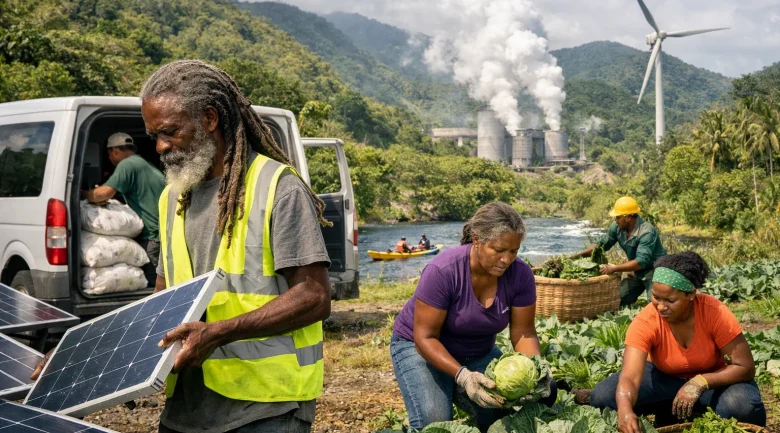
Green Industries are the primary catalyst for Dominica’s mission to become the world’s first climate-resilient nation. By leveraging its unique volcanic landscape, abundant freshwater, and dense forest cover, the island is transitioning from a traditional agrarian economy to a sophisticated, carbon-neutral “Nature Island” model. This shift is codified in the National Resilience Development Strategy (NRDS) 2030 and the Climate Resilience and Recovery Plan (CRRP), which provide a comprehensive roadmap for industrializing sustainability over the next decade.
Geothermal Energy: The Industrial Bedrock
The cornerstone of Dominica’s green industrial revolution is the development of its geothermal resources. With temperatures in the Roseau Valley reservoirs reaching 250–270°C, the island possesses one of the highest-quality hydrothermal resources in the Western Hemisphere.
Project Profile: Laudat Geothermal Plant
- Capacity: 10 MW (Initial Phase), with expansion potential exceeding 100 MW.
- Infrastructure: Three production wells and one injection well.
- 2030 Target: 100% domestic electricity generation from renewable sources (Geothermal + Hydro).
- Economic Impact: The transition aims to lower electricity costs, historically among the highest in the Caribbean, by over 40%, providing a competitive advantage for local manufacturers.
The Base-Load Advantage
Unlike solar or wind, geothermal energy provides constant, 24/7 power. This reliability is critical for the Well-Planned and Durable Infrastructure pillar of the CRRP, ensuring that essential services remain operational even during extreme weather events.
Green Hydrogen and Ammonia (Vision 2035)
As Dominica achieves 100% renewable self-sufficiency, its surplus geothermal energy is being positioned as a valuable export commodity through the production of green hydrogen.
The KGL Partnership
The Government has partnered with Kenesjay Green Limited (KGL) to conduct pre-feasibility studies for a large-scale green ammonia facility.
- Production Goal: 27,000 to 30,000 tons of green hydrogen per year.
- Export Strategy: Utilizing green hydrogen to produce ammonia, which can be easily transported and sold as a zero-carbon fuel for the global maritime industry.
- 2035 Horizon: Establishing Dominica as the Caribbean’s first Green Hydrogen Hub, diversifying the economy away from tourism and agriculture.
Climate-Smart and Organic Agriculture
Dominica is redefining its agricultural sector as a premium, organic “Nature Island” brand. The strategy focuses on high-value niche markets rather than bulk commodity trade.
Agricultural Resilience Metrics (2030 Targets)
| Metric | Goal | Strategy |
| GDP Contribution | 50% Increase | Expansion of agro-processing and high-value exports. |
| Resilience | <50% Loss in Disasters | Shifting from sloped root-crop farming to tree-crop agroforestry. |
| Modernization | 100% Increase in Greenhouses | Scaling hydroponics and non-soil technologies. |
Sector Breakdown: Organic Diversification
- Cocoa and Coffee: Focused on “Bean-to-Bar” processing to capture more value locally.
- Herbal Teas and Essential Oils: Utilizing the island’s unique biodiversity to supply the global wellness industry.
- Food Security: Increasing national production of nutrient-dense staples (dasheen, breadfruit) to reduce the food import bill by 25% by 2030.
The Blue Economy: Marine Resilience as Industry
Dominica’s Blue Economy represents a vital frontier for green growth, leveraging its Exclusive Economic Zone (EEZ) that is 38 times larger than its landmass. This vast marine territory is being transformed from a passive resource into a high-tech industrial sector where conservation and profitability coexist. Central to this strategy is the establishment of the world’s first Sperm Whale Reserve, covering 788 square kilometers. This reserve serves as a functional pillar of the nation’s broader Green Industry initiative, proving that protecting biodiversity is a lucrative economic engine and a cornerstone for future sustainable growth.
Financialization of Marine Ecosystem Services
A cornerstone of this blue industry is the monetisation of carbon sequestration via the resident population of approximately 200 sperm whales. Through the whale pump effect, a natural process of nutrient cycling, these whales facilitate the growth of phytoplankton, which absorbs vast amounts of atmospheric carbon. This biological activity sequesters an estimated 4,200 metric tonnes of carbon annually. Currently, these sequestration figures are being packaged into high-integrity blue carbon credits. This innovative financial tool provides a sustainable revenue stream that funds marine protection while contributing to the national treasury, effectively turning conservation into a primary export. This mechanism transforms environmental ethics into a resilient fiscal framework.
Regenerative Tourism and Data-Driven Governance
Beyond carbon markets, the reserve supports a sophisticated eco-tourism model that generates nearly $2 million USD in direct tourist spending annually. By implementing highly regulated, low-impact “swim-with” and observation programs, the island attracts high-value visitors while ensuring the whales remain undisturbed. This industry is managed by a dedicated Whale Officer and a scientific research board. Their data-driven approach ensures that tourism quotas are strictly tied to the health of the pod, maintaining a balance between industrial utility and ecological resilience. This model demonstrates how the Blue Economy secures the nation’s future by protecting its most valuable natural assets currently.
Key Pillars of Marine Industrial Growth
- Blue Carbon Markets: Establishing a verified framework for trading carbon credits generated by whale activity and seagrass meadows.
- Sustainable Fisheries Management: Implementing advanced GPS tracking and catch-reporting systems to ensure artisanal fishing remains within biological limits.
- Marine Biotechnology: Exploring deep-sea genetic resources for pharmaceuticals and bio-products while ensuring equitable benefit-sharing.
- Climate-Resilient Infrastructure: Developing eco-friendly port facilities and coastal defenses that mimic natural reef structures.
- Oceanic Research & Education: Positioning the island as a regional hub for marine biology studies and specialized deep-sea research.
Core Industrial Objectives
- Resource Sovereignty: Securing long-term national control over the EEZ to prevent illegal, unreported, and unregulated (IUU) fishing.
- Economic Diversification: Reducing dependence on traditional land-based agriculture by expanding into high-tech marine services.
Circular Economy and Waste Management
The Nature Island brand requires a zero-waste philosophy. Dominica is currently the only English-speaking Caribbean nation implementing national curbside collection for glass, plastic, and tin.
The Recycle OECS Model
- Community Impact: Over 10 tonnes of plastic waste have been diverted from landfills through youth-led initiatives like the Zero Waste initiatives.
- Private Sector Leadership: The hospitality sector has successfully diverted over 30 tonnes of plastic in pilot phases.
- 2030 Target: Achieving a 50% recycling rate for PET plastics and establishing regional processing hubs to reduce export costs from $357 to $95 per tonne.
Sustainable Infrastructure and Resilient Housing
To support these green industries, Dominica’s physical landscape is being rebuilt to “Category 5 hurricane” standards.
Housing and Urban Development Goals
- The 5,000 Homes Project: A government-led initiative to build 5,000 modern, sustainable, and affordable resilient homes.
- Resilient Building Codes: 90% of the national housing stock is targeted for construction or retrofitting to resilient codes by 2030.
- Transport Innovation: The development of a 6.6km cable car to the Boiling Lake, the longest in the world, aims to provide a zero-emission transport method that protects the fragile rainforest floor from excessive foot traffic.
Strategic Summary of National Resilience (2025–2035)
| Industry Pillar | Key Outcome by 2030 | Vision for 2035 |
| Energy | 100% Renewable (Domestic) | Green Hydrogen Export Hub |
| Agriculture | Organic Branding & 50% GDP Growth | Fully Integrated Agri-Manufacturing |
| Marine | Self-Sustaining Whale Reserve | Global Leader in Blue Carbon Credits |
| Waste | Zero Plastic Leakage | Regional Circular Economy Hub |
| Tourism | 25% Increase in Natural Sites | “Net Zero” Destination Status |
Financial and Institutional Framework
The transition to green industries is supported by innovative financing and robust governance.
- Citizenship by Investment (CBI): Revenue from the CBI programme is directly reinvested into resilient housing and geothermal infrastructure.
- CREAD: The Climate Resilience Executing Agency of Dominica was established to provide technical oversight and ensure that all public projects align with the CRRP’s six results areas (Strong Communities, Robust Economy, etc.).
- Sustainable Financing: Dominica is exploring Blue Bonds and debt-for-nature swaps to fund the long-term management of its protected areas and renewable energy grid.
A Model for the 21st Century
By 2035, Dominica seeks to prove that a Small Island Developing State (SIDS) can not only survive climate change but thrive by turning environmental stewardship into a high-tech, profitable industrial sector. The synergy between geothermal energy, organic farming, and conservation of the blue economy creates a virtuous cycle that secures the nation’s future while protecting its most valuable asset: the natural environment.
This vision is not merely aspirational; it is a blueprint for a resilient economy where carbon neutrality and economic prosperity are inseparable. By harnessing the volcanic heat of the interior and the untapped potential of the surrounding Caribbean Sea, Dominica is positioning itself as the “Nature Island of the Future.” This transformation empowers local communities, creates high-value green jobs, and preserves the pristine biodiversity that defines the Dominican identity. As the world watches, this small nation is setting a global standard for sustainable development, proving that true wealth lies in the harmony between human progress and planetary health.
In this new era, Dominica stands as a beacon of hope, a living laboratory for innovation where every green initiative contributes to a legacy of resilience, sovereignty, and enduring natural beauty for generations.


References
-
1.
Dominica Climate Resilience and Recovery Plan (CRRP) 2020-2030 https://odm.gov.dm/wp-content/uploads/2022/02/CRRP-Final-042020.pdf
-
2.
Invest Dominica Authority - Renewable Energy https://investdominica.com/invest/renewable-energy/
-
3.
Commonwealth of Dominica Updated Nationally Determined Contribution (NDC) https://unfccc.int/sites/default/files/2022-07/The%20Commonwealth%20of%20Dominica%20updated%20NDC%20July%204%20%2C.pdf
-
4.
National Resilience Development Strategy 2030 https://observatorioplanificacion.cepal.org/en/plans/national-resilience-development-strategy-2030-dominica
-
5.
2023 Dominica Energy Report Card https://cekh.ccreee.org/wp-content/uploads/2025/06/2023-Dominica-Energy-Report-Card-1.pdf
-
6.
Islands Energy Snapshot - Dominica https://docs.nlr.gov/docs/fy15osti/62704.pdf
-
7.
ThinkGeoEnergy - Dominica Geothermal Updates https://www.thinkgeoenergy.com/geothermal-power-plant-in-dominica-to-start-commissioning-by-december-2025/
-
8.
Sustainable Citizenship in Dominica (CBIU) https://www.cbiu.gov.dm/news/dominica-citizenship/sustainable-citizenship-in-dominica/