

Breadfruit – Yampeh
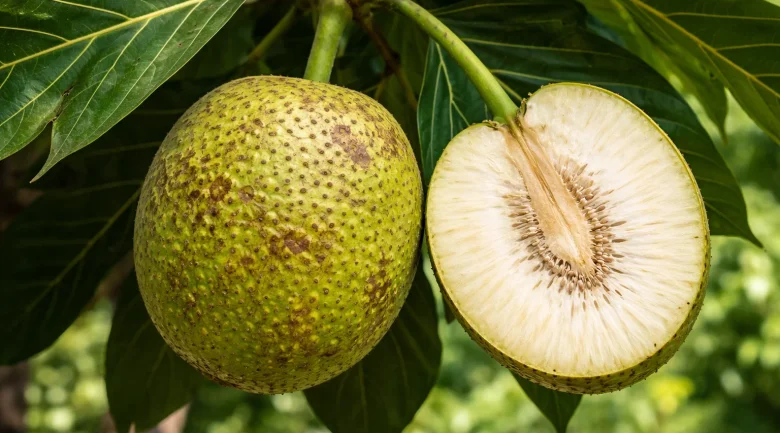
Breadfruit (frequently called ‘yampeh’ locally) is woven into the historical, medicinal, and cultural fabric of Dominica, serving as a resilient “Tree of Life” that has sustained the island’s population through centuries of both prosperity and peril. While known scientifically as Artocarpus altilis, the colloquial term yampeh specifically refers to the starchy, heartier varieties that Dominicans have cherished since the plant was introduced to the Caribbean in the 1790s. Originally brought from Tahiti by Captain William Bligh on the HMS Providence, breadfruit was intended as a high-calorie, low-cost food source for enslaved populations. Today, however, it has been reclaimed as a premier symbol of Dominican food sovereignty and a nutritional powerhouse, anchoring the nation’s modern agricultural identity.
The Botanical Evolution: From Traditional to New Varieties
For generations, the yampeh found in Dominican backyards was largely limited to a few traditional varieties characterised by their massive, deeply lobed leaves and pebbled green skin. However, in today’s agricultural landscape, it has been transformed by the strategic introduction of new, high-yield varieties aimed at extending the harvest season and improving export quality.
- Traditional ‘Yampeh’: These are the yellow-fleshed, dense varieties preferred for Oil Down. They are prized for their ability to retain their shape during long, slow simmering in coconut milk.
- The Ma’afala and Ulu Fiti Introductions: Through partnerships with the Global Breadfruit Heritage Council, Dominica has successfully integrated the Ma’afala variety. This Samoan cultivar is smaller and more compact, making it easier to harvest and more resistant to high winds. More importantly, it bears fruit earlier in the tree’s life cycle, providing a faster return on investment for small-scale MSMEs.
- Extended Seasonality: By mixing traditional trees with these new varieties, Dominican farmers have moved from a single massive peak season to a near-year-round supply, ensuring that the local hospitality sector and export processing plants never run dry.
Beyond the Kitchen: The Breadfruit Leaf in Bush Medicine
In Dominica, the Nature Island ethos extends to traditional medicine, where the breadfruit tree is regarded as a pharmacy in its own right. The breadfruit leaf is a staple in Dominican Bush Medicine, utilized for centuries by village elders and bush doctors to treat a variety of systemic ailments.
- Hypertension and Heart Health: The most common medicinal use involves the yellowing, fallen leaves. When boiled into a tea, these leaves are believed to act as a potent vasodilator, helping to lower high blood pressure, a critical traditional remedy in a region with high rates of hypertension.
- Anti-Inflammatory Properties: The green leaves are often crushed into a poultice to reduce skin inflammation or joint pain. Local wellness startups are even experimenting with extracting these compounds for use in organic topical creams sold at eco-resorts.
- The Cooling Effect: In the hot tropical climate, breadfruit leaf tea is often consumed as a cooling tonic to settle the blood and alleviate headaches or “nternal heat.
Nutritional Profile and Modern Superfood Status
In the health-conscious landscape of today, breadfruit (yampeh) has transitioned from a humble ground provision to a globally recognised superfood. It is naturally gluten-free and possesses a low-to-moderate glycemic index, making it a superior alternative to refined wheat and white potatoes.
| Nutrient | Benefit for Dominicans |
| Complex Carbs | Provides sustained energy for the physical labor of farming and mountain hiking. |
| Dietary Fiber | Exceptionally high content, aiding in heart health and metabolic regulation. |
| Potassium | More potassium per gram than a banana; essential for electrolyte balance. |
| Vitamin C | A powerful antioxidant that boosts the immune system and aids skin repair. |
Culinary Traditions: The Soul of the Nature Island
Dominican cuisine treats yampeh with deep respect, utilizing it in various stages of ripeness, from the rock-hard green stage to the sugary-sweet marshy overripe stage.
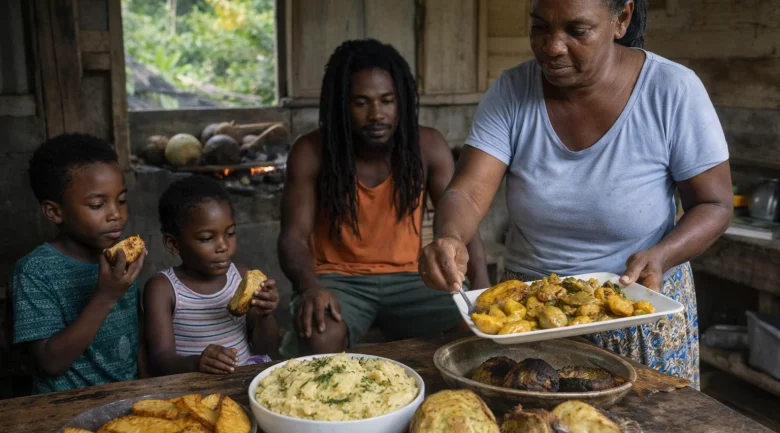
- The Oil Down: This is the definitive Dominican one-pot meal. Slices of yampeh are simmered in fresh coconut milk with smoked meat, turmeric, pimento peppers, and dumplings. The dish is cooked until the coconut milk reduces into a rich, savoury oil that “oils down” the breadfruit, giving it a melt-in-the-mouth texture.
- Roasted Yampeh: Traditionally cooked directly in the white embers of an outdoor wood fire. Once the skin is charred black, it is scraped away to reveal a smoky, bread-like interior that is typically paired with fried saltfish, avocado, and cucumber salad.
- Innovative Preparations: In Roseau’s modern cafes, you will now find Breadfruit Tacos (using thinly sliced roasted rounds as shells) and Yampeh Gnocchi, showcasing the fruit’s ability to adapt to international culinary trends.
The 2026 Economic Shift: Value-Added Processing
The government of Dominica, through the Small Business Support Unit (SBSU), has identified breadfruit as a key export commodity for the mid-2020s. By moving away from exporting the heavy, perishable whole fruit, the island is now focusing on Breadfruit Flour.
- Industrial Dehydration: New solar-geothermal hybrid processing facilities in the northeast and central districts convert surplus yampeh into a fine, high-value flour.
- The Global Export Market: This flour is marketed internationally as a premium, gluten-free baking ingredient. Dominican breadfruit flour is highly sought after in European and North American markets for use in high-end gluten-free pastries and pastas.
- Product Diversification: Beyond flour, MSMEs are producing Breadfruit Chips (packaged in biodegradable bags made from banana fiber) and Vacuum-Packed Roasted Yampeh, allowing the diaspora in New York and London to enjoy a taste of home in minutes.
Resilience and the 2030 Vision
The breadfruit tree is the ultimate symbol of Climate Resilience. During the aftermath of Hurricane Maria in 2017, when the banana industry was completely levelled, the sturdier breadfruit trees were among the first to rebound. Their deep root systems prevent soil erosion on Dominica’s steep volcanic slopes, and their massive canopies provide essential shade for delicate cocoa and coffee plants.
As Dominica marches toward 2030, the breadfruit (or yampeh) stands as a green monument to self-sufficiency. It is a plant that arrived as a colonial tool of survival but has been transformed by the Dominican people into a sophisticated pillar of health, tradition, and economic independence. In every village from Scotts Head to Penville, the sight of a heavy-laden yampeh tree is a reminder that on the Nature Island, the earth always provides.


References
-
1.
New breadfruit variety to be introduced to Dominica https://dominicanewsonline.com/news/homepage/news/agriculture/new-breadfruit-variety-to-be-introduced-to-dominica/