


Micro, Small, and Medium Enterprises (MSMEs)
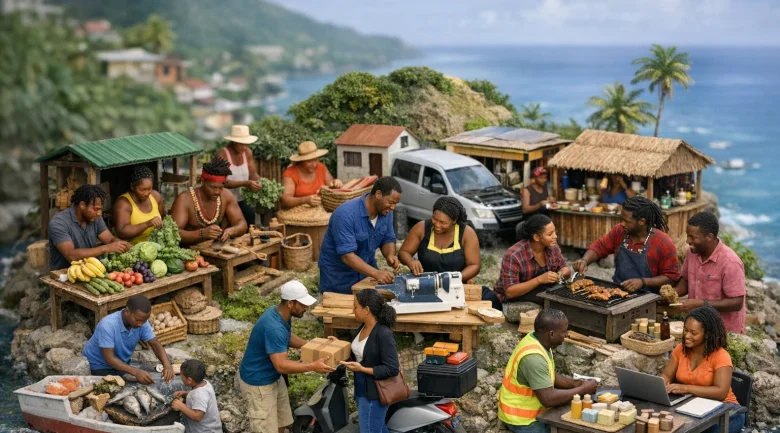
The Micro, Small, and Medium Enterprises (MSMEs) sector is the undisputed heartbeat of the Commonwealth of Dominica’s socio-economic landscape. As the nation navigates the complexities of the mid-2020s, anchored by reality unfolding around us in real time, this sector has transcended its traditional role as a mere alternative to formal employment. Today, MSMEs represent approximately 75% to 80% of all registered business entities on the island, contributing an estimated 35% to 40% of the national Gross Domestic Product (GDP). More importantly, they account for over 60% of total private-sector employment, making them the primary vehicle for wealth distribution, poverty alleviation, and social stability in a Small Island Developing State (SIDs).
In the wake of the 2025/2026 fiscal year, MSMEs in Dominica have transitioned from “survivalist” entities, often born of economic necessity or post-disaster desperation, to the primary engines of the nation’s ambitious Blue and Green Economy mandates. This journey through the local business landscape explores the intricate data, historical evolution, institutional support mechanisms, structural challenges, and the strategic, long-term impact of MSMEs in Dominica’s ongoing journey toward becoming the world’s first fully climate-resilient nation by 2030.
The Historical Evolution of the Dominican MSME
To understand the current sophistication of the MSME sector, one must examine the traumatic and transformative economic shifts that forced the Dominican populace to embrace entrepreneurship. The history of Dominican MSMEs is fundamentally a story of forced evolution, remarkable adaptability, and incredible grit.
The Post-Banana Era (1990s–2010s)
For much of the late 20th century, Dominica’s economy was overwhelmingly dominated by a single agricultural export: bananas. Protected by preferential trade agreements with the United Kingdom and the European Union (the Lomé Conventions), thousands of Dominicans operated as smallholder farmers. However, following World Trade Organization (WTO) rulings in the late 1990s and early 2000s, these preferential tariffs were dismantled. The banana industry collapsed, taking with it the primary source of income for a vast percentage of the rural population.
This collapse triggered a massive wave of necessity entrepreneurship. Former farmers and agricultural workers were forced to diversify rapidly to survive. This era saw a surge in the opening of small community grocery shops (locally referred to as shops), localised trucking and logistics services, and the birth of the modern agro-processing movement. Families began taking raw agricultural products that could no longer be exported, such as hot peppers, cocoa, and coconuts, and converting them into value-added products like hot sauces, natural soaps, and cocoa sticks. This period laid the foundation for the mindset that raw commodities must be processed locally to retain their economic value.
The Catalyst of Catastrophe (2017 Hurricane Maria)
The defining moment for the modern Dominican economy occurred on September 18, 2017, when Hurricane Maria, a category 5 storm, struck the island. The storm destroyed approximately 90% of the island’s housing stock and wiped out an estimated 226% of Dominica’s GDP in a single night. The formal, large-scale corporate sector ground to a halt; international supply chains were severed, and major hotels were left in ruins.
However, it was the MSME sector that led the immediate, grassroots recovery. While large entities awaited complex insurance payouts and international assessors, micro-entrepreneurs mobilised. Local chainsaw operators cleared critical roadways; individuals with solar panels set up mobile charging stations; and small-scale farmers and fishers restarted the domestic food supply chain within days. This period showed policymakers that MSMEs are not peripheral businesses; they are the most agile and resilient part of the national infrastructure. The government’s subsequent resilience strategy fundamentally shifted to ensure that micro-businesses were heavily fortified against future climate shocks.
The Digital Leap (2020–2024)
If Hurricane Maria forced physical resilience, the COVID-19 pandemic forced digital resilience. The sudden halt of global tourism and the implementation of local curfews exposed the vulnerability of cash-only, brick-and-mortar micro-businesses. During this period, catalyzed by World Bank funding and the Caribbean Digital Transformation Project, the government pushed MSMEs into the 21st century. By 2024, the government successfully digitized thousands of business licenses, introduced comprehensive e-commerce training, and facilitated the adoption of digital wallets and online payment gateways. This allowed MSMEs to move from the informal, undocumented sector into the formal, data-driven economy with unprecedented speed.
Defining the Current MSME Landscape in Dominica
In Dominica, MSMEs are classified primarily by a combination of their total number of employees, annual financial turnover, and total assets, as codified in the Micro and Small Business Enterprise Act. These legal definitions are critical, as they determine a business’s eligibility for specific tiers of government grants, corporate tax holidays, and technical support programs.
The Classification Matrix
- Micro-Enterprises: Defined as businesses employing between 1 and 5 individuals, with an annual turnover typically under EC$100,000. This is the largest segment by volume, encompassing street vendors, artisanal craft makers, independent taxi operators, and small-scale family farms.
- Small Enterprises: Employing between 6 and 20 individuals, with an annual turnover ranging from EC$100,001 to EC$500,000. This tier includes boutique eco-guest houses, established local restaurants, mid-sized agro-processing facilities, and specialized tech startups.
- Medium Enterprises: Employing between 21 and 50 individuals, generating between EC$500,001 and EC$2,000,000 annually. These are the heavy lifters of the sector, including local construction firms, wholesale distributors, larger eco-resorts, and light manufacturing plants.
Demographics and Sector Breakdown
The demographic makeup of the current MSME sector reveals a highly inclusive, though shifting, economic environment:
- Gender Parity: Approximately 48% to 50% of micro-enterprises in Dominica are female-led or female-owned. Women disproportionately dominate the retail sector, the culinary and hospitality services, and the rapidly expanding agro-processing and health-wellness sectors.
- Youth Participation: Driven by the Dominica Youth Business Trust (DYBT), there has been a 15% increase in youth (ages 18-35) business ownership between 2020 and 2025, acting as a critical buffer against the “brain drain” of educated graduates leaving the island.
The sector distribution reflects Dominica’s natural advantages and evolving service economy:
- Services (Tourism, Hospitality, Professional): 45%
- Agriculture & Agro-processing: 30%
- Retail & Trade: 15%
- Creative Industries & Technology: 10% (Notably, this is the fastest-growing segment in 2026, heavily supported by new digital infrastructure).
Institutional Support and Governance
MSMEs in Dominica do not operate in a vacuum; they are supported, regulated, and financed by a complex, multi-layered ecosystem of statutory bodies, government ministries, and non-governmental organizations.
The Small Business Support Unit (SBSU)
Operating under the Ministry of Tourism and Job Creation (or the relevant economic ministry), the SBSU is the government’s primary policy-execution arm for micro-businesses. The SBSU has revolutionised the formalisation process through its digital “One-Stop Shop” portal. This platform allows a rural entrepreneur to register their business name, apply for a Tax Identification Number (TIN) from the Inland Revenue Division, and ensure compliance with the Dominica Social Security scheme in a single, streamlined digital session, completely eliminating the need for multiple trips to the capital.
National Development Foundation of Dominica (NDFD)
The National Development Foundation of Dominica remains the premier non-bank financial institution on the island, specifically tailored to the realities of small island entrepreneurship. Traditional commercial banks often require land titles or substantial capital as collateral, assets that most micro-entrepreneurs do not possess. The NDFD bypasses this by offering:
- Micro-loans: Targeted at grassroots startups based on business viability rather than rigid collateral.
- Intensive Business Advisory: The NDFD does not just distribute funds; they provide mandatory financial literacy training, helping “mom-and-pop” operations transition into using digital accounting software like QuickBooks.
- Green Resilience Loans: A specialized, low-interest financing facility designed for MSMEs to install solar water heaters, photovoltaic panels, or rainwater harvesting systems, thereby reducing their operational overheads and increasing disaster readiness.
Dominica Youth Business Trust (DYBT)
The Dominica Youth Business Trust focuses exclusively on the 18–35 demographic. Through its “Small Business Assistance Facility” and its intensive, month-long residential training camps, it provides “Soft Loans” and pairs young entrepreneurs with established business mentors. The DYBT is central to the government’s strategy to tackle youth unemployment by making self-employment a lucrative, respected, and well-supported career path rather than a fallback option.
The Agricultural Industrial and Development Bank (AID Bank)
For MSMEs looking to scale from “Small” to “Medium,” the AID Bank provides larger-scale, concessional financing. Today, their portfolio is heavily skewed toward supporting medium enterprises involved in the ancillary services surrounding the new International Airport construction, the Northern Geothermal Zone industrial projects, and large-scale agricultural revitalisation (such as industrial greenhouse farming and commercial cocoa production).
Dominica Association of Industry and Commerce (DAIC)
Acting as the primary private-sector voice, the Dominica Association of Industry and Commerce lobbies the government on behalf of MSMEs, negotiating for better tax rates, improved customs procedures, and acting as a networking hub connecting local small businesses with larger regional suppliers in CARICOM.
The Blue and Green Economy Integration
Dominica’s global brand is The Nature Island and the government’s overarching mandate is climate resilience. Consequently, the most successful MSMEs are those whose business models are inherently aligned with the “Blue” (ocean/water) and “Green” (land/renewable) economies.
The Blue Economy Boom
With the legal gazetting and operationalization of the Sperm Whale Reserve on the island’s west coast, a massive opportunity has opened for maritime MSMEs. The government has restricted large commercial shipping in these zones, creating a monopoly for small, locally-owned eco-tour operators. Small boat captains and fishers are being retrained and certified as “Whale Rangers” and high-end acoustic eco-guides. This has transformed traditional, often unpredictable fishing livelihoods into highly lucrative, high-value tourism services. Additionally, coastal MSMEs are expanding into sustainable aquaculture, specifically the processing and farming of seamoss (Eucheuma), which is packaged into gels, beverages, and cosmetics for regional export.
The Green Economy and Circularity
On land, MSMEs are heavily incentivized to adopt circular economy principles. Grants are readily available for agro-processors who utilize zero-waste manufacturing (e.g., using coconut husks for biomass energy while extracting the oil for sale). Furthermore, the integration of geothermal energy from the Geothermal Power Plant in the Roseau Valley into the national grid has begun to stabilize the notoriously high electricity tariffs that historically crippled local manufacturing. With cheaper, greener baseline power, small manufacturing MSMEs can finally operate machinery, refrigeration units, and packaging lines at a cost that allows them to compete with imported goods.
The Digital Transformation and Tech Entrepreneurship
One of the most profound shifts in the MSME landscape is the explosive growth of the technology and digital services sector, largely driven by the Entrepreneurship and Innovation Hub (EHUB).
The EHUB Ecosystem
Located in Roseau, with satellite links to the northern town of Portsmouth, the EHUB provides co-working spaces, high-speed fiber-optic connectivity, and specialized prototyping labs. The hub has successfully incubated hundreds of digital startups. These are non-traditional MSMEs, software developers, digital marketing agencies, virtual assistants, and remote accounting firms.
These tech-MSMEs represent a critical evolution: they are exporting services rather than physical goods. This bypasses the traditional logistical nightmares of island economies, such as high shipping costs, port delays, and customs duties. A Dominican graphic design agency or coding firm can service clients in New York, London, or Toronto, bringing foreign exchange directly into the local economy with virtually zero carbon footprint and zero shipping costs.
Fintech and E-Commerce Unlocked
Historically, Caribbean MSMEs have been locked out of global e-commerce due to a lack of integration with major payment gateways (like Stripe or PayPal). However, the implementation of modernized legislation in the form of the Payment System and Services Act of 2026 has allowed local fintech startups and credit unions to issue electronic money and facilitate seamless peer-to-peer and business-to-consumer digital transactions. MSMEs can now easily set up online storefronts, accept international credit cards, and participate fully in the global digital marketplace.
Creole 4 Business (C4B) and Export Strategies
While the domestic market of roughly 70,000 people is too small to sustain massive industrial growth, Dominican MSMEs are leveraging their unique cultural and geographical position to penetrate the French West Indies.
Bridging the Francophone Gap
The Creole 4 Business (C4B) initiative has professionalized the Orange Economy (the cultural and creative industries). Dominica sits squarely between the French overseas departments of Martinique and Guadeloupe, which have a combined population of nearly 800,000 and boast high, Euro-backed purchasing power. However, non-tariff barriers, language differences, and stringent European Union (EU) packaging regulations historically kept Dominican MSMEs out.
C4B provides explicit logistical “hand-holding” to overcome this. The program offers “Kwéyòl for Business” language training for service workers. More importantly, it helps agro-processors redesign their packaging to meet EU standards (including bilingual French/English labeling, nutritional facts, and barcode integration).
The Seal of Excellence
MSMEs that meet these rigorous standards are awarded the national “Seal of Excellence.” Armed with this certification, local producers of organic coffee, raw honey, essential oils, and herbal teas are now exporting directly to supermarket shelves in Fort-de-France and Pointe-à-Pitre. By framing Dominican products as high-end, culturally authentic, and organic, MSMEs are successfully competing on quality rather than trying to compete on price against mass-produced goods from larger nations.
Structural Challenges and Barriers to Growth
Despite the immense progress, the reality of operating an MSME in a rugged, volcanic, hurricane-prone island presents severe, ongoing challenges that policymakers are constantly battling.
The “Last-Mile” Logistics Constraint
Dominica’s terrain is incredibly mountainous, meaning that domestic transport is slow and expensive. Moving raw materials from a farm in the deep eastern interior (like Delices or San Sauveur) to a processing facility, and then to the deep-water port in Woodbridge Bay, adds significant overhead costs. Furthermore, regional inter-island shipping remains fractured and costly, making it sometimes cheaper to ship goods from Miami to Dominica than from Dominica to neighboring Antigua.
The Collateral Conundrum
While institutions like the NDFD help, the broader commercial banking sector remains highly risk-averse. Many commercial banks still operate on outdated lending models that require 120% collateral coverage, usually in the form of real estate. For a young tech entrepreneur who needs a $50,000 loan for server space and software licenses, but only owns a laptop and intellectual property, traditional banks offer virtually no solutions. The lack of a comprehensive, modern “Movable Asset Registry” (allowing loans against inventory, accounts receivable, or IP) continues to stifle medium-sized scaling.
Human Resource Drain
As MSMEs scale, they require highly specialised labour, advanced machinery technicians, specialised digital marketers, and logistics managers. However, there is a constant threat of “brain drain,” where the most talented workers migrate to North America or Europe. Retaining top-tier talent in an MSME requires competing with international salaries, which many small businesses cannot afford.
Fiscal Policies and Incentives
To combat these challenges, the Government of Dominica has deployed highly targeted fiscal policies in the most recent national budgets to lower barriers to entry and accelerate growth.
- VAT Threshold Adjustments: The threshold for mandatory Value Added Tax (VAT) registration has significantly increased. This removed the heavy administrative burden of monthly VAT filing for micro-businesses, allowing them to keep their retail prices lower and more competitive for local consumers.
- Green Vehicle Incentives: Recognising that logistics is a massive pain point, the government enacted a policy granting MSMEs 100% exemption from import duties and environmental levies on the purchase of Electric Vehicles (EVs) and hybrid delivery vans. This directly reduces the exorbitant cost of importing fossil fuels for small delivery fleets.
- The “Resilience Rebate”: A cornerstone of the new tax code is the resilience rebate. MSMEs that invest their own capital in climate-proofing their businesses, such as installing Category-5 certified roofing, hurricane shutters, or off-grid solar battery backups, are eligible for substantial corporate tax credits.
Building MSME Resilience with a 2030 Outlook
The MSME sector in Dominica today is a testament to the power of targeted policy, technological integration, and innate cultural resilience. It is a sector that has endured the collapse of international trade regimes, the devastation of Category 5 hurricanes, and the economic paralysis of a global pandemic, only to emerge stronger, more formalised, and increasingly digitised.
As Dominica accelerates toward its 2030 goal of becoming the world’s first climate-resilient nation, the roadmap for MSMEs is inextricably linked to the completion of the country’s mega-projects. The upcoming operationalisation of the International Airport will unlock rapid air-cargo capabilities, enabling small farmers and processors to export high-value, perishable goods (such as exotic fruits and fresh-cut flowers) directly to Miami, London, and beyond. Simultaneously, the Northern Geothermal Zone will provide cheap, clean industrial power, enabling MSMEs to scale into light manufacturing and green commodities.
In a small island state, the micro-enterprise is not merely a small business; it is the baseline of national survival, the incubator of innovation, and the primary mechanism for keeping the wealth of the “Nature Island” in the hands of its people.


References
-
1.
Small Business Assistance Program https://sbsu.dominica.gov.dm/index.php/services
-
2.
Climate Resilience & Recovery Plan (CRRP) https://www.dhta.org/dominicas-micro-small-and-medium-enterprises-msme/
-
3.
IMF Country Report: Dominica (2024) https://www.elibrary.imf.org/downloadpdf/view/journals/019/2025/002/article-A001-en.pdf
-
4.
Micro, Small & Medium Enterprise Policy under Development https://www.news.gov.dm/news/news-items/micro-small-medium-enterprise-policy-under-development
-
5.
OAS MSME Clearinghouse (Dominica) https://msme-clearinghouse.com/dominica/
-
6.
Dominica AID Bank: MSME Line of Credit https://www.aidbank.com/index.php/loans/special-loans/msme-line-of-credit
-
7.
NDFD 2017 AGM Report http://ndfd.dm/wp-content/uploads/2019/04/NDFD-36-AGM.-REPORT-FOR-2017.pdf
-
8.
UN Sustainable Development Goals (MSME Role) https://www.local2030.org/library/767/Mircro-Small-and-Medium-sized-Enterprises-and-their-role-in-achieving-the-Sustainable-Development-Goals.pdf