


High Blood Pressure in Dominica
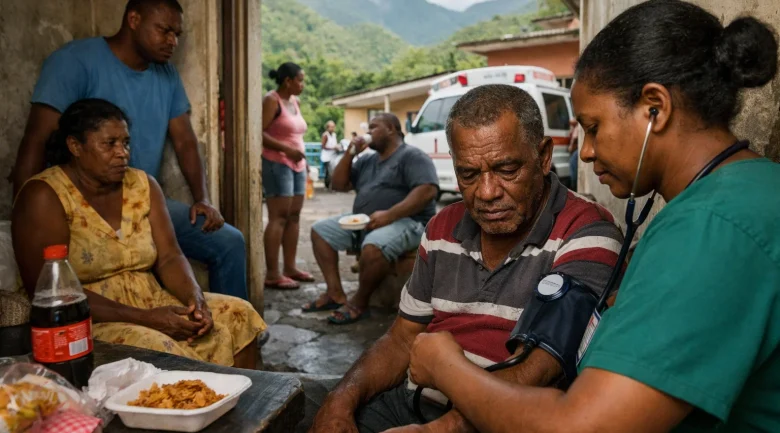
High blood pressure (technically referred to as Hypertension) stands as the primary driver of premature mortality and disability in Dominica, operating as a “silent killer” beneath the island’s vibrant, natural exterior. While the nation is celebrated for its pristine rainforests and volcanic peaks, this chronic non-communicable disease (NCD) has quietly become a national emergency, outpacing infectious pathogens in its impact on the public health system. The transition from traditional lifestyles to a modern, high-sodium diet has created a profound public health paradox that threatens the very life expectancy and economic productivity of the Dominican people.
The transition of hypertension from a rare clinical finding in the mid-20th century to a national epidemic mirrors the profound socioeconomic and nutritional shifts that have reshaped Dominican society. This comprehensive analysis explores the epidemiological data, clinical impacts, cultural drivers, and the strategic public health response to high blood pressure in Dominica.
Defining the Clinical Condition
Blood pressure is the force exerted by circulating blood against the walls of the body’s arteries, the major blood vessels in the body. Hypertension is diagnosed when this pressure remains persistently elevated.
Medically, it is defined by two measurements:
- Systolic Blood Pressure (SBP): The pressure in the arteries when the heart beats (contracts).
- Diastolic Blood Pressure (DBP): The pressure in the arteries when the heart rests between beats.
In Dominica, aligning with the World Health Organization (WHO) and the Pan American Health Organization (PAHO), hypertension is defined as a systolic reading of 140 mmHg or higher, and/or a diastolic reading of 90 mmHg or higher, on two or more consecutive clinical visits.
What makes hypertension uniquely dangerous, earning it the moniker “The Silent Killer”, is that it frequently presents with zero symptoms. A patient in Roseau or Marigot can walk around for a decade with a severely elevated blood pressure of 170/100 mmHg, feeling perfectly healthy. In contrast, the pressure systematically destroys the microvasculature in their brains, hearts, and kidneys.
Epidemiological Landscape: The Data-Driven Reality
The prevalence of high blood pressure in Dominica has escalated dramatically over the last three decades, positioning the island alongside other Caribbean nations bearing the highest burdens of cardiovascular disease in the Americas.
The Historical Context: The STEPS Survey
The first major wake-up call for the Ministry of Health was the 2007–2008 WHO STEPS survey of chronic disease risk factors. This population-based survey of adults aged 15–64 revealed a stark reality:
- 32.1% of the adult population had raised blood pressure or were currently on medication for the condition.
- The data highlighted a deeply concerning trend of physical inactivity and obesity, laying the groundwork for the current crisis.
Current Prevalence and Regional Standing
Recent data pooled by PAHO and the NCD Risk Factor Collaboration (NCD-RisC) paints an even more severe picture. In recent years, the regional age-standardized prevalence of hypertension in the Americas for adults aged 30–79 sat at approximately 35.4%.
However, Dominica falls into the highest-risk tier. Along with nations like Paraguay, the Dominican Republic, and Jamaica, Dominica ranks in the top 20% of countries globally with the highest prevalence of hypertension, with rates exceeding 45% in the adult demographic.
The Treatment and Control Gap
The true crisis in Dominica lies not just in the prevalence of the disease, but in the Control Rate, the percentage of diagnosed individuals whose blood pressure is successfully kept below the 140/90 mmHg threshold through lifestyle changes and medication.
| Epidemiological Indicator | Status in Dominica (Current Estimates) | Public Health Implication |
| Prevalence (Adults 30-79) | ~45% – 47% | Nearly 1 in 2 adults requires cardiovascular monitoring. |
| Awareness Rate | Moderate to Low | Many remain undiagnosed due to the lack of symptoms (“Silent Killer”). |
| Treatment Rate | Improving | More patients are prescribed medication, but adherence fluctuates. |
| Control Rate (<140/90) | Sub-optimal (< 40%) | The majority of treated patients are still at high risk for stroke/heart attack. |
While women in the region generally exhibit higher treatment and control rates than men, the overall population control rate indicates severe gaps in continuous, effective healthcare delivery and patient adherence.
The Clinical Burden: Morbidity and Mortality
Non-communicable diseases, driven primarily by uncontrolled hypertension, are responsible for over 52% of all deaths in Dominica. The systemic damage caused by high blood pressure manifests in several catastrophic clinical endpoints.
Cerebrovascular Accidents (Strokes)
Hypertension is the leading modifiable risk factor for stroke. The sheer mechanical stress of high blood pressure weakens the endothelial lining of the brain’s blood vessels. This can lead to two outcomes:
- Ischemic Stroke: Plaque builds up in the damaged vessels, creating a clot that starves the brain of oxygen.
- Hemorrhagic Stroke: The weakened vessel ruptures under the intense pressure, bleeding directly into the brain tissue. At the Dominica China Friendship Hospital (DCFH), strokes are a leading cause of prolonged admission, permanent disability, and sudden death. The economic loss of a working-age adult paralysed by a stroke is an immense burden on the Dominican family structure.
Chronic Kidney Disease (CKD) and Dialysis
The kidneys filter blood through millions of microscopic capillary tufts called glomeruli. Uncontrolled hypertension causes these delicate vessels to narrow, weaken, and harden (nephrosclerosis). Over time, the kidneys lose their ability to filter toxins.
Hypertension, alongside diabetes, is the primary driver behind the expanding need for hemodialysis at the DCFH. Dialysis is incredibly resource-intensive, requiring specialised machines, imported fluids, and highly trained nephrology nurses, representing a massive drain on the national health budget.
Ischemic Heart Disease and Heart Failure
To pump blood against the high resistance of stiff, narrowed arteries, the heart muscle must work harder. Just as any overworked muscle hypertrophies (thickens), it does the same. Specifically, Left Ventricular Hypertrophy (LVH) occurs, leading to a stiff heart that cannot relax and fill properly. Eventually, this culminates in congestive heart failure, where the heart cannot pump enough blood to meet the body’s needs, leading to fluid pooling in the lungs and extremities.
Sociocultural and Environmental Drivers
The high prevalence of hypertension in Dominica is not purely a biological accident; it is the inevitable consequence of a rapidly changing food environment and shifting economic landscapes.
The Caribbean Salt Culture
The human body requires only a very small amount of sodium to conduct nerve impulses and contract muscles. However, the modern Dominican diet far exceeds the WHO recommendation of less than 5 grams of salt per day (roughly one teaspoon).
This excess is driven by a complex cultural and economic history:
- Historical Preservation: Before the advent of reliable refrigeration on the island, salting and smoking were essential for preserving meat and fish. Saltfish (cod), smoked herring, and salted pigtail became deeply ingrained in the culinary identity of Dominica. Today, despite modern refrigeration, these highly sodium-dense foods remain dietary staples.
- The Processed Food Invasion: As Dominica modernised, traditional ground provisions (dasheen, yams, root vegetables) were increasingly replaced by cheaper, imported, ultra-processed foods. Canned sausages, instant noodles, and imported snacks contain staggering amounts of hidden sodium.
- Hidden Salts in Cooking: The heavy use of commercial bouillon cubes (seasoning cubes) and high-sodium soy sauces in traditional cooking creates meals where the sodium content vastly exceeds safe limits.
The Obesity Epidemic and Sedentary Shift
There is a linear biological relationship between Body Mass Index (BMI) and blood pressure. As weight increases, the vascular bed expands, and the heart must pump harder to supply oxygen to the excess tissue.
Historically, Dominicans engaged in high levels of incidental physical activity through agriculture, walking mountainous terrains, and manual labour. Today, the economy has shifted heavily toward service sectors, desk jobs, and motorised transport. Current data indicate that over 60% of the adult population in Dominica is classified as overweight or obese. This metabolic shift is a primary engine driving the hypertension epidemic.
Genetic and Demographic Vulnerabilities
Extensive global clinical research indicates that populations of African descent, which comprise the vast majority of Dominica’s population, often exhibit higher rates of hypertension, develop it earlier in life, and suffer more severe cardiovascular complications compared to other ethnic groups. While genetics loads the gun, it is the modern environment of high-salt diets and low physical activity that pulls the trigger.
Barriers to Effective Management
If hypertension is easily diagnosed with a blood pressure cuff and treated with inexpensive, generic medications, why do control rates remain so low in Dominica? The answers lie in behavioral psychology, cultural beliefs, and systemic healthcare friction.
The Fallacy of the Silent Killer
Because hypertension usually lacks overt symptoms (no pain, no fever, no rash), it does not trigger the human instinct to seek care. A patient may be prescribed daily medication, but if they “feel fine,” they often stop taking the pills. In their mind, medication is for curing an acute illness, not managing a silent, lifelong physiological state.
Traditional and Bush Medicine
Dominica has a rich, deeply respected heritage of “bush medicine” and herbalism. Bush teas made from soursop leaves, breadfruit leaves, and garlic water are widely consumed for their health benefits. While some of these plants possess mild vasodilatory properties, they are completely insufficient to manage clinical hypertension.
A dangerous barrier arises when patients abandon clinically proven pharmacological therapies (like ACE inhibitors, Calcium Channel Blockers, or Diuretics) in favor of unstandardized herbal remedies, falsely believing they have cured their high blood pressure until a stroke occurs.
White-Coat Hypertension
The geography of Dominica means that visiting a clinic often involves navigating winding mountain roads or waiting in crowded district health centers. The stress of the visit itself can cause a temporary spike in blood pressure, a phenomenon known as white-coat hypertension. This can lead to over-diagnosis or the inappropriate escalation of medication dosages by well-meaning clinical staff.
Systemic Fragmentation
Before recent digital reforms, the healthcare system struggled with patient tracking. If a patient missed a follow-up appointment at a rural clinic in La Plaine, there was no centralised system to alert the nurses to follow up. The patient would fall through the cracks, only re-entering the healthcare system via the emergency room during a hypertensive crisis.
The Strategic Public Health Response (2026 and Beyond)
Recognising that NCDs directly threaten the island’s future economic and social stability, the Dominican Ministry of Health, in partnership with PAHO, WHO, and the Caribbean Public Health Agency (CARPHA), has launched an aggressive, multi-sectoral counter-offensive.
The HEARTS in the Americas Framework
Dominica has adopted the HEARTS technical package, a global initiative led by the WHO designed to improve cardiovascular health in primary care settings. It moves away from arbitrary, physician-dependent treatment and institutes standardized protocols.
- H – Healthy-lifestyle counseling: District nurses are trained to move beyond simply saying “eat better” and provide actionable, culturally specific advice (e.g., teaching patients how to soak and boil saltfish multiple times to extract sodium before cooking).
- E – Evidence-based clinical protocols: Every clinic from Portsmouth to Grand Bay now uses the exact same, simplified algorithm for escalating blood pressure medication, ensuring standard care regardless of geography.
- A – Access to essential medicines: The government utilizes the PAHO Strategic Fund to bulk-purchase high-quality blood pressure medications, ensuring rural dispensaries never run out of stock.
- R – Risk-based management: Treating the patient holistically. A patient is not just evaluated for their blood pressure, but their combined cardiovascular risk (including smoking status, cholesterol, and blood sugar).
- T – Team-based care: Shifting the burden from doctors to public health nurses, pharmacists, and community health workers who manage routine follow-ups.
- S – Systems for monitoring: The implementation of digital Electronic Medical Records (EMRs) to track population-level control rates and automatically flag patients who miss prescription refills.
CARPHA’s Sodium Reduction Strategy (CESA)
Dominica is an active participant in CARPHA’s Regional Framework for Reduction of Sodium. This is a vital upstream intervention aimed at changing the food environment before disease occurs. The strategy focuses on:
- Change the food environment: Working with local bakers to incrementally reduce the amount of salt used in daily bread production, a stealthy but highly effective population-wide intervention.
- Educate the population: Public campaigns warning about the dangers of hidden sodium in bouillon cubes and processed meats.
- Strengthen system capacity: Utilizing the National Centre of Testing Excellence to audit the sodium content of imported goods.
The Sisserou Basket Initiative
In an effort to reduce reliance on imported, ultra-processed foods, the Ministry of Agriculture and the Ministry of Health promote the Sisserou Basket dietary guidelines. This visually replaces the Western food pyramid with a culturally resonant market basket, heavily emphasising the consumption of local ground provisions, fresh fish, and abundant local fruits, directly combating the obesity and sodium drivers of hypertension.
Toward a Healthier Nature Island
Hypertension in the Commonwealth of Dominica represents a formidable collision between biology, modern dietary habits, and cultural history. It is a silent, creeping epidemic that continuously strains the medical infrastructure, fills the dialysis wards, and robs families of their elders through premature strokes and heart disease.
However, the trajectory is not inevitable. By leveraging the comprehensive HEARTS framework, modernising primary care through digital surveillance, and executing aggressive sodium-reduction policies, Dominica is actively fighting back. The ultimate goal is to bridge the gap between the island’s pristine environmental image and the internal, physiological reality of its citizens, ensuring that the “Nature Island” fosters natural, vibrant, and resilient health for generations to come.


References
-
1.
WHO Dominica Hypertension Profile (2023) https://cdn.who.int/media/docs/default-source/country-profiles/hypertension/hypertension-2023/hypertension_dma_2023.pdf
-
2.
PAHO Dominica Country Profile https://hia.paho.org/en/country-profiles/dominica
-
3.
The Caribbean’s blood pressure rates rank highest in the Americas https://dominicanewsonline.com/news/homepage/homepage-carousel/the-caribbeans-blood-pressure-rates-rank-highest-in-the-americas/
-
4.
Prevalence of Hypertension and Diabetes in Dominica (ASRJETS) https://asrjetsjournal.org/American_Scientific_Journal/article/download/1658/759/4311
-
5.
Standardized Hypertension Management (PMC) https://pmc.ncbi.nlm.nih.gov/articles/PMC6438160/
-
6.
Caribbean Primary Care Hypertension Guidelines https://extranet.who.int/ncdccs/Data/GRD_D1_Hypertension%20Mgt%20guidelines.pdf