


Bush Tea in Dominica
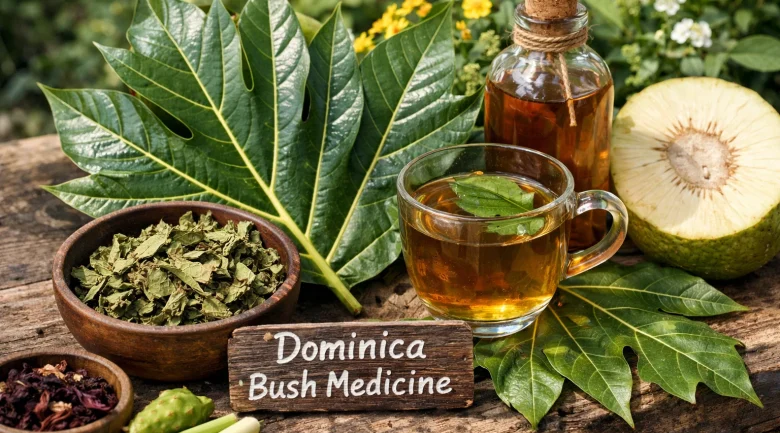
Dominica has a time-honoured tradition of drinking bush tea, but that rarely refers to the processed Camellia sinensis leaves found on supermarket shelves. On the Nature Isle, teas are gathered from nature, not just bought. This is “Bush Tea”, a vibrant, aromatic, and deeply medicinal tradition that serves as the island’s primary wellness system. For generations, the lush backyard gardens and untamed rainforests have provided a liquid pharmacopoeia that fuels the morning ritual of nearly every household.
Bush tea is more than a beverage; it is a cultural anchor. It is the first thing brewed as the sun crests over the Atlantic and the last thing whispered about when a child catches a cold. In a land defined by its biological richness, the tradition of steeping local leaves, barks, and roots represents a profound connection between the people and the volcanic soil they inhabit. Currently, as the world moves toward holistic wellness, the Bush of Waitukubuli is being rediscovered as a masterclass in ethnobotany.
The Philosophy of the Bush
The term bush in the local vernacular refers to any plant that grows wild or in a semi-cultivated state. To a visitor, the roadside might look like a wall of green; to a local, it is a well-stocked pharmacy. The philosophy of bush tea is rooted in balance. It is used for “cooling” the blood, “cleaning” the system, or “building” strength.
Unlike modern pharmaceuticals, which often isolate a single compound, bush tea is an infusion of the whole plant’s essence. It is relatable, accessible, and free. It bridges the gap between the elderly herb men who hold ancestral knowledge and the younger generation seeking to maintain their heritage in a modern world.
The Essential Pharmacopeia: 15 Core Herbs of Dominica
To understand the complexity of this tradition, one must know the players. Below is a guide to the most prominent plants used in the Dominican tea pot, each with its unique role in the island’s health narrative:
- Lemongrass (Fever Grass): Known for its bright, citrusy aroma; currently the most popular morning tea used to soothe nerves and reduce mild fevers.
- Sweet Basil (Tulsi/Spice): A fragrant leaf used not just for cooking but for settling upset stomachs and providing a calming effect before sleep.
- Soursop Leaf: Famed for its sedative properties; often brewed in the evening to combat insomnia or to help stabilize high blood pressure.
- Bay Leaf: Harvested from the same tree that produces the island’s famous oils; it provides a warm, spicy tea for respiratory health.
- Mint (Garden/Black): Ubiquitous in backyard gardens; it is the go-to remedy for digestion and refreshing the palate after a heavy meal.
- Ginger: A powerful root harvested from the volcanic soil; used to provide heat to the body and combat nausea and inflammation.
- Periwinkle: Beyond its beautiful flowers, the leaves are traditionally steeped to help manage sugar levels, though its use requires expert knowledge.
- Moringa: Often called the miracle tree, its leaves provide a nutrient-dense tea used to boost the immune system and increase energy.
- Noni: While the fruit is pungent, the leaves are steeped to address joint pain and provide a general boost to cellular health.
- Zicack (Fat Pork): The leaves of this coastal shrub are traditionally used in teas to address bowel issues and strengthen the digestive tract.
- Castor Bean Leaf: Used with extreme caution and primarily topically or in specific cleansing rituals to draw out heat from the head.
- Big Man Leaf: As the name suggests, this plant is traditionally associated with male vitality and increasing physical stamina and blood flow.
- Annatto: While famous for its red dye, the leaves are brewed to treat skin conditions and provide a mild antioxidant boost.
- Vervain: A small, hardy plant found in pastures; used to cool the system and soothe children who are restless or colicky.
- Doudouce (Sweetener): Often added to other bitter teas; it provides a natural, subtle sweetness that rounds out the earthy flavors of the bush.
The Social Ritual: The Morning “Hot Water”
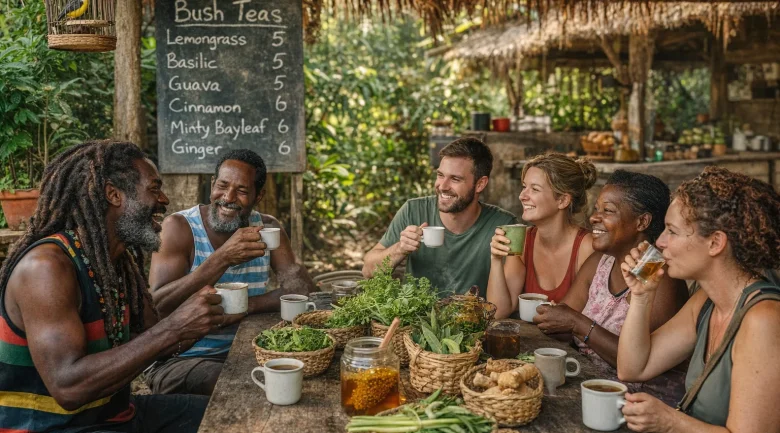
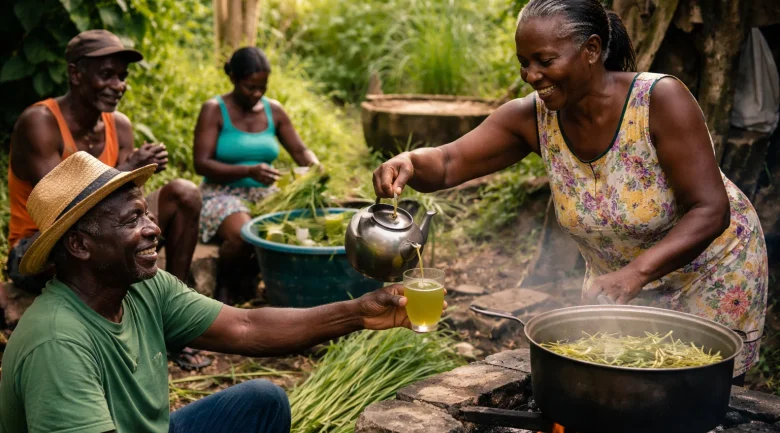
In many rural communities, the call to come for your hot water is the official start of the day. Bush tea is rarely consumed alone. It is a communal experience. In the Layou Valley or the heights of Bellevue Chopin, the morning tea is often accompanied by bakes (fried dough) or roasted breadfruit.
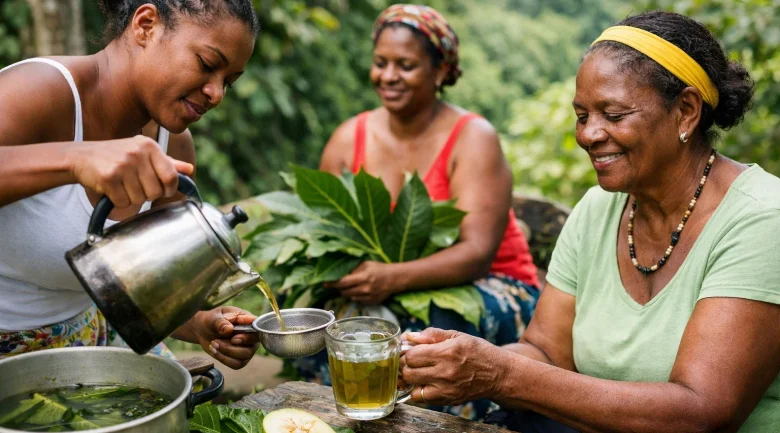
The preparation is a sensory experience. The sound of the water boiling in a battered tin pot, the snapping of fresh lemongrass stalks, and the steam rising to meet the cool mountain air create an atmosphere of groundedness. It is time to discuss the day’s work, the weather, and community news. For many, the tea is the only medicine they need to face a hard day of farming in the steep interior.
The Art of the Steep: Infusion vs. Decoction
Dominican tea preparation is an intuitive science. There are two primary methods used, depending on which part of the plant is being utilised.
The Infusion (The Gentle Draw)
For delicate leaves and flowers, like Mint, Basil, or Lemongrass, the infusion is preferred. The water is brought to a boil, removed from the heat, and the fresh bush is dropped in to steep for five to ten minutes. This preserves the volatile oils and delicate flavours without making the tea overly bitter.
The Decoction (The Hard Boil)
For barks, roots, and tough seeds, like Ginger, Cinnamon bark, or certain woody stems, a decoction is necessary. These items are boiled along with the water for several minutes to extract the deeper tannins and minerals. This results in a much stronger, more potent brew, often used for specific medicinal purposes.
Modern Wellness and the Future of the Tradition
Currently, the tradition of bush tea is evolving. While the elderly still prefer their tea straight from the garden, a new wave of Dominican entrepreneurs is packaging these bushes for the global market. You can now find dried, sachet versions of Lemongrass and Soursop in gift shops from Roseau to Portsmouth.
This commercialisation helps preserve the knowledge, but it also invites a conversation about sustainability. As more people realise the benefits of the island’s flora, there is a renewed focus on protecting the rainforests and the coastal scrublands from over-harvesting. The government and local NGOs are encouraging Medicinal Gardens as part of the eco-tourism experience, ensuring that every visitor can experience the island’s healing power without depleting its natural resources.
The Eco-Tourism Experience: A Sip of the Island
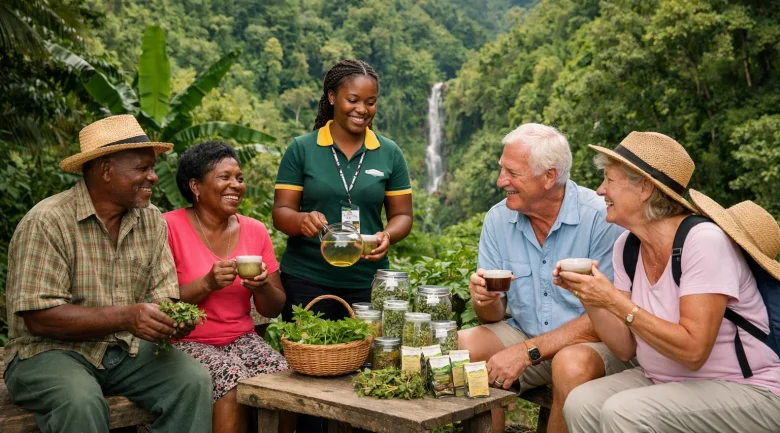
For the traveller, drinking bush tea is the most intimate way to consume the essence of the Nature Island. Many guesthouses and eco-lodges nestled along the Waitukubuli National Trail offer a Bush Tea Breakfast. There is a specific kind of magic in sitting on a veranda, watching the mist roll off Morne Trois Pitons, and sipping a tea made from leaves picked only thirty feet away.
It is a relatable luxury. It costs nothing but time and a little knowledge. Whether you are looking to settle your stomach after a long flight, soothe your muscles after hiking the Boiling Lake, or simply want to participate in a thousand-year-old Caribbean tradition, bush tea is your gateway. It is the flavor of resilience, the scent of the volcano, and the warmth of Dominican hospitality in a single cup.


References
-
1.
Medicinal Plant Use in Dominica (Texas A&M) https://dominica.tamu.edu/wp-content/uploads/sites/54/2017/09/Patel_Megha.pdf
-
2.
Medicinal Plants of Dominica: Uses & Chemical Constituents https://www.plantsjournal.com/archives/2015/vol3issue5/PartC/3-5-15.pdf
-
3.
Dominica Botanic Gardens - Medicinal Plants https://www.dominicagardens.com/medicinal-plants.html
-
4.
The Enduring Wisdom of the Land (Rosalie Bay) https://www.rosaliebaydominica.com/blogs/the-enduring-wisdom-of-the-land