




Holy Basil
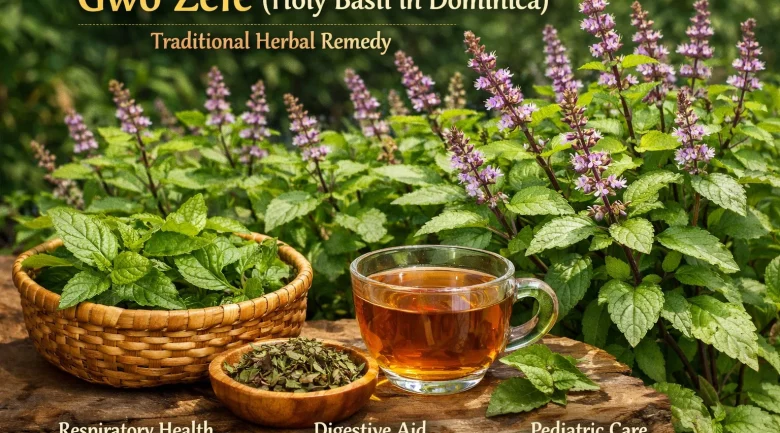
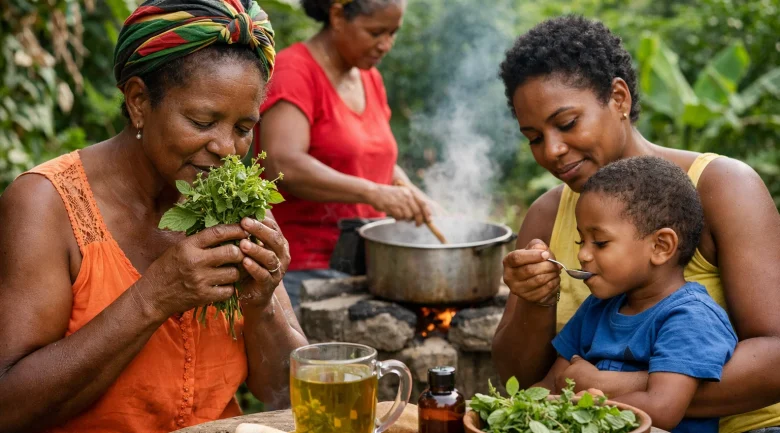
Holy Basil (Ocimum tenuiflorum) in Dominica is a perennial aromatic herb deeply embedded in the island’s traditional medicine and domestic gardens. Known locally in Kwéyòl as Gwo Zèfè, it is distinct from the common sweet basil used primarily for culinary purposes. In the Dominican botanical tradition, Holy Basil is classified as a warming herb and is regarded as one of the most versatile remedies for respiratory, digestive, and pediatric health.
Botanical Profile and Identification
Holy Basil is a member of the Lamiaceae family and is native to the tropical regions of the Old World, though it has been naturalized in Dominica for centuries.
- Growth Habit: It is an erect, multi-branched subshrub, often reaching heights of 30 to 60 cm. The stems are woody at the base and covered in fine hairs.
- Leaves and Flowers: The leaves are green or purple-tinted, ovate, and have slightly serrated (toothed) margins. It produces small, purplish or white flowers on elongated racemes.
- Scent Profile: Unlike the peppery-sweet scent of Mediterranean basil, Gwo Zèfè possesses a strong, pungent aroma reminiscent of cloves and peppermint due to its high eugenol content.
Primary Medicinal Applications
In Dominican bush medicine, Holy Basil is a primary active herb used to stimulate the body’s natural defenses and treat symptoms of congestion and infection.
Respiratory and Immune Support
- Coughs and Bronchitis: It is the standard ingredient for cold tea in Dominica. The leaves are boiled to make an expectorant that helps loosen phlegm and soothe the throat lining.
- Fever and Flu: Due to its diaphoretic (sweat-inducing) properties, it is used to break fevers associated with the common cold or seasonal influenza.
- Asthma: Regular, mild infusions are traditionally consumed by those with chronic respiratory issues to strengthen the lungs and reduce the severity of spasms.
Gastrointestinal and Pediatric Care
- Digestive Relief: Gwo Zèfè is used to treat gripes (abdominal cramps), flatulence, and indigestion. It is considered a carminative that settles the stomach.
- Infant Care: In rural Dominican communities, a very weak infusion of Holy Basil is a time-honored remedy for colic in infants.
Topical and Antiseptic Uses
- Skin Infections: Crushed leaves are applied to minor cuts, fungal infections, and insect bites to utilize the plant’s natural antifungal and antibacterial properties.
- Earaches: A traditional practice involves warming a leaf over a flame, extracting a drop of juice, and placing it into the ear to relieve pain.
Preparation and Administration
- Standard Infusion: Five to seven leaves are typically steeped in one cup of boiling water for 5 to 10 minutes. For respiratory ailments, it is almost always sweetened with local honey or lime juice.
- Medicinal Baths: In combination with other aromatic herbs like Bay Leaf or Citrus leaves, Holy Basil is added to warm baths to treat physical fatigue and chill in the body.


References
-
1.
Ethnophysiology and herbal treatments of intestinal worms in Dominica, West Indies https://s3.wp.wsu.edu/uploads/sites/1932/2018/01/quinlan_et_al_2002_worms.pdf
-
2.
Bush Medicine in Dominica: Ethnophysiology and Medical Ethnobotany in a Caribbean Horticultural Village https://ethnobiology.org/publications/contributions/bush-medicine-dominica-ethnophysiology-medical-ethnobotany-caribbean-horticultural-village
-
3.
Medicinal Plant Use in Dominica (Texas A&M Study) https://dominica.tamu.edu/wp-content/uploads/sites/54/2017/09/Patel_Megha.pdf
-
4.
CABI Compendium: Ocimum tenuiflorum https://www.sciencedirect.com/topics/pharmacology-toxicology-and-pharmaceutical-science/ocimum-tenuiflorum