
Medicinal Baths in Dominica
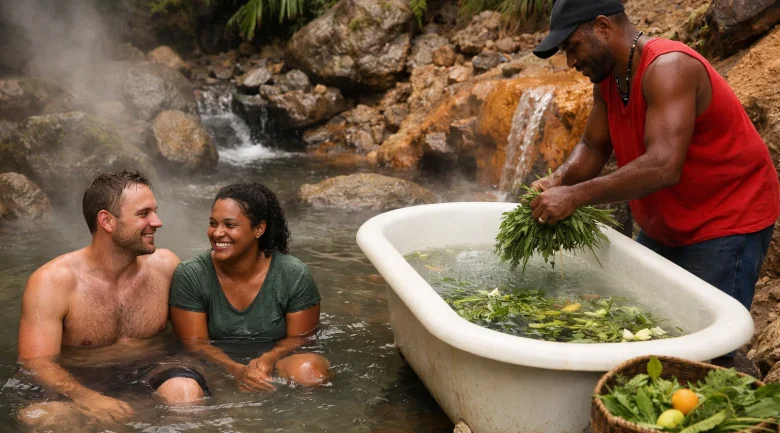
The tradition of medicinal bathing in Dominica is a profound intersection of the island’s raw volcanic energy and its deep-seated Kalinago and African heritage. While the geological heat provides the medium, the culture of “taking the waters” is an ancestral practice that has survived through centuries of colonial shifts and environmental changes. Today, the wellness industry is not just a commercial sector but a formalisation of a lifestyle that has prioritised hydrothermal therapy and herbal medicine for generations.
The Ancestral Roots: Kalinago and African Traditions
The history of medicinal baths begins with the Kalinago people, the island’s indigenous inhabitants, who called the island Waitukubuli. For the Kalinago, the sulfur springs and thermal vents were sacred sites of purification. They understood the spirit of the water long before modern chemistry identified sulfur or magnesium. Today, many of the names of the thermal regions still reflect this indigenous connection to the earth’s heat.
Following the arrival of enslaved Africans, these geothermal features were integrated into a new, syncretic form of traditional medicine. African herbal lore merged with the island’s existing knowledge of its flora and the therapeutic properties of the natural hot springs. Currently, the practice of bushing a bath, adding specific medicinal herbs and leaves to thermal water, remains a cornerstone of local health. This tradition was a form of resistance and self-care, providing a way for marginalised populations to maintain their health using the natural pharmacy of the rainforest.
The Wellness Village: Wotten Waven’s Cultural Identity
The village of Wotten Waven currently stands as the geographical heart of this tradition. Unlike clinical spas found in Europe or North America, the baths in Wotten Waven are deeply integrated into the community’s social fabric. Historically, these springs were communal meeting points where villagers would soak in the evening to wash away the physical toll of agricultural labor. Today, this communal spirit is preserved in the rustic, open-air design of the facilities.
The evolution from communal soak to a structured wellness industry began in the late 20th century as local families realized the global value of their liquid gold. Currently, facilities like Ti Kwen Glo Cho and Screws Sulphur Spa are family-owned enterprises that have transformed private land into botanical sanctuaries. These sites are designed to minimise the footprint on the delicate rainforest ecosystem, utilising bamboo pipes and local stone to channel the water, ensuring that the experience remains an extension of the forest rather than an intrusion upon it.
The Herbal Integration: “Bushing” the Bath
A unique aspect of the medicinal bath culture is the sophisticated use of ethnobotany. Today, a truly traditional medicinal bath is rarely just water. Currently, practitioners utilise a wide array of local flora to enhance the mineral effects of the sulfur:
- Soursop Leaves: Often added to baths to treat hypertension and induce a state of deep relaxation and sleep.
- Lemongrass (Fever Grass): Used in thermal water to open the sinuses and treat respiratory congestion.
- Bay Leaves: Derived from the island’s abundant bay trees, it is used to invigorate the skin and provide relief from cold in the bones or flu-like symptoms.
- Castor Oil Leaves: Frequently applied as a poultice while soaking to reduce localized inflammation in the joints.
This herbal hydrotherapy is a living tradition. Currently, visitors can request specific herbal infusions based on their ailments, reflecting a personalised approach to wellness that predates modern boutique spa treatments by centuries.
The Five Pillars of Modern Wellness in Dominica
Today, the wellness industry is categorized into five distinct pillars that define the national strategy for health tourism. These pillars are currently being used to market the island as a premier destination for holistic recovery:
- Thermi-Thermal Therapy: Utilizing the varying temperatures of sulfur pools to stimulate the lymphatic system.
- Dermatological Rejuvenation: The use of volcanic mud and high-sulfur silt to treat chronic skin conditions.
- Ethnobotanical Healing: The integration of the island’s 1,200+ flowering plant species into teas, tinctures, and bath infusions.
- Forest Bathing (Shinrin-yoku): Leveraging the high oxygen levels and phytoncides of the primary rainforest to lower cortisol.
- Nutritional Wellness: The Farm-to-Table movement, utilising the island’s fertile volcanic soil to produce nutrient-dense, organic food.
Technical Milestones and Preservation Efforts
- Establishment of the Wellness Association: Currently, a formal body of practitioners ensures that traditional knowledge is protected and that standards of service are maintained across the industry.
- Organic Certification Programs: Today, many wellness farms are seeking international organic certification to validate the purity of the herbs used in medicinal treatments.
- Protection of Geothermal Reservoirs: Currently, strict environmental monitoring ensures that the natural flow of medicinal springs is not disrupted by the island’s broader infrastructure developments.
- Heritage Site Documentation: Today, efforts are underway to document the oral histories of the elder healers who hold the secrets to specific herbal bath recipes.
- Eco-Spa Architecture Standards: Currently, new wellness developments must adhere to low-impact building codes to preserve the natural canopy and water tables.
Socio-Economic Impact of the Healing Arts
The wellness industry currently serves as a vital economic engine for rural communities. Today, it provides livelihoods for bush doctors, therapists, farmers, and guides who specialise in the “healing trails.” This economy is built on the principle of “high value, low impact,” ensuring that the island’s resources are not depleted by mass tourism. Currently, the government is incentivising the Wellness Village model, in which an entire community benefits from the influx of visitors seeking restoration.
By focusing on the “Total Health” of the visitor, physical, mental, and spiritual, the island is carving out a niche that is distinct from the typical Caribbean “sun and sand” offering. Today, a trip to the medicinal baths is seen as a pilgrimage to one of the last remaining places where the earth’s primal energy and human tradition exist in perfect, healing harmony.
The Living Legacy of the Springs
The medicinal baths are the heartbeat of the island’s cultural resilience. Currently, as the world seeks more authentic and nature-based forms of healing, the traditions of Wotten Waven and Soufrière are more relevant than ever. Today, we invite you to step into these waters, not just as a tourist, but as a participant in a centuries-old ritual of renewal.


References
-
1.
Where to Find Dominica’s Healing Thermal Waters https://secretbay.dm/where-to-find-dominicas-healing-thermal-waters/
-
2.
Screws Sulphur Spa: Tripadvisor https://www.tripadvisor.com/Attraction_Review-g147281-d1028448-Reviews-Screw_s_Sulphur_Spa-Dominica.html
-
3.
Natural Stress Reliever: Health Benefits of Dominica Hot Springs https://www.anichidevelopment.com/dominica-hot-springs/
-
4.
Dominica Botanic Gardens Medicinal Plant List https://www.dominicagardens.com/medicinal-plants.html
-
5.
Medicinal Plant Use in Dominica: Megha Patel https://dominica.tamu.edu/wp-content/uploads/sites/54/2017/09/Patel_Megha.pdf
-
6.
The importance of botellas and other plant mixtures in Dominican traditional medicine https://pmc.ncbi.nlm.nih.gov/articles/PMC2829983/
-
7.
Discover Dominica’s Herbal Cascade Treatment https://www.rosaliebaydominica.com/discover-dominica-s-herbal-cascade-treatment