


Black Sage (Cordia Curassavica)
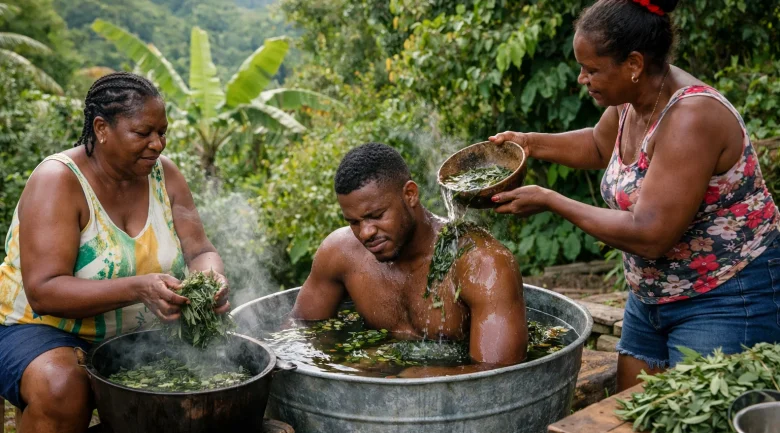
Black Sage (Cordia curassavica), occasionally referred to in Dominica as Mahot Noir, is a resilient, aromatic shrub extensively used by the island’s bush doctors for its anti-inflammatory and analgesic properties. Found across the diverse landscapes of the Nature Isle, it is particularly esteemed for its effectiveness in treating physical trauma and musculoskeletal pain. In the Dominican botanical tradition, it is often utilised in the form of medicinal baths or topical washes to “draw out” pain and reduce swelling.
Botanical and Geographic Profile
Black Sage is a member of the Boraginaceae family and is native to the tropical Americas. It is highly adapted to the Caribbean environment, showing significant presence in both coastal and inland regions.
- Morphology: The plant is a multi-branched shrub typically reaching 1 to 3 meters in height. It features dark green, lance-shaped leaves with a rough, sandpapery texture and serrated margins. The flowers are small, white, and tubular, appearing in spikes at the ends of branches, followed by small, bright red fleshy fruits.
- Aromatic Properties: The foliage possesses a strong, pungent, and resinous scent when crushed, which is a characteristic marker used by local harvesters to identify the species.
- Local Habitat: It is a hardy plant frequently found in dry coastal scrub, roadside edges, and abandoned agricultural lands. It is common in the drier leeward parishes, but also thrives in the disturbed soils of the interior.
Ethnomedicinal Data and Applications
Dominican traditional herbal medicine knowledge emphasises the use of Black Sage for external healing and the management of chronic pain.
| Application | Traditional Use in Dominica | Part Used |
| Analgesic | Relief of arthritis, rheumatism, and general joint pain. | Leaves & Stems |
| Anti-inflammatory | Used to treat sprains, bruises, and localized swelling. | Leaves |
| Dermatological | Applied as a wash for skin irritations and to promote wound healing. | Leaves |
| Respiratory | Occasionally used in mild infusions for coughs and colds. | Leaves |
Technical Analysis and Safety Standards
Pharmacological evaluations of Cordia curassavica support the traditional Dominican applications, particularly concerning its inflammatory response.
- Chemical Constituents: The plant is rich in essential oils, including alpha-humulene and trans-caryophyllene, which are known for their potent anti-inflammatory and analgesic activities.
- Topical Efficacy: In Dominica, it is considered one of the strongest medicinal herbs for joint care. Scientific data corroborates that the essential oils can penetrate the skin to provide localised relief.
- Safety Profile: While primarily used externally, internal consumption as a tea is practised in moderation. Local practitioners advise caution for pregnant women, consistent with the general conservative approach to strong aromatic shrubs.
Preparation and Administration
- Medicinal Bath: A large quantity of Black Sage leaves and young stems is boiled in a copper or large pot. The decoction is then added to bathwater. This is the standard Dominican treatment for sore body or chronic rheumatism.
- Topical Wash: For localized injuries like a sprained ankle, a strong decoction is used to bathe the area several times a day to reduce inflammation.
- Bush Tea: For respiratory or digestive issues, 2 to 3 leaves are steeped in hot water. This is often taken as a bitter tea to cleanse the blood.


References
-
1.
Journal of Medicinal Plants Studies (2015): Medicinal plants of Dominica https://www.plantsjournal.com/archives/2015/vol3issue5/PartC/3-5-15.pdf
-
2.
Medicinal Plant Use in Dominica - Caribbean Study Abroad https://dominica.tamu.edu/wp-content/uploads/sites/54/2017/09/Patel_Megha.pdf
-
3.
TRAMIL: Program for Applied Ethnomedicine in the Caribbean - Cordia curassavica Monograph https://www.tramil.net/en/plant/cordia-curassavica