


Wild Thyme
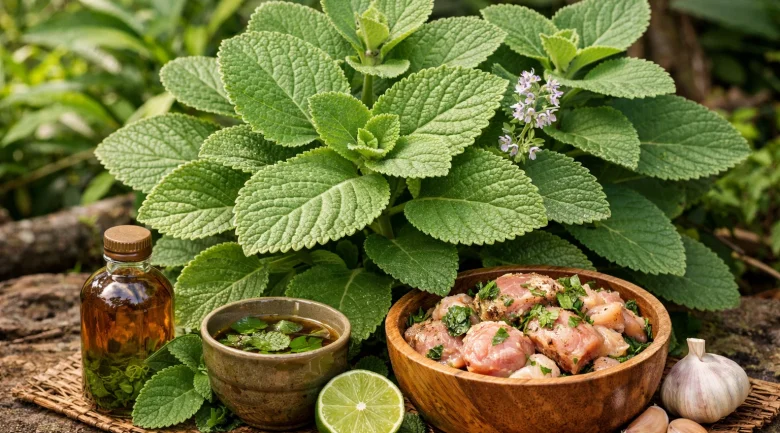

Wild Thyme (Plectranthus amboinicus) in Dominica, known in Kwéyòl as Gros Ditèn (translated as thick thyme). Other names: Spanish Thyme, Cuban Oregano, Indian Borage, French Thyme and Broadleaf Thyme. It is a semi-succulent perennial herb central to both the island’s culinary and medicinal herbal traditions. Unlike the smaller-leafed Thymus vulgaris (Petite Ditèn), Gros Ditèn is characterised by its large, fleshy, highly aromatic leaves. In the Dominican context, it is a primary multipurpose herb, utilised as a foundational seasoning for proteins and as a potent remedy for respiratory and digestive ailments.
Botanical and Geographic Profile
Wild Thyme is a member of the Lamiaceae (mint) family and is native to Southern and Eastern Africa, though it has been naturalized across the Caribbean for centuries.
- Morphology: The plant features thick, brittle stems and broad, ovate, fleshy leaves covered in fine, velvety hairs (trichomes). The margins of the leaves are typically crenate (scalloped).
- Aromatic Properties: When bruised or crushed, the leaves release a powerful, pungent aroma that combines the scents of thyme, oregano, and mint. This is due to high concentrations of carvacrol and thymol.
- Local Habitat: It is a hardy, drought-tolerant plant that grows wild in coastal areas and waste grounds but is most commonly found in lakou (backyard) gardens across Dominica. It thrives in well-drained, fertile volcanic soil and is particularly abundant in the sun-drenched gardens of Dominica’s rural communities.
Ethnomedicinal Data and Applications
In Dominica, Gros Ditèn is categorized as a “warming” herb and is a first-line treatment for congestion and internal discomfort.
| Application | Traditional Use in Dominica | Part Used |
| Respiratory | Treatment of stubborn coughs, sore throats, bronchitis, and nasal congestion. | Leaves |
| Digestive | Relief from flatulence, colic, and stomach upset; used to settle the belly. | Leaves |
| Systemic | Management of chronic asthma and easing of hiccoughs. | Leaves |
| Anticonvulsant | Historically cited in regional medicine for treating convulsions and epilepsy. | Leaves |
| Anti-infective | Topical and internal use for skin infections and helminthiasis (worms). | Leaves |
Technical Analysis and Safety Standards
Pharmacological research, including studies conducted within the Caribbean region, confirms the high bioactivity of Plectranthus amboinicus.
- Chemical Constituents: The herb contains significant levels of essential oils, flavonoids, and terpenes. The presence of carvacrol provides it with documented antimicrobial, antifungal, and anti-inflammatory properties.
- Medicinal Versatility: Beyond respiratory care, research into Dominican medicinal plant use highlights its application in treating hepatopathy (liver issues) and renal or vesical calculi (kidney/bladder stones) in specific traditional protocols.
- Safety Profile: While widely used in cooking and as a tea, its high essential oil content means that medicinal decoctions are usually prepared with a small number of leaves (1–3) to prevent gastric irritation.
Culinary Integration
In Dominica, Wild Thyme is almost never absent from the kitchen. It is a critical component of Green Seasoning.
- Seasoning: The leaves are finely minced and rubbed into fish, poultry, and meats (especially goat and pork) to neutralise fresh (gamey) odours and provide a deep, savoury base.
- Cooking: Unlike delicate herbs, the fleshy leaves of Gros Ditèn withstand long simmering times in stews, soups, and oil down dishes without losing their flavor profile.
Preparation and Administration
- Cough Syrup/Tea: A common Dominican home remedy involves steeping one or two large leaves in hot water with lime and honey. For children, the leaf is sometimes warmed over a flame to soften it, and the expressed juice is administered directly with a spoon of honey.
- Steam Inhalation: Because of its high volatile oil content, the leaves are often added to boiling water for steaming to clear blocked sinuses and chest congestion.


References
-
1.
Journal of Medicinal Plants Studies (2015): Medicinal plants of Dominica https://www.plantsjournal.com/archives/2015/vol3issue5/PartC/3-5-15.pdf
-
2.
Medicinal Plant Use in Dominica - Caribbean Study Abroad https://dominica.tamu.edu/wp-content/uploads/sites/54/2017/09/Patel_Megha.pdf
-
3.
Program for Applied Ethnomedicine in the Caribbean - Plectranthus amboinicus Monograph https://www.tramil.net/en/plant/plectranthus-amboinicus