



Ginger in Dominica
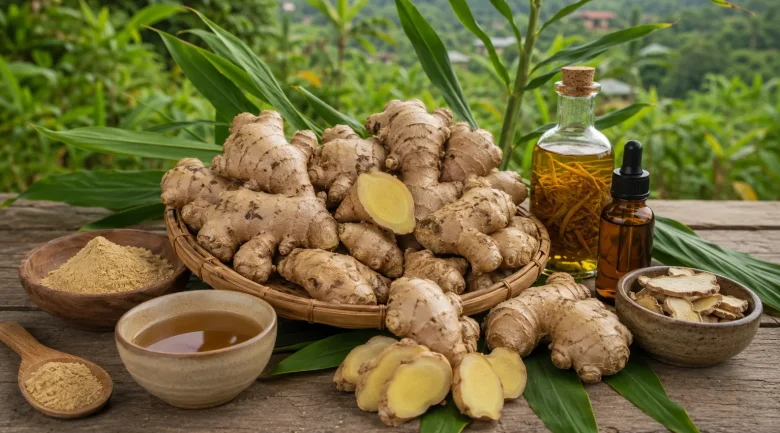
Ginger (Zingiber officinale) is a high-value, herbaceous perennial root crop cultivated across the island of Dominica. Highly regarded for its potent aroma, sharp flavor, and dense, fibrous rhizome, ginger serves as a cornerstone of Dominica’s domestic agricultural market, traditional medicine, and growing agro-processing sector.
While historically overshadowed by dominant export monocrops like bananas, ginger has emerged under modern agricultural diversification policies as a key non-traditional crop. Its climate resilience, high profit margins, and adaptability to Dominica’s volcanic soils make it an attractive commodity for smallholder farmers, particularly in the island’s wet, elevated interior regions.
Botanical and Cultivation Context
Dominica’s unique topography and microclimates provide optimal agro-ecological conditions for ginger cultivation. The crop thrives under specific environmental parameters that are naturally abundant on the island.
- Soil Requirements: Ginger requires deep, fertile, well-draining soils with a high organic matter content and a pH range between 5.5 and 6.5. Dominica’s rich volcanic clay-loams, particularly in highland regions, are ideal. Poorly drained clay soils are actively avoided by farmers, as waterlogging rapidly triggers pythium rhizome rot (soft rot).
- Rainfall and Temperature: The plant demands high annual rainfall (exceeding 2,000 mm) distributed evenly throughout its growth cycle, coupled with warm temperatures between 25°C and 32°C.
- Primary Cultivation Belts: The major commercial ginger-producing areas in Dominica are situated in the wet interior and eastern agricultural regions. Key cultivating zones include:
- Bellevue Chopin
- Grand Bay (south-east)
- Marigot and Wesley (north-east)
- Pont Cassé and the surrounding interior heights
The planting season typically begins at the start of the rainy season, between May and June, utilizing matured rhizome “seed pieces” or “fingers.” The crop takes approximately 8 to 9 months to reach full maturity, with the main harvesting window occurring from January through April.
Economic Data and Trade Metrics
Unlike larger regional producers, Dominica focuses on high-quality niche output rather than massive industrial volumes.
National Production Volume
According to data maintained by the Food and Agriculture Organization (FAO) of the United Nations, Dominica’s raw ginger production has stabilised as a reliable non-traditional crop. The island produces approximately 160 to 170 metric tons of fresh ginger annually, utilising roughly 85 harvested acres.
Export Trade and Partners
Despite its modest production scale, Dominica has developed a highly profitable export trade, positioning the island as a key supplier of premium fresh ginger within both regional and international markets. In recent trading years, Dominica’s annual fresh ginger exports reached an estimated value of USD $1,033,843 (approximately XCD $2,791,376). In fact, ginger represents one of the highest percentage shares of Dominica’s total export portfolio compared to global baselines.
The primary destinations for Dominican ginger are heavily anchored in neighboring Caribbean territories and European markets:
| Export Destination | Value (USD) | Export Quantity (Kg) | Key Market Drivers |
| France | $657,470 | 138,972 kg | High demand for premium organic imports. |
| Antigua and Barbuda | $180,580 | 38,070 kg | Heavily reliant on Dominican agricultural imports for local tourism and consumption. |
| Saint Kitts and Nevis | $43,170 | 8,762 kg | Steady regional import partner for fresh ground provisions and spices. |
| United Kingdom | $20,810 | 4,968 kg | Diaspora market demand and specialty retail. |
| Montserrat | $20,740 | 4,269 kg | Inter-island trade of fresh agricultural produce. |
Market Pricing Structures
In Dominica’s domestic marketplace, ginger is treated as a premium spice. Prices fluctuate moderately based on seasonal supply, with costs peaking during the late-summer planting season (August–October) and dropping to their lowest points during the peak harvest in the first quarter of the year.
- Farm-gate Prices: The price paid directly to farmers by wholesalers or hucksters typically ranges from XCD $4.00 to XCD $6.00 per pound (approximately XCD $8.80 to XCD $13.20 per kilogram), depending on the cleanliness, size, and grade of the rhizomes.
- Retail Market Prices (Roseau Market and Portsmouth Market):
- Average Retail Range: XCD $5.85 to XCD $9.37 per pound (roughly XCD $12.91 to XCD $20.65 per kilogram).
- High-Demand Periods: During major cultural events, such as the Independence celebrations or the lead-up to Christmas, retail prices can escalate to XCD $12.00 per pound due to spiked demand for traditional beverage preparation.
- Wholesale Market Prices: Wholesale prices fluctuate between USD $1.52 and USD $2.43 per pound (XCD $4.10 to XCD $6.56 per pound), driving commercial-scale interest from regional shipping hucksters.
Cultural and Culinary Significance
In Dominican households, ginger is far more than a culinary ingredient; it is a vital component of daily wellness and seasonal traditions.
Traditional Beverages
- Ginger Beer: A fermented, spicy, sweetened beverage prepared primarily during festive seasons. Freshly grated ginger is steeped with spices, sweetened with cane sugar, and left to ferment naturally for several days before serving cold over ice.
- Sorrel Infusions: Ginger is an indispensable companion to sorrel juice, where it is boiled alongside the Hibiscus sabdariffa sepals to balance the natural tartness of the plant with warm, spicy notes.
- Cocoa Tea: A standard breakfast beverage made from local cocoa blocks, bay leaf, nutmeg, and fresh ginger.
Traditional Medicine and Folk Applications
In Dominican folk medicine (traditionally passed down through generations), ginger is classified as a powerful “warming” herb.
- Digestive Aid: Ginger tea, made by boiling bruised rhizomes with cinnamon or mint, is the standard home remedy for flatulence, indigestion, and motion sickness.
- Respiratory Relief: During the flu season, a concentrated decoction of ginger, lime juice, and local honey is prepared to soothe coughs, reduce congestion, and alleviate sore throats.
Agro-Processing and Value Addition
To mitigate post-harvest losses and maximise agricultural revenue, the Government of Dominica, primarily through the Dominica Export Import Agency (DEXIA), promotes the processing of raw ginger into high-value shelf-stable commodities.
Local private enterprises and agricultural cooperatives have successfully commercialized several ginger-based products:
- Ginger Powders and Spices: Dehydrated and pulverized ginger used for domestic culinary purposes and regional export.
- Infused Hot Sauces and Marinades: Agro-processing companies manufacture specialty products like garlic-ginger marinades and ginger-infused hot pepper sauces, blending local hot peppers with fresh ginger pulp.
- Herbal Teas: Packaged dried ginger teas, often blended with lemongrass (fever grass) or herbal bush medicines, targeted at the local health-conscious market and tourist trade.


