



Sweet Basil
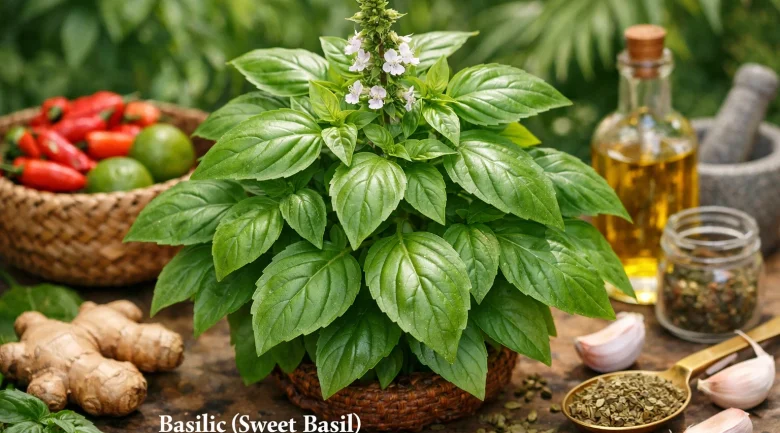
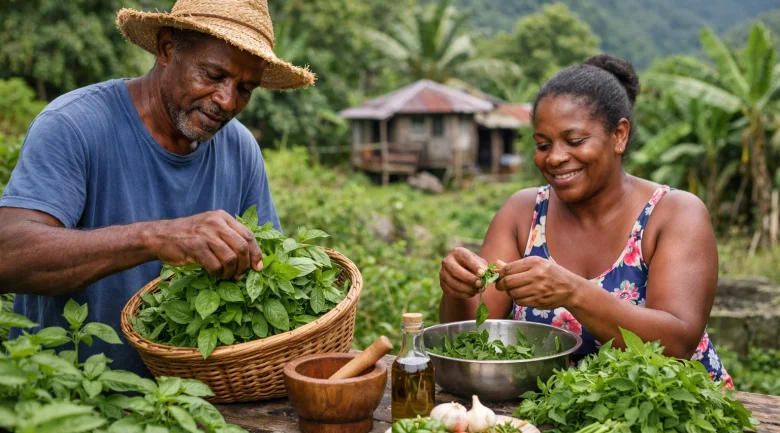
Sweet Basil (Ocimum basilicum) in Dominica is a highly aromatic annual herb that serves as a staple in both the domestic kitchen and the local apothecary. Known simply as Basilic in Kwéyòl, it is distinguished from the hardier Holy Basil (Gwo Zèfè) by its smoother, larger leaves and its sweeter, more peppery scent profile. Sweet Basil is valued by Dominicans for its gentleness as a herb, its digestive benefits, and its prominent role in the island’s culinary seasoning traditions.
Botanical Profile and Cultivation
Sweet Basil belongs to the Lamiaceae family and is widely cultivated across all ten parishes of Dominica.
- Growth Habit: It is a low-growing, bushy herb with square stems and opposite, ovate leaves that are typically bright green and glossy.
- Flowers: The plant produces small white or pale lavender flowers on terminal spikes. In Dominica, gardeners often pinch off these flowers to encourage the plant to keep producing foliage rather than going to seed.
- Cultivation: It thrives in the moist, nutrient-rich volcanic soils of areas such as Bellevue Chopin and the Layou Valley. While it requires more consistent water than Holy Basil, it is a resilient grower in both containers and open-ground lakou (backyard) gardens.
Primary Medicinal Applications
In Dominican herbal medicine, Sweet Basil is primarily recognised for its antispasmodic and carminative properties. It is often the first choice for treating mild ailments in children and the elderly due to its palatable taste.
Digestive Support
- Stomach Cramps and Gas: A tea made from Sweet Basil leaves is a standard remedy for gripes and flatulence. It is believed to relax the muscles of the digestive tract.
- Nausea: Mild infusions are used to settle the stomach and alleviate symptoms of motion sickness or general nausea.
Nervous System and Stress Relief
- Calming Agent: In local tradition, Sweet Basil is used to treat nervousness and mild anxiety. A cup of the tea is often given to individuals experiencing emotional upset to help stabilize their mood.
- Headache Relief: When steeped as a strong tea or used in a medicinal bath, it is believed to reduce tension headaches.
Pediatric and General Care
- Children’s Tea: Because it lacks the intense pungency of other herbs, Sweet Basil is a preferred cooling tea for children. It is often used to treat minor indigestion or to help a restless child settle before sleep.
Culinary Integration
Sweet Basil is an indispensable component of Dominica’s Green Seasoning, the base marinade for nearly all local savoury dishes.
- Creole Cooking: The leaves are finely chopped and added to fish broths, stewed meats, and oil down to provide a fresh, aromatic top note.
- Preservation: Many Dominican households blend fresh Sweet Basil with garlic, pimento peppers, and salt to create a refrigerated seasoning paste that lasts through the harvesting season.
Preparation and Administration
- Infusion: Three to five fresh leaves are steeped in hot water for five minutes. This is often consumed plain or with a squeeze of local lime.
- Topical: Freshly crushed leaves are sometimes rubbed on the skin as a natural, mild insect repellent or to soothe the itch of a mosquito bite.


References
-
1.
Medicinal Plant Use in Dominica (Texas A&M University) https://dominica.tamu.edu/wp-content/uploads/sites/54/2017/09/Patel_Megha.pdf
-
2.
Sweet Basil (Ocimum basilicum): Nature and Supernatural Nature https://natureandsupernaturalnature.wordpress.com/2020/05/04/sweet-basil-ocimum-basilicum/
-
3.
Ocimum basilicum: Useful Tropical Plants https://tropical.theferns.info/viewtropical.php?id=Ocimum+basilicum