


Moringa (Moringa Oleifera)
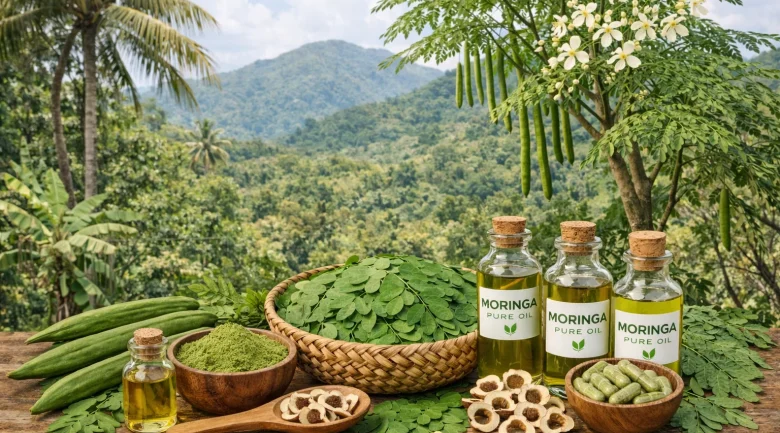
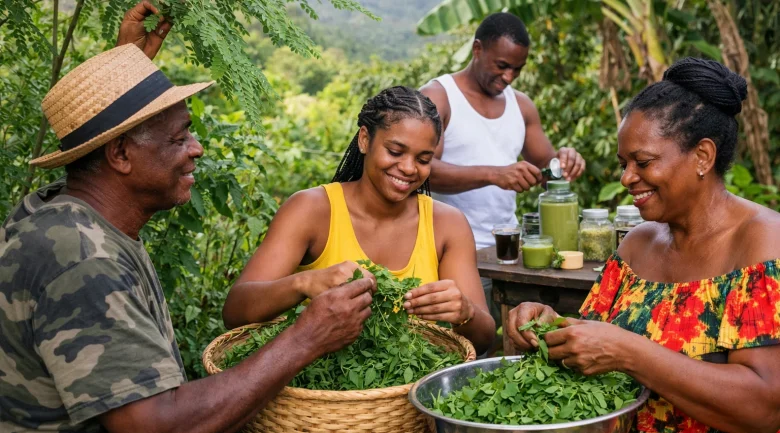
Moringa (Moringa oleifera), commonly referred to as the “Miracle Tree” or “Tree of Life” in Dominica, is a fast-growing, drought-resistant multipurpose plant that has gained significant prominence across the island. While it is a relatively recent addition to the traditional bush medicine landscape compared to ancient staples like Zebapique, it is now widely cultivated for its exceptional nutritional density and diverse pharmacological properties. For Dominicans, Moringa is utilised as a systemic tonic to boost immunity, manage chronic metabolic conditions, and provide a concentrated source of vitamins and minerals.
Botanical and Geographic Profile
Moringa belongs to the Moringaceae family and is native to the sub-Himalayan regions, but it thrives exceptionally well in Dominica’s tropical climate and fertile volcanic soil.
- Morphology: The tree is characterised by its corky, whitish bark and tripinnate leaves with small, oval leaflets. It produces clusters of fragrant, creamy-white flowers and long, pendulous drumstick seed pods.
- Aromatic and Taste Profile: The leaves have a mild, slightly peppery flavor similar to watercress or arugula, while the seeds possess a unique sweet-to-bitter taste profile.
- Local Habitat: Moringa is found in home gardens (lakou) across all parishes, particularly in drier coastal regions such as St. Peter and St. Luke, where its drought tolerance is an advantage. It is also increasingly featured in community gardens and agro-processing projects in areas like Grand Bay.
Ethnomedicinal Data and Applications
Dominican practitioners and health-conscious residents utilise all parts of the Moringa tree, leaves, seeds, and bark, for their specific bioactivities.
| Application | Traditional Use in Dominica | Part Used |
| Nutritional Tonic | Used to combat fatigue and anemia due to high iron and protein content. | Leaves (Dried/Fresh) |
| Metabolic Support | Management of Type 2 diabetes (blood sugar regulation) and hypertension. | Leaves & Seeds |
| Immune Booster | General “cleanse” and systemic support to prevent seasonal illness. | Leaves |
| Anti-inflammatory | Relief from joint pain and arthritis-related swelling. | Leaves & Seed Oil |
| Water Purification | Crushed seeds are used in rural settings for their flocculant properties to clarify water. | Seeds |
Technical Analysis and Safety Standards
Scientific literature, including studies relevant to Dominican biodiversity, confirms that Moringa is among the most nutrient-dense plants on the island.
- Chemical Constituents: Moringa is rich in vitamins A, C, and E, as well as essential minerals (calcium, potassium, iron). It contains high concentrations of polyphenols and isothiocyanates, which are responsible for its anti-diabetic and anti-inflammatory effects.
- Pharmacological Benefits: Research highlights its antioxidant properties and its potential for treating hepatopathy (liver health) and hypercholesterolemia.
- Safety Profile: Moringa is generally considered safe for consumption as a food or tea. However, Dominican elders often advise pregnant women to avoid the bark and roots, as they contain compounds that may cause uterine contractions.
Preparation and Administration
- Moringa Tea: Fresh or dried leaves are steeped in hot water. To preserve the high vitamin C content, practitioners often suggest adding the leaves to hot water that has already been taken off the boil.
- Powdered Supplement: Dried leaves are pulverised and added to green juices, smoothies, or sprinkled over local stews and soups to fortify the meal.
- Seeds: One or two peeled seeds are sometimes chewed daily as a treatment for high blood pressure or as an aphrodisiac, though they are quite potent.


References
-
1.
Journal of Medicinal Plants Studies (2015): Medicinal plants of Dominica https://www.plantsjournal.com/archives/2015/vol3issue5/PartC/3-5-15.pdf
-
2.
Texas A&M University (2005): Medicinal Plant Use in Dominica https://dominica.tamu.edu/wp-content/uploads/sites/54/2017/09/Patel_Megha.pdf