



Noni (Morinda Citrifolia)
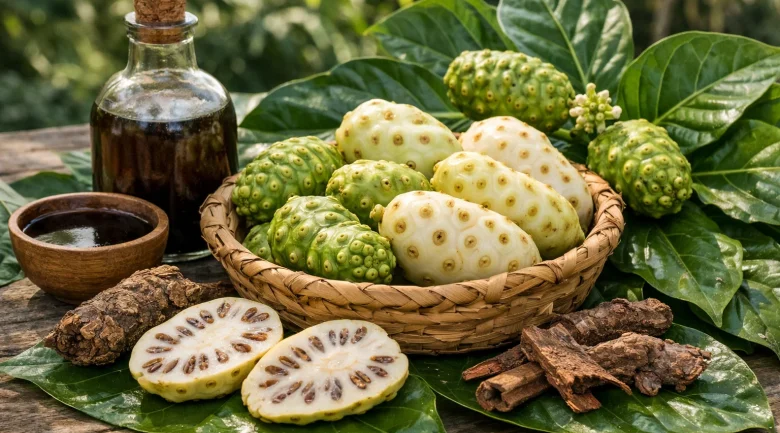
Noni (Morinda citrifolia), a small evergreen tree belonging to the Rubiaceae family, is native to Dominica and has transitioned from a wild coastal plant to a revered superfood in the island’s natural pharmacopoeia. Known for its distinct, pungent aroma, often compared to ripened cheese, Noni is highly regarded by Dominican herbalists for its systemic healing properties. It is a cornerstone of bush medicine for managing chronic inflammation, metabolic disorders, and strengthening the immune system.
Botanical and Geographic Profile
- Morphology: A small tree or shrub reaching up to 6 meters, with large, glossy, dark green elliptical leaves. Its most striking feature is the compound fruit, which is ovoid, warty, and turns from green to a translucent creamy-white when fully ripe.
- Local Distribution: While native to Southeast Asia and Australasia, Noni has naturalised across Dominica. It is particularly abundant in coastal areas and lowland forests, but is increasingly cultivated in home gardens in parishes such as St. John, St. Andrew and St. Joseph due to its medicinal demand.
Ethnomedicinal Data and Applications
In the Dominican tradition, Noni is used as a potent tonic, often prepared as a juice from the fermented or fresh fruit.
| Application | Traditional Use in Dominica | Part Used |
| Analgesic | Relief for arthritis, joint pain, and gout. | Fruit & Leaves |
| Metabolic | Management of high blood pressure and blood sugar regulation. | Fruit Juice |
| Immune Support | Used as a systemic tonic to fight infections and boost energy. | Fruit |
| Topical | Heated leaves are applied to boils, sores, or painful joints. | Leaves |
Technical Analysis and Safety Standards
Scientific investigation, including regional Caribbean studies, supports the diverse applications of Noni found in Dominican traditional knowledge.
- Chemical Constituents: The fruit is rich in polysaccharides, fatty acids, and alkaloids, most notably xeronine (and its precursor proxeronine), which is believed to help repair damaged cells. It also contains significant levels of Vitamin C and potassium.
- Anti-inflammatory Action: Research validates its efficacy in reducing inflammation, corroborating its use by Dominican elders to treat chronic rheumatic pain.
- Safety Profile: While highly beneficial, the juice is extremely potent. Local practitioners suggest moderate consumption, and those with kidney conditions are advised to be cautious due to the fruit’s high potassium content.
Preparation and Administration
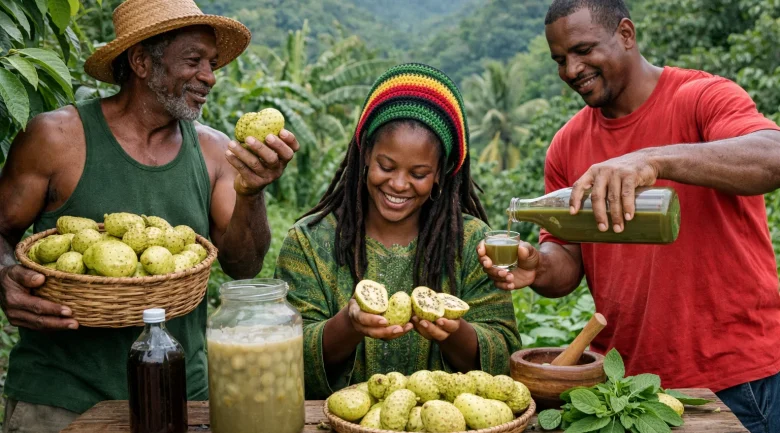
- Traditional Juice: Ripe, soft fruits are placed in a glass jar and left in the sun to ferment naturally. The dark liquid that leaches out is collected and taken in small doses (usually a tablespoon) daily.
- Leaf Poultice: Fresh leaves are often wilted over a flame to release their medicinal oils and then wrapped around swollen joints or placed on the forehead to alleviate fevers.


References
-
1.
Caribbean Medicinal Plants: Morinda citrifolia (University of the West Indies resource) https://sta.uwi.edu/fst/lifesciences/documents/Morinda_citrifolia.pdf
-
2.
Noni Juice Production and Use in the Caribbean (FAO Agricultural Report) https://www.fao.org/3/y5143e/y5143e0h.htm