


Dominica Good Agricultural Practices (DOM-GAP)
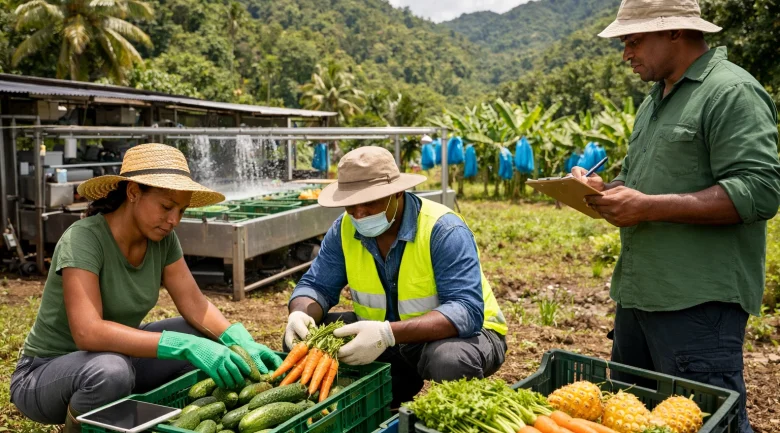
The Dominica Good Agricultural Practices (DOM-GAP) framework represents the national standard for the primary production of fresh produce in the Commonwealth of Dominica. Managed by the Dominica Bureau of Standards (DBOS), this certification system is the cornerstone of the island’s efforts to modernise its agricultural sector, ensure consumer safety, and secure access to high-value international markets. In an era where global retailers demand stringent food safety and environmental protocols, DOM-GAP serves as the essential bridge between the traditional Dominican farm and the modern global supply chain.
The Genesis and Evolution of DOM-GAP
The origin of DOM-GAP is rooted in the structural shift of the island’s economy following the Standards Act of 1999. Historically, the agricultural sector was dominated by the banana trade, which relied on preferential treatment in European markets. When these preferences began to erode in the late 1990s, the government identified a critical need for a national quality infrastructure to support crop diversification.
The formalisation of DOM-GAP as a distinct brand and system was the primary output of a 2011 CARICOM Secretariat consultancy. This initiative sought to assess various farm inspection systems and develop an internationally benchmarked national farm certification program. The goal was to reduce the prohibitive costs that small-scale farmers faced in obtaining foreign-based certifications such as GLOBALG.A.P. By creating a localised version that maintained the same rigorous criteria, the Bureau enabled Dominican farmers to achieve recognised safety standards at a fraction of the cost.
Strategic Benchmarking against GLOBALG.A.P.
DOM-GAP is not a standalone set of rules; it is strategically aligned with the GLOBALG.A.P. (Good Agricultural Practice) standard. This alignment ensures that any farm certified under DOM-GAP is practising methods that are recognisable to international auditors and retailers. Today, this benchmarking is vital for exports to the United Kingdom, the European Union, and North America. It focuses on three core pillars:
- Food Safety: Minimizing biological, chemical, and physical hazards.
- Environmental Protection: Reducing the negative impact of farming on the ecosystem.
- Social Responsibility: Ensuring the health, safety, and welfare of agricultural workers.
The Core Modules of the DOM-GAP Standard
Divided into several “Compliance Criteria” that farmers must document and maintain, the standard’s specific requirements necessitate examination to provide a comprehensive technical overview of the required farming practices.
1. Site History and Management
Before a farm can be certified, the owner must provide a detailed history of the land. This involves identifying previous uses to ensure that the soil is not contaminated with heavy metals or industrial chemicals. Farmers must conduct a risk assessment for new planting sites, evaluating potential runoff from neighboring lands or proximity to livestock, which could introduce pathogens into the crop.
2. Soil Management and Fertilization
The standard emphasizes “integrated soil management.” Farmers are required to perform periodic soil tests to determine nutrient levels, preventing the over-application of fertilizers. Records must be kept of every fertilization event, including the date, the type of fertilizer used (organic vs. synthetic), and the quantity applied. Currently, there is a strong push toward utilizing local compost and “bio-fertilizers” to align with the nation’s climate-resilience goals.
3. Water Management and Irrigation
Water is a major vector for foodborne illnesses. DOM-GAP requires that water used for irrigation, especially for crops eaten raw, must be tested for microbial contamination. In Dominica, where many farms utilise mountain springs or river water, the standard mandates strict buffers between water sources and livestock or chemical storage areas.
4. Crop Protection and Pesticide Usage
This is perhaps the most scrutinised module of the standard. DOM-GAP promotes Integrated Pest Management (IPM), which prioritises biological and mechanical controls over chemical ones. When chemicals are necessary, only products approved by the Pesticides Control Board may be used.
- Pre-Harvest Intervals (PHI): Farmers must adhere to strict waiting periods between the last spray and harvest to ensure no chemical residues remain on the produce.
- Storage: Pesticides must be kept in a locked, ventilated, and properly labeled facility, separate from the produce.
5. Harvesting and Handling Protocols
The integrity of the cold chain and hygiene during harvest are critical. Workers must be trained in sanitary handling, meaning no smoking, eating, or drinking in the harvest area. Equipment such as crates and knives must be sanitized daily. The standard also requires that harvested produce be kept off the ground to avoid soil-borne contaminants.
6. Waste and Pollution Management
A DOM-GAP certified farm must have a clear waste management plan. This includes the proper disposal of empty chemical containers (which must be triple-rinsed and punctured) and the management of organic waste, such as crop residues, through composting. The goal is to ensure the farm remains a clean, professional environment that does not pollute the surrounding rainforest or water systems.
7. Worker Health, Safety, and Welfare
The standard recognizes that a safe worker produces safe food. All certified farms must have:
- First Aid Access: A fully stocked first aid kit and at least one person trained in basic first aid.
- Potable Water: Clean drinking water must be available to workers at all times.
- Sanitary Facilities: Accessible toilets and hand-washing stations with soap and single-use towels.
- Protective Equipment (PPE): Appropriate gear (masks, gloves, boots) for those handling chemicals.
8. Traceability and Record Keeping
The Paper Trail is the backbone of DOM-GAP. If a consumer in the United States becomes ill, the system must be able to trace that specific batch of produce back to the exact Dominican farm and even the specific plot it was harvested from. Farmers are required to maintain a National Farm Registry number and keep detailed logbooks of every action taken on the farm for at least two years.
The Certification Process: A Roadmap for the Farmer
Achieving DOM-GAP certification is a rigorous process that involves multiple stages of oversight from the Inspection Unit of the DBOS.
- Application and Self-Assessment: The farmer submits an application and performs a gap analysis to see which standards they are currently failing to meet.
- Training: The Bureau, often in collaboration with the Division of Agriculture, provides training in food safety, pesticide management, and record-keeping.
- The Audit: An official inspector visits the farm to perform a physical check and review all documentation. This audit is billed at a standard rate (currently $150 per hour for audits plus a $150 certificate fee).
- Corrective Actions: If the farm fails any “Critical” points, the farmer is given a timeframe to correct the issues.
- Certification: Once compliant, the farm is granted a certificate, and the produce can carry the DOM-GAP seal, signaling its safety to buyers.
Economic Impact and National Resilience
Since its pilot phase, which focused on key commodities such as dasheen, plantain, hot pepper, ginger, and pineapple, DOM-GAP has significantly strengthened the island’s export profile. In 2024, data indicated that agricultural exports contributed significantly to foreign exchange, with over US$1.1 million generated from fresh fruits and condiments alone.
Furthermore, the standard has become a vital component of the Emergency Agricultural Livelihoods and Climate Resilience Project (EALCRP), funded by the World Bank. Following the devastation of Hurricane Maria, the rebuilding of the agricultural sector was not just about quantity, but also about quality. By integrating DOM-GAP into the recovery phase, the government ensured that the island’s “New Agriculture” was inherently more professional and export-ready.
Future Outlook: Digitalization and Regional Integration
Today, the Dominica Bureau of Standards is looking to digitalise the DOM-GAP system. Proposals are under discussion to transition from paper logbooks to mobile applications that enable farmers to record data in real time. This would further accelerate the traceability process and make it easier for international buyers to verify a farm’s status instantly.
As the Caribbean Community (CARICOM) moves toward a more integrated regional food system, DOM-GAP serves as a model for other small island developing states. By adhering to these practices, Dominica is not only protecting its citizens but is also securing its place as a Global Centre for Resilience in the agricultural world.


References
-
1.
National Farm Certification Programme (DOM-GAP) - DBOS https://www.dominicastandards.org/images/docs/dom_gap_presentation_2022.pdf
-
2.
Dominica Bureau Training Farmers in Agricultural Practices - CROSQ https://website.crosq.org/dominica-bureau-training-farmers-in-agricultural-practices/
-
3.
Comprehensive Study of Farm Inspection and Certification Systems - PISLM Report https://knowledgehub.pislmsids.org/wp-content/uploads/2025/03/Comprehensive-study-of-Farm-inspection-and-certification-systems-currently-being-implemented-in-Dominica.pdf
-
4.
Farmers Called to Be Part of National Farm Certification Scheme - GIS Dominica https://news.gov.dm/news/news-items/farmers-called-to-be-part-of-the-national-certification-scheme
-
5.
Phytosanitary Certificate Guidelines - Ministry of Agriculture https://agriculture.gov.dm/phytosanitary-certificate