




Ridge-to-Reef Approach in Dominica
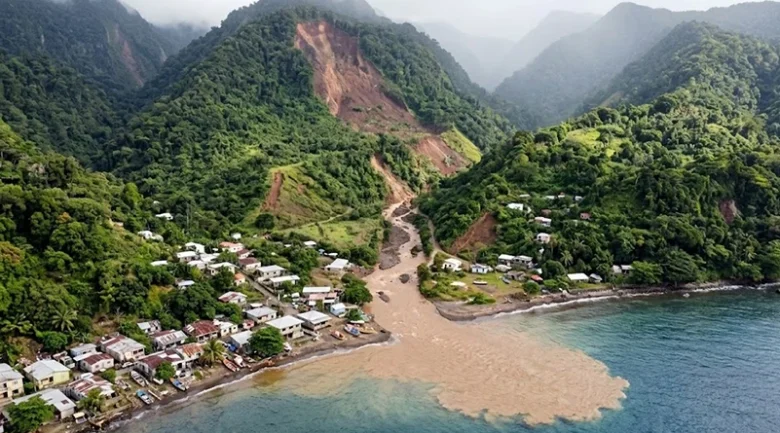
The Ridge-to-Reef (R2R) concept serves as a fundamental philosophy of survival for Dominica, moving beyond simple scientific frameworks or slogans. Our volcanic geography demands this integrated management style to preserve our natural heritage and national resilience. Because Dominica is characterised by some of the steepest terrain in the world, rising from sea level to nearly 5,000 feet over a horizontal distance of just a few miles, there is no such thing as a local environmental event. A landslide in the high peaks of the Northern Forest Reserve can, within minutes, become a plume of suffocating silt that destroys a coral reef in the Caribbean Sea.
Dominica has fully integrated this Source-to-Sea management model into its national policy, recognising that the health of the Nature Island‘s economy is indistinguishably linked to the integrity of its watersheds. This strategy seeks to harmonize Agriculture, forest conservation, and the Blue Economy into a single, circular system of resilience.
The Ridge: The Island’s Biological Sponge
The Ridge represents the starting point of the R2R continuum. In Dominica, this means the high-altitude rainforests and elfin woodlands that crown the island’s interior. These forests are the island’s primary defense against the volatile Climate of Dominica.
Forestry as Infrastructure
In the National Resilience Development Strategy, the Forestry Division views trees not as timber, but as green infrastructure.” The deep, interlocking root systems of the Gommier and Bois Diable trees act as natural anchors, holding the volcanic soil in place during the torrential rains of Dominica’s Hurricane Season.
When these forests are intact, they function as a biological sponge, slowing the descent of rainwater and allowing it to percolate into the underground aquifers. This prevents flashiness in the rivers, the dangerous, rapid rise in water levels that leads to downstream flooding. However, if the ridge is degraded by unauthorised clearing or landslides, the system fails. The soil, stripped of its canopy, washes away, leading to land degradation. To combat this, the government has set a 2030 Land Degradation Neutrality (LDN) target to restore 75% of degraded lands in parishes like Saint Andrew.
The Whale Pump and Nutrient Cycling
A fascinating addition to the R2R model in 2026 is the recognition of the Whale Pump. Scientific research funded by the Sperm Whale Tourism Levy has shown that the Sperm Whales residing in Dominican waters play a role in the Ridge’s health by proxy. Whales dive deep to feed and return to the surface to release nutrient-rich faecal plumes. These nutrients foster the growth of phytoplankton, which absorbs carbon. This carbon sequestration helps regulate the global climate, which in turn reduces the intensity of the storms that hit the ridges of Dominica. It is a perfect, closed-loop cycle of nature.
The Arteries: Watersheds and the Agriculture-Erosion Nexus
If the ridges are the lungs of the island, the 365 rivers are its arteries. The transition zone between the high mountains and the coastal reefs is where the most intense human activity occurs, primarily through agriculture.
Sustainable Land Management (SLM) on the Slopes
Dominica’s fertile volcanic soil is incredibly fertile but highly unstable when tilted. Historically, farmers planting root crops like dasheen on steep slopes have inadvertently contributed to massive siltation in the rivers.
To support the Ridge-to-Reef initiative, the Ministry of Agriculture is implementing a Slope Stabilisation Protocol. This strategy promotes Sustainable Land Management through:
- Vetiver Grass Buffers: Planting deep-rooted vetiver grass along the contours of farms to act as a living silt fence.
- Intercropping: Moving away from monocultures and toward agroforestry, where fruit trees are interspersed with ground provisions to maintain a permanent canopy.
- The Agriwomen Influence: Programs like Chq N Gro have empowered female farmers to lead this transition, focusing on organic inputs that prevent chemical runoff from reaching the sea.
The Case of the Kachibona River
The Kachibona River in Marigot is a primary example of R2R management in action. Because it runs adjacent to the Douglas-Charles Airport (DOM), any failure in the upper watershed has immediate economic consequences. The river training projects implemented in 2025 and 2026 are designed to manage sediment load from the interior, ensuring the river channel remains deep and the adjacent infrastructure remains dry.
The Reef: Protecting the Blue Frontier
The Reef is the terminal point of the R2R journey. In Dominica, this includes the vibrant coral systems of the Soufriere-Scotts Head Marine Reserve (SSMR) and the newly established Sperm Whale Reserve.
Siltation: The Silent Reef Killer
Corals are animals that rely on sunlight for energy (via symbiotic algae). When R2R management fails on land, the resulting turbidity (cloudy water) blocks this sunlight. Worse, the silt settles on the coral polyps, literally smothering them to death. The Local Area Management Authority (LAMA) in Soufrière has reported that reef health has improved by 12% in areas where upland forest restoration was prioritised, proving that the best way to save a reef is often to plant a tree five miles away.
The Blue Economy Shift
Dominica has moved toward a high-value, low-impact Eco-tourism model. The Sperm Whale Reserve Act of 2025 created a massive protected zone where ship traffic is strictly regulated to prevent noise pollution and strikes.
- Maritime Corridors: Specific paths have been carved out for commercial vessels and artisanal fishers to ensure they don’t disturb the whales.
- The Blue Fund: Revenues from the Sperm Whale Tourism Levy are funnelled back into the R2R system to fund river cleanups and forest patrols. This is a revolutionary financial mechanism where the reef (through tourism) pays for the protection of the ridge.
Data-Driven Resilience: The Technology of R2R
Dominica has embraced Industry 5.0 to monitor the Ridge-to-Reef continuum. The island no longer relies on guesswork; it uses a sophisticated network of sensors and satellite data.
| Component | Technology Used | R2R Benefit |
| Ridge | LiDAR & Drone Mapping | Identifies landslide hotspots before they fail, allowing for proactive reforestation. |
| Watershed | Real-time Telemetry | Sensors in the Layou River alert the Fisheries Division of sudden spikes in turbidity. |
| Reef | Passive Acoustic Monitoring | Hydrophones in the whale reserve track the health of marine mammals and the level of vessel noise. |
| Agriculture | IoT Soil Sensors | Helps farmers in Saint Andrew use exactly the right amount of water and nutrients, preventing runoff. |
This data is synthesised by the Ministry of Finance, Economic Development, Climate Resilience and Social Security in collaboration with the Blue Economy Unit. Leveraging the institutional framework and technical systems established by the now-defunct Climate Resilience Execution Agency for Dominica (CREAD), this partnership enables Precision Conservation. By targeting resources precisely where they are most needed, the government ensures the continuity of the Ridge-to-Reef (R2R) chain. It maintains Dominica’s trajectory toward becoming the world’s first climate-resilient nation.
The Social Fabric: Community-Led Stewardship
A Ridge-to-Reef model is only as strong as the people who live within it. In Dominica, this involves a deep respect for the Kalinago Territory and the traditional knowledge of the island’s indigenous people.
Indigenous Wisdom and Modern Science
The Kalinago have practised a form of R2R management for centuries, utilising taboos and traditional harvesting seasons to ensure that wildlife and rivers remain plentiful. Fisheries management incorporates these traditional practices, such as protecting Crayfish in the upper rivers, which are vital indicators of water quality.
The Village Economy
In fishing villages like Mahaut and Soufriere, the R2R approach has changed how people view their livelihoods. Fishers now understand that the quality of their catch depends on the quality of the trash management in their village. The Mahaut Fisheries Facility has become a hub for environmental education, where the St. Paul’s Fisherfolk Co-operative leads monthly beach and river cleanups.
The ocean doesn’t start at the beach; it starts at the mountain peak. Every piece of plastic dropped in a mountain stream is a death sentence for a coral reef.
Dominica Environmental Health Officer
The Economic Logic: Why R2R Makes Sense
From a purely financial standpoint, Ridge-to-Reef management is the only way to reduce the national debt. Dominica’s National Resilience Development Strategy 2030 outlines that for every $1 invested in upland forest protection, the state saves approximately $7 in downstream infrastructure repair and disaster recovery.
Protecting Tourism Assets
Dominica’s tourism is based on its wildness. If the rivers become silted and the reefs die off, the tourism industry collapses. By managing the ridge, the state is effectively ensuring its primary source of foreign exchange. The Nature Island Fund, populated by the arrival levies of 2026, ensures that this insurance policy is always funded.
Food Security
A healthy R2R system ensures that the Agricultural sector remains productive without destroying the Fisheries sector. This “Blue-Green” synergy is the only way to ensure that Dominica can feed itself by 2030, reducing the massive bill for imported processed foods.
A Legacy for 2030
The Ridge-to-Reef paradigm is Dominica’s answer to the global climate crisis. It is a recognition that, in a world of rising seas and unpredictable storms, we cannot afford to view our environment in fragments.
By the end of 2030, the success of this model is visible in the crystal-clear waters of the Soufriere-Scotts Head Marine Reserve, the lush, stable slopes of the Northern Forest Reserve, and the bustling markets of Marigot, where sustainable produce is sold. Dominica is proving that a small island can be a global giant in environmental management, showing the world that the secret to a resilient future lies in respecting every link in the chain, from the highest ridge to the deepest reef.


References
-
1.
National Forest Policy - Government of Dominica https://dominica.gov.dm/images/docs/govt_pubs/national_forest_policy_march_2022.pdf
-
2.
Dominica’s Biodiversity Strategy and Action Plan https://www.cbd.int/doc/world/dm/dm-nbsap-01-en.pdf
-
3.
Application of Ridge-to-Reef for Biodiversity Conservation (UN SDGs) https://sdgs.un.org/partnerships/application-ridge-reef-concept-biodiversity-conservation-and-enhancement-ecosystem
-
4.
Conserving Biodiversity Using a Ridge-to-Reef Approach (GEF) https://www.thegef.org/projects-operations/projects/9580
-
5.
Dominica National Conservation Trust Fund (DNCTF) https://caribbeanbiodiversityfund.org/news/strengthening-conservation-in-dominica-how-the-dnctf-and-cbf-are-driving-local-leadership-and-sustainable-impact/
-
6.
Caribbean Impact Report (The Nature Conservancy) https://www.nature.org/content/dam/tnc/nature/en/documents/Caribbean_Impact_Report_ONLINE.pdf
-
7.
cosystem-Based Adaptation (EbA) in Watersheds (GIZ) https://www.giz.de/en/projects/ridge-reef-strengthening-connectivity-between-protected-areas-and-resilience-watershed