

Mahi-mahi
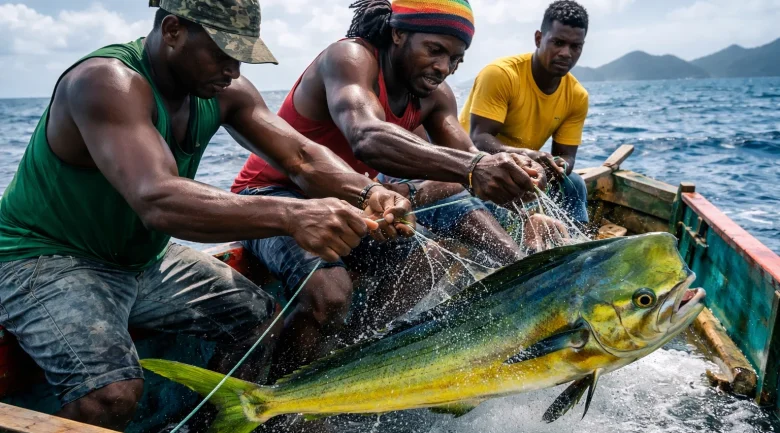
In Dominica, the Mahi-mahi (Coryphaena hippurus) is one of the most vital offshore pelagic species, serving as a primary target for the island’s artisanal and recreational fisheries. Known locally as Dolphin or Dorado, this vibrant, fast-swimming fish is a symbol of the island’s rich marine biodiversity and its deep-seated connection to the Caribbean Sea.
The Local Fishery and Traditional Methods
Fishing for Mahi-mahi in the island is an art form passed down through generations. Most local fishers operate out of small, traditionally made wooden or fibreglass boats powered by outboard engines.
- Hand-Line Fishing: While sport fishers use rod and reel, many local artisanal fishers still use short lengths of hand-line. This traditional method requires immense skill and strength, as the Mahi-mahi is known for its aggressive fight.
- FADs (Fish Aggregating Devices): To improve catch rates, Dominican fishers utilize FADs. These are man-made shelters constructed from tarpaulins or palm fronds, anchored in deep waters (often over 3,000 feet deep). These devices attract small baitfish, which in turn draw in predators like Mahi-mahi.
- Surface Trolling: Fishers typically troll at speeds between 2–9 knots, using lures or live bait like Ballyhoo to mimic the movement of prey on the water’s surface.
Breeding and Migration in Island Waters
Dominica’s location in the Eastern Caribbean makes it a key stop on the Mahi-mahi’s migratory path.
- Migration Patterns: These fish move through Dominican waters as they migrate between the U.S. East Coast, the Bahamas, and South America. They are highly migratory and can travel thousands of miles in a single season.
- Rapid Breeding: Mahi-mahi are among the fastest-growing fish in the ocean. In the warm tropical waters of the island, they can reach sexual maturity in just 4 to 5 months.
- Spawning Season: Peak sightings usually occur between February and June. They are “batch spawners,” meaning they reproduce every few days during the season, often under floating patches of Sargassum seaweed, which protect their eggs.
Culinary Traditions and Local Taste
In Dominican kitchens, Mahi-mahi is highly prized for its firm, sweet, and flaky white meat. It is a staple of the island’s “Blue Economy” and a favourite in both village homes and luxury resorts.
- Traditional Preparation: One of the most authentic ways to enjoy this fish on the island is in a Coubouillon, a rich, herb-infused fish stew made with fresh seasoning, garlic, and lime.
- Creole Style: It is also commonly prepared Creole-style, pan-seared with peppers, onions, and a blend of local spices, often served alongside provisions like dasheen, green bananas, or yams.
- The Conch Shell Alert: Historically, when a boat returned to a village like Soufrière or St. Joseph with a significant catch of “Dolphin,” the blow of a conch shell would alert the community that fresh fish was available for sale on the beach.
Environmental Stewardship
Dominica has recently integrated the management of this species into its broader Governance Pillars. Through programs like FISH4ACP, the government is working to ensure that the Mahi-mahi fishery remains sustainable. This includes improving the cold chain (refrigeration) for local fishers and ensuring that the use of FADs does not lead to overfishing, preserving this “star fish” of the Caribbean for future generations.


