


Overfishing in Dominica
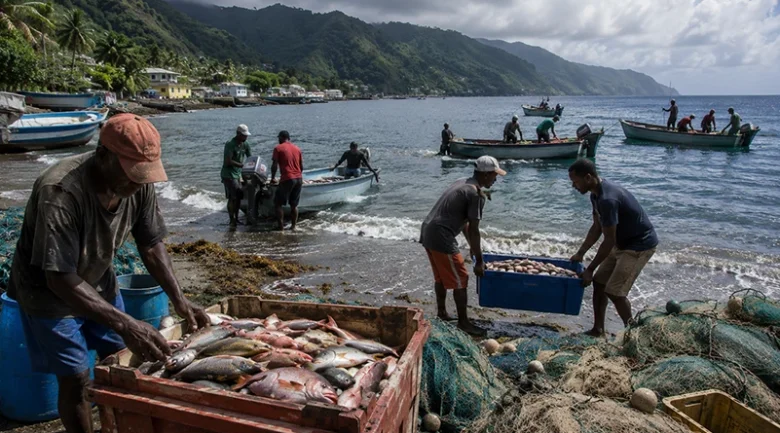
Overfishing in Dominica refers to the extraction of aquatic species from the nation’s territorial waters at a rate faster than the populations can naturally replenish. As an island nation with a narrow continental shelf and a deep-seated reliance on marine resources for food security and livelihoods, Dominica faces unique challenges in maintaining sustainable fish stocks. This entry examines the biological, economic, and legislative dimensions of fisheries management, focusing on the pressure placed on nearshore reefs and migratory species.
The National Context of Dominican Fisheries
Dominica’s fisheries sector is primarily artisanal, characterised by small-scale operations using open pirogues and traditional gear. Unlike larger Caribbean nations with extensive shallow banks, Dominica’s volcanic topography results in a steep drop-off close to shore. Consequently, the majority of fishing pressure is concentrated in a very narrow band of coastal water, particularly on the western (leeward) coast and the northern and southern extremities.
The Fisheries Division, under the Ministry of Agriculture, Fisheries, Blue and Green Economy, is the primary authority responsible for monitoring catch data and enforcing regulations. Overfishing in this context is not merely a matter of industrial fleet activity, which is minimal in Dominica, but rather the cumulative effect of localised pressure on specific high-value species.
Priority Species and Vulnerability
Certain species in Dominica are more susceptible to overfishing due to their life cycles, habitat requirements, and high market demand, necessitating strict seasonal closures and size limits to prevent the collapse of slow-growing populations that are critical for maintaining the ecological health of the island’s vibrant coral reefs and deep-sea environments:
The Queen Conch (Aliger gigas)
The Queen Conch is a significant export and local delicacy. Because conchs are slow-moving and congregate in specific seagrass beds, they are easily harvested by divers. Overfishing occurs when juvenile conchs (those without a well-developed flared lip) are taken before they have had the opportunity to breed.
Spiny Lobster (Panulirus argus)
Lobsters represent a major economic pillar for fishers in villages like Scotts Head and Calibishie. The use of traps and spearfishing has raised concerns about the depletion of berried females (those carrying eggs). National standards strictly prohibit the harvest of lobsters during the closed season or when they are carrying eggs to prevent population collapse.
Reef Fish (Snappers, Groupers, and Parrotfish)
Nearshore reef fish are the primary source of protein for many Dominican households. The depletion of Parrotfish (Scaridae) is of particular concern. As herbivores, parrotfish play a critical role in cleaning algae off coral reefs. Their removal through overfishing leads to algal smothering, which kills the coral and further degrades the habitat required for other fish to survive, creating a feedback loop of ecological decline.
Titiwi (Sicydium punctatum)
As explored in previous sections, the titiwi is vulnerable due to its predictable migratory patterns. If the run is over-harvested at the river mouth using fine-mesh cloths, an insufficient number of post-larvae reach the upstream breeding grounds, potentially collapsing the recruitment for subsequent years.
Drivers of Overfishing in Dominica
Several factors contribute to the unsustainable pressure on marine resources within the state’s jurisdiction, ranging from unregulated artisanal harvesting and illegal foreign encroachment to the degradation of essential nursery habitats caused by coastal development and intensifying storm surges that disrupt the fragile underwater equilibrium:
- Technological Shifts: The transition from traditional wooden canoes to powerful outboard engines and fiberglass pirogues has allowed fishers to reach more distant grounds, but it has also increased the efficiency of nearshore extraction.
- Illegal, Unreported, and Unregulated (IUU) Fishing: While Dominica monitors its coastal waters, the vast Exclusive Economic Zone (EEZ) is susceptible to incursions by foreign vessels, particularly in the deep-sea pelagic zones.
- Habitat Degradation: The impact of Hurricane Maria (2017) caused significant damage to the coral reef structures. With less habitat available, fish populations are more concentrated and thus easier to over-harvest.
- Economic Necessity: In the wake of natural disasters or economic shifts, many individuals turn to fishing as a safety net occupation. This influx of part-time fishers increases the total effort (number of boats and hours spent) on the water.
The Legislative and Institutional Framework
Dominica’s management of overfishing is guided by a strong legal framework that balances extraction with conservation. It ensures that commercial activities remain within sustainable biological limits through strict enforcement of gear restrictions, territorial use rights, and comprehensive monitoring systems that safeguard the long-term viability of Dominica’s marine heritage.
The Fisheries Act (Chapter 61:02)
The Fisheries Act provides the legal basis for the management of all aquatic resources in Dominica. It empowers the Minister to:
- Declare closed seasons for specific species.
- Prescribe minimum sizes for catch.
- Regulate the types of gear allowed (e.g., minimum mesh sizes for nets and traps).
- Establish Marine Protected Areas (MPAs).
National Fisheries Regulations
Specific regulations are enforced to mitigate overfishing, focusing on the preservation of reproductive cycles and the protection of vulnerable coral reef ecosystems from destructive harvesting techniques, and include:
- Mesh Size Restrictions: Nets with excessively small mesh are prohibited to ensure that juvenile fish can escape.
- Scuba Gear Prohibitions: In many areas, the use of Scuba gear for commercial fishing (particularly for conch and lobster) is restricted to prevent the total clearance of deep-water “refuge” populations.
Marine Protected Areas (MPAs) and Zonal Management
Dominica has pioneered the use of MPAs to combat overfishing and habitat loss. These areas act as fish nurseries where populations can recover and eventually spill over into actively fished zones, effectively replenishing the surrounding waters and ensuring the long-term survival of the island’s artisanal fishing industry.
Soufrière-Scott’s Head Marine Reserve
The Soufrière Scott’s Head Marine Reserve (SSMR) is the most prominent example of zonal management in Dominica. To mitigate conflict between stakeholders while maximising the recovery of vulnerable marine biodiversity, this marine reserve carefully balances the needs of local fishers with the requirements of the tourism sector by being divided into:
- Fishing Zones: Areas where local fishers can operate using approved methods.
- Nursery/Scientific Zones: Strictly no-take areas where fish stocks are allowed to reach natural densities.
- Recreation Zones: Areas for scuba diving and snorkelling that generate non-extractive revenue for the community.
Cabrits Marine Reserve
Located in the north near Portsmouth, the Cabrits Marine Reserve protects vital seagrass and reef habitats that support the northern fishing fleet.
Sustainable Alternatives: FADs and Aquaculture
To reduce the pressure on overfished nearshore reefs, the Dominican government has promoted a shift toward pelagic (open sea) fishing and inland alternatives, utilising advanced Fish Aggregating Devices (FADs) to target migratory species like tuna and Mahi-mahi while simultaneously expanding freshwater aquaculture to enhance domestic food security and protect fragile coastal ecosystems.
- Fish Aggregating Devices (FADs): The Fisheries Division has deployed numerous FADs, moored buoys that attract deep-sea species like Tuna, Mahi-mahi (Dolphinfish), and Marlin. By encouraging fishers to target these fast-growing, migratory species, the pressure on the fragile sedentary reef populations is significantly reduced.
- Aquaculture: Initiatives in inland areas, such as the farming of Tilapia and Prawns, provide alternative protein sources, reducing the national dependency on wild-caught marine stocks.
Socio-Economic Consequences of Overfishing
If left unmanaged, overfishing poses a direct threat to the Dominican way of life, potentially destabilizing national food security, eroding cultural traditions tied to the sea, and undermining the economic foundations of coastal communities that rely on vibrant marine ecosystems:
- Food Security: Fish is a primary source of affordable protein. Declining stocks lead to higher prices in the Roseau Market and Portsmouth Market, disproportionately affecting lower-income households.
- Livelihood Loss: As “Catch Per Unit Effort” (CPUE) declines, fishers must spend more time and fuel to catch fewer fish, leading to a cycle of poverty in coastal villages.
- Tourism Impact: Dominica’s “Nature Island” branding relies on healthy reefs for the diving industry. Overfished reefs are less vibrant and attractive to international tourists.
Regional and International Commitments
Dominica is a signatory to several international agreements that guide its approach to overfishing, ensuring that local management policies remain aligned with global standards for sustainable harvesting, the protection of migratory marine species, and the preservation of critical oceanic biodiversity, and include:
- CRFM (Caribbean Regional Fisheries Mechanism): Promotes regional cooperation in the management of shared stocks such as migratory tuna.
- CITES: Regulates the international trade of species like the Queen Conch to ensure their survival in the wild.
- OECS (Organisation of Eastern Caribbean States): Coordinates harmonized fisheries laws across the sub-region.
The Path to Sustainability
Addressing overfishing in Dominica requires a multifaceted approach that combines rigorous enforcement of the Fisheries Act with community-based management. The success of the Soufrière-Scott’s Head Marine Reserve serves as a model for how conservation and artisanal fishing can coexist. Moving forward, the continued deployment of FADs and the protection of critical habitats, such as mangroves and seagrass beds, will be essential to ensuring that Dominica’s blue economy remains resilient in the face of climate change and increased demand.


