



Conch Shell
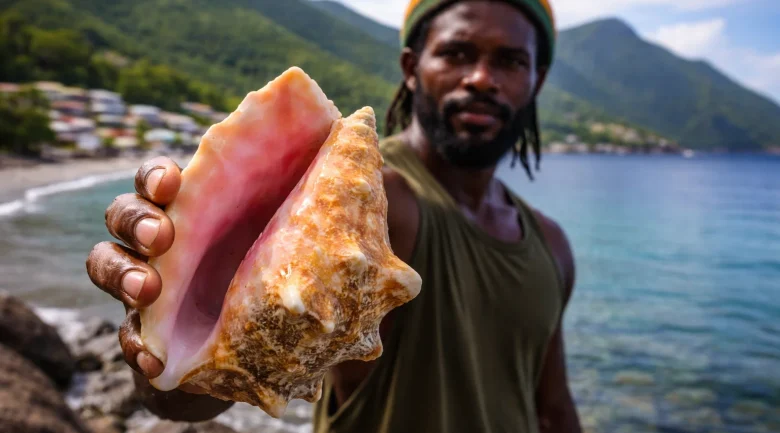
In the Commonwealth of Dominica, the Conch Shell (locally known as the Lambi shell) is far more than a marine artefact; it was a primary instrument of communication, a cornerstone of culinary heritage, and a symbol of spiritual and historical resilience. For centuries, the resonant blast of the shell has echoed across the island’s peaks and valleys, serving as a “social telegraph” that connects the mountain villages to the sea.
The Social Telegraph: Communication and Tradition
The most iconic use of the conch shell on the island is as a traditional wind instrument, often called a fotuto or shell trumpet. Its deep, penetrating tone can travel for miles, making it an ingenious early warning and signalling system.
- The Fisher’s Signal: When a boat returns to a coastal village like Layou or Scotts Head with a fresh haul of Mahi-mahi or Tuna, the fishers blow the shell to alert the community. For residents, this sound is a literal dinner bell, signalling that the “fresh catch” has arrived at the beach or is being transported through the neighbourhood.
- Community Alerts: In Kalinago culture and rural mountain areas, the shell has historically been used to warn neighbours of impending storms, floods, or landslides.
- Historical Resistance: During the era of resistance, Dominica’s Maroon communities and enslaved people appropriated the conch shell as a tool for secret communication, using specific rhythms to warn of approaching danger or to summon gatherings.
Culinary Heritage: The “Lambi”
The meat inside the shell, known as Lambi, is a delicacy central to Dominica’s “Blue Economy.” Because the meat is naturally tough, Dominican culinary tradition requires it to be expertly prepared to achieve its signature tender texture.
- Harvesting: Local divers typically find Queen Conch (Aliger gigas) in sandy sea grass beds. To maintain the country’s sustainability standards, harvest is strictly managed to prevent overfishing.
- Preparation: The meat is usually “knocked” (removed from the shell), cleaned, and then pounded with a mallet or marinated in lime juice to tenderize it.
- Iconic Dishes: Stewed Lambi, a rich, savoury dish where the conch is slow-cooked in a medley of Creole seasonings, garlic, and onions.
- Lambi Fritters: Diced conch mixed into a seasoned batter and deep-fried, often served during festivals or as a popular street food.
The Shell in Modern Culture and Music
The conch shell has found a prominent place in Dominica’s modern musical identity. It is no longer just a signalling tool but a lead instrument in the island’s signature Bouyon Music and Chanté mas genres.
- Carnival Anthem: The shell is a key “wind instrument” during Carnival celebrations, where veteran blowers perform alongside Soca and Bouyon artists.
- Spiritual Significance: In local folklore and spiritual practices, the spiral of the shell symbolises cosmic order.
Environmental and Sovereign Pacts
As part of the island’s commitment to its Sovereign Pacts (specifically those involving CITES and regional fishery management), the harvesting of conch is carefully regulated. The country monitors shell size and maturity to ensure that the Queen Conch population remains healthy, preserving both a food source and a cultural icon.


