

Marronage in Dominica
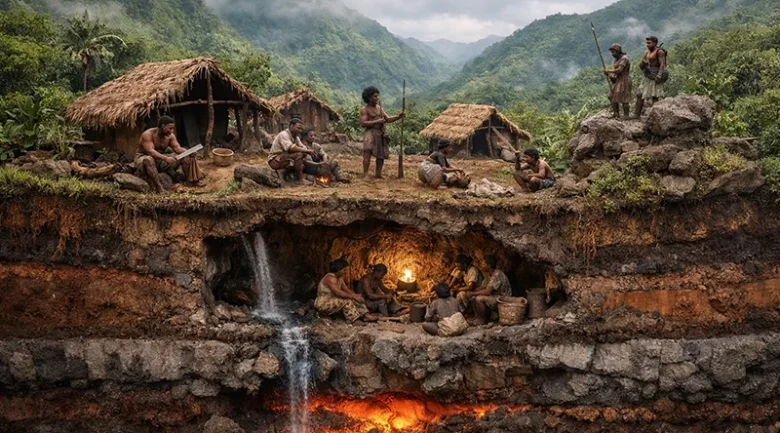
Marronage in Dominica refers to the complex, sustained system of resistance in which enslaved Africans escaped the plantation boundaries to establish independent, self-governing communities in the island’s interior. While the phenomenon of running away existed across the Caribbean, the specific manifestation in Dominica was uniquely formidable. This was due to the island’s extreme verticality, a landscape of 365 rivers, steaming fumaroles, and jagged volcanic peaks that the indigenous Kalinago called Waitukubuli. In this environment, Marronage was not a desperate act of flight but a strategic rejection of the colonial machine, creating a parallel society that defied British authority for more than half a century.
Geographic Isolation and the Waitukubuli Landscape
The primary catalyst for Marronage’s success in Dominica was the island’s topography. Unlike the flatter landscapes of Antigua or Barbados, Dominica’s interior remained largely uncharted by Europeans well into the late 18th century. The dense rainforest canopy provided a green curtain that shielded Maroon settlements from coastal surveillance.
The Maroons utilised this geography with surgical precision. Settlements, or maniels, were typically located on high-altitude plateaus or flat areas surrounded by steep precipices. This provided a natural defensive advantage: any approaching colonial militia could be spotted hours before they reached the camp. The terrain also dictated a specific type of movement; Maroons moved along riverbeds and through secret mountain passes that were invisible to those unfamiliar with the island’s rugged heart. For the British, the interior was a “wilderness of horror,” but for the Maroons, it was a fortified sanctuary.
Social Hierarchies and Internal Governance
The maniels were far from being disorganised bands of fugitives. They were sophisticated micro-states with defined social structures, often blending West African governance models with the pragmatic requirements of Caribbean survival.
- Leadership Roles: Each community was led by a “Chief” or “Governor.” These leaders, such as the legendary Balla or Jacko, were often chosen for their military acumen and their ability to provide spiritual or moral guidance.
- The Council of Elders: Decision-making was rarely the work of a single person. A council of senior members often advised the chief on matters of internal justice, camp relocation, and raid timing.
- Gender Dynamics: Women played a critical role in the sustainability of Marronage. While men often led the defensive skirmishes, women were the primary architects of the agricultural systems and the guardians of cultural traditions. They managed the hidden provision grounds and ensured the transmission of languages and medicinal knowledge.
Economic Sabotage and the Plantation Link
A common misconception is that Maroon communities were entirely isolated. In reality, Marronage in Dominica functioned through a symbiotic, albeit clandestine, relationship with the enslaved population remaining on the plantations.
| Resource | Maroon Contribution | Plantation Contribution |
| Food | Wild game, mountain chicken, wild yams | Salt, dried fish, sugar |
| Tools | Hand-carved implements, wood | Iron machetes, hoes, axes |
| Intelligence | Troop movement alerts | Details on harvest cycles, guard shifts |
| Military | Protection for escapees | Gunpowder, lead, ammunition |
This internal frontier meant that the Maroons were a constant drain on the plantation economy. They did not just steal physical goods; they stole labour by providing a destination for those seeking freedom. Every successful escape weakened the financial viability of the British estates and heightened the psychological anxiety of the plantocracy.
The First Maroon War: 1785–1786
The British colonial administration, sensing a total loss of control over the island’s interior, initiated the First Maroon War in 1785. Sir John Orde recognised that the Maroons, led by Balla and Pharcelle, had become too powerful to ignore. The Maroons had begun charging tribute to planters and were effectively controlling large swaths of the Windward side of the island.
The British strategy focused on scorched-earth tactics. Rather than engaging the Maroons in direct combat, where the British were almost always defeated, the colonial militia targeted the Maroons’ food supplies. They burned fields of tannia, dasheen, and plantains, hoping to starve the communities into submission.
In early 1786, the British dealt a major blow by capturing Balla. He was brought to Roseau, tried under colonial law, and executed in a public display intended to terrorise the remaining resistance. However, Pharcelle, a more diplomatic leader, negotiated a temporary, tenuous peace, highlighting the political sophistication of the Maroon leadership.
The Role of the Black Corps
Recognising that European soldiers were physically incapable of navigating the Dominican interior, the British formed the Black Corps of Rangers. These units were composed of enslaved men who were promised freedom or rewards in exchange for tracking Maroons.
The use of the Black Corps introduced a tragic element of internecine conflict. These rangers possessed the same forest-craft as the Maroons. They could track broken twigs, identify disturbed moss, and endure the high humidity of the peaks. The success of the later British campaigns was almost entirely dependent on these individuals, who were essentially forced or incentivised to hunt their own kin for the preservation of the colonial state.
The Second Maroon War: 1809–1814
The Second Maroon War (1809–1814) represented the final, most violent attempt by the British to liquidate the Maroon presence. By 1809, the Maroon population had swelled, emboldened by the global shifts in the abolitionist movement. Leaders like Jacko, Quashie, and Apollo had established territories that were virtually independent of British law.
The conflict escalated significantly under Governor George Ainslie in 1813. Ainslie was a career soldier with little patience for diplomacy. He issued a proclamation that remains one of the most brutal documents in Dominican history:
Every Maroon who does not surrender within fifteen days will be treated as an outlaw. Those captured will be executed without mercy, and their settlements will be razed to the ground.
Ainslie’s campaign was relentless. He utilised the Black Corps to find the most unfindable camps. The war reached its climax in 1814 during the siege of Jacko Flats. Jacko, who had lived as a free man in the woods for over forty years, was killed in a desperate defense of his home. His death, along with the systematic destruction of virtually every known manuel, broke the back of organised military Marronage in Dominica.
Cultural Continuities and National Identity
The end of the Second Maroon War did not mean the end of the Maroon spirit. While the large-scale armed camps were gone, the cultural and genetic legacy of the Maroons remained. When full Emancipation finally arrived in 1833 (and was implemented in 1834), it was the former Maroon territories that became the foundation for Dominica’s independent peasantry.
The Maroons left an indelible mark on the Dominican landscape:
- Toponymy: Names like Jacko Flats, Jacko Falls, and Maroon Hill serve as permanent markers of this era.
- Agricultural Traditions: The mountain farming techniques used by Dominicans today, planting on steep slopes and using specific forest-clearing methods, are direct descendants of Maroon survival strategies.
- Language and Folklore: Elements of the Kwéyòl language and specific oral histories regarding mountain spirits often reflect the hidden, defiant lives of those who dwelt in the woods.
The Enduring Legacy of Resistance
The history of Marronage in Dominica is more than a chronicle of colonial warfare; it is the foundational narrative of the Dominican people’s quest for autonomy. The Maroons demonstrated that even under the most oppressive systems of chattel slavery, the human impulse for liberty could find a way to flourish within the folds of the mountains. Their legacy transformed Dominica from a mere site of extraction for the British Empire into a land of refuge and resilience.
Today, the figure of the Maroon stands as a national symbol of strength, reminding the modern nation that its freedom was not a gift from a distant parliament but a right that was fought for, bled for, and ultimately secured in the rugged heights of Waitukubuli. This spirit of defiance remains a core component of the Dominican identity, ensuring that the history of those who chose the woods over the whip is never forgotten.


References
-
1.
Maroon Emancipationists: Africans & Igbos (ResearchGate) https://www.researchgate.net/publication/335551744_Maroon_Emancipationists_Dominica's_Africans_and_Igbos_in_the_Age_of_Revolution_1763-1814
-
2.
Geospatial Analysis of Maroon Settlements (Cambridge University) https://www.cambridge.org/core/services/aop-cambridge-core/content/view/546802B275644DA0575A0A0C419C1CFA/S0002731624000489a.pdf/an_imperium_in_imperio_a_geospatial_analysis_of_defensibility_and_accessibility_of_maroon_settlements_in_dominica.pdf
-
3.
In the Forests of Freedom (Academia.edu) https://www.academia.edu/92721305/In_the_forests_of_freedom_the_fighting_Maroons_of_Dominica
- 4.
-
5.
Chief Jacko: National Hero (Division of Culture) https://divisionofculture.gov.dm/resource-information2/national-figures/jacko
-
6.
Your Time Is Done Now. Slavery, Resistance and Defeat: The Maroon Wars of Dominica (1813-1814) https://www.ucl.ac.uk/social-historical-sciences/events/2015/mar/your-time-done-now-slavery-resistance-and-defeat-maroon-wars-dominica-1813-1814
-
7.
Negre Mawon: The Fighting Maroons (Government News) https://news.gov.dm/news/news-items/negre-nawon-the-fighting-maroons-of-dominica
-
8.
Maroon Chief Jacko in 1812 (Maroon Country) https://marooncountry.org/jacko-and-1812
-
9.
Creativity & Resistance (Smithsonian) https://www.sites.si.edu/s/topic/0TO36000000U0DYGA0/creativity-and-resistance-maroon-cultures-in-the-americas