
Plantocracy in Dominica
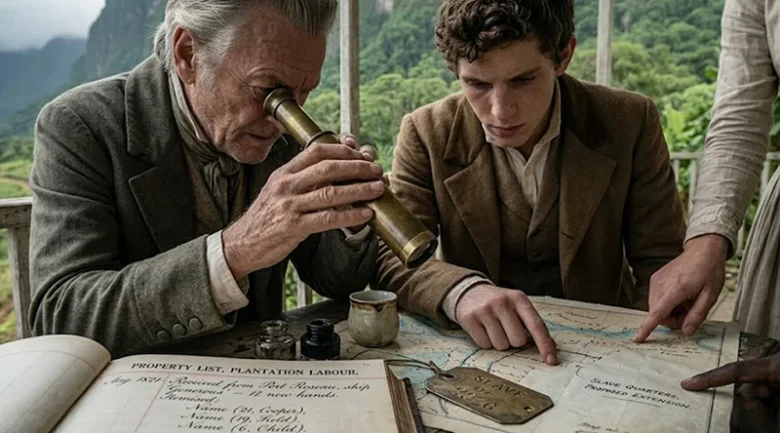
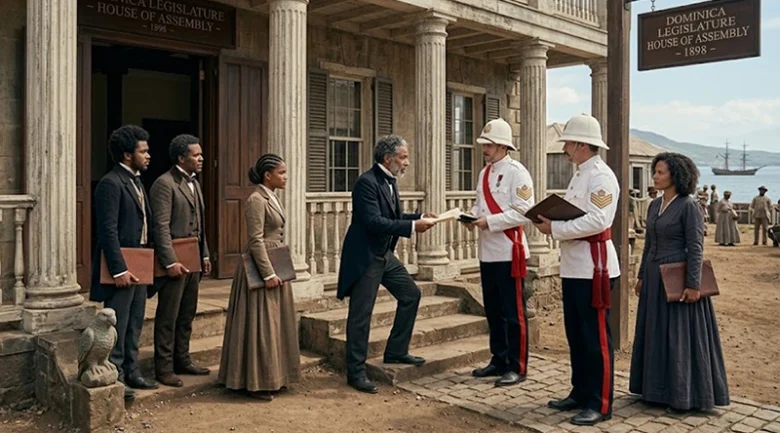
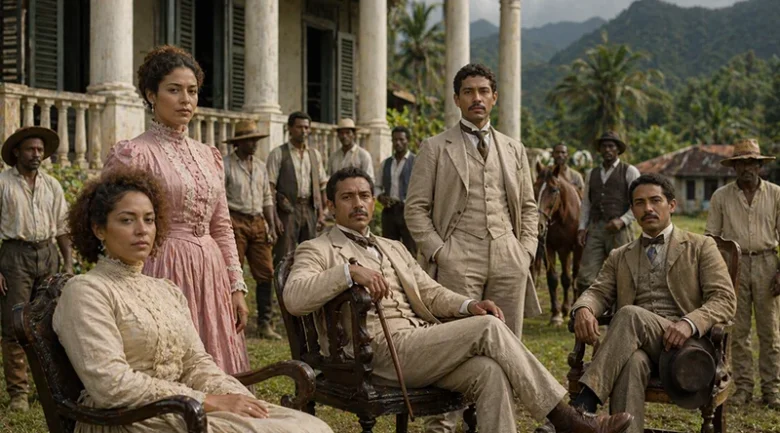
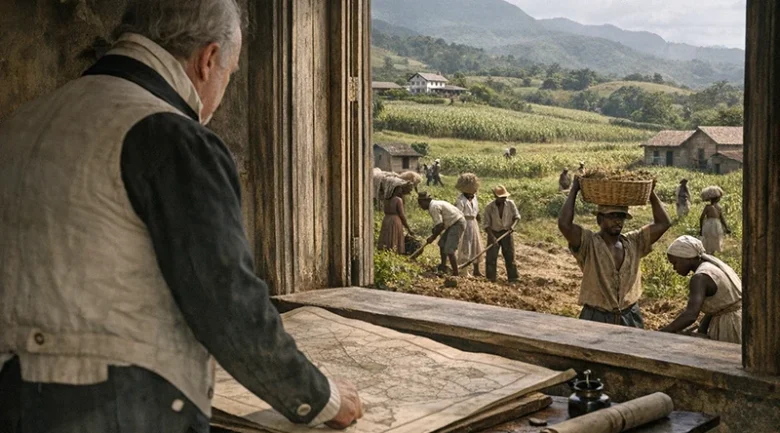
The plantocracy in Dominica was a precarious and often desperate elite, defined by their attempt to impose a rigid, industrial European order onto a landscape that was fundamentally rebellious. Unlike the planter classes of Barbados or St. Kitts, who enjoyed the relative ease of flat, navigable plains, the Dominican plantocracy lived in a state of constant battle. They were fighting the dense, vertical “High Woods,” the unpredictable tropical weather, and a population of enslaved people who used the island’s geography to create a shadow economy that undermined the very foundations of the plantation system.
The Anatomy of the Plantocracy
The term plantocracy refers to the ruling class of plantation owners who held immense economic and political power over the Caribbean colonies. In Dominica, this class was never a monolith. Instead, it was a fractured, highly volatile group of European settlers who struggled against the island’s vertical, volcanic terrain to transform fertile soil into profitable exports like coffee, sugar, and rum.
The Legislative Battleground: The House of Assembly
The plantocracy’s institutional power was anchored in the House of Assembly in Roseau. Initially, voting and office-holding rights were restricted exclusively to white, land-owning Christian males, turning the legislative body into a private club for the plantocracy. They utilised this early political monopoly to:
- Manipulate Taxation: The elite consistently shifted the fiscal burden away from their large agricultural estates and onto the merchant classes or free non-white populations.
- Mobilize the Militia: The legislature funded and directed the island’s military defenses to prioritize protecting remote plantations from frequent, highly organized Maroon raids.
- Codify Slave Laws: The assembly drafted the rigid local statutes that legally classified enslaved human beings as property, a mechanism designed entirely to protect the planters’ financial investments.
However, Dominica’s legislative landscape shifted dramatically in 1831 with the passage of the Brown Privilege Bill. This legislation granted free men of colour full political rights, allowing a wealthy, educated class of mixed-race Dominican politicians to contest elections successfully. By the mid-1830s, they broke the white plantocracy’s monopoly, creating the first Black and mixed-race legislative majority in the history of the British West Indies.
The Dual Heritage: French Coffee vs. British Sugar
Dominica’s plantocracy was unique because it was culturally “split.” Between 1763 (when the British took over) and the late 1700s, the island was caught in a tug-of-war between French and British styles of exploitation.
The French Habitants
The French planters were the first to establish a foothold. They were largely coffee planters. Coffee thrived on the steep hillsides of the Soufrière and the Roseau Valley. Because coffee production required less heavy machinery than sugar, the French plantocracy was often more decentralised and local. They lived on their estates, spoke Kwéyòl with their enslaved workers, and created a culture that felt more permanent.
The British Adventurers
When the British arrived, they brought the Sugar Revolution. They wanted large-scale, industrial-grade plantations. They viewed Dominica as an investment rather than a home. Many British planters were absentee owners, living in London while their estates were managed by “Attorneys” or “Overseers.” This created a brutal, transactional atmosphere on British estates, where the bottom line was the only metric of success.
The Geography of Resistance: The Mountain Barrier
The plantocracy’s most formidable adversary in Dominica was not the French or the Maroons, it was ultimately the terrain itself. While flat colonies like Barbados allowed planters to enforce near-total panoptic surveillance across their estates, Dominica’s vertical topography, dominated by the towering peaks of Morne Trois Pitons and Morne Diablotin, created impassable natural barriers that the plantocracy could never fully control.
Maritime and Overland Transport Logistics
Moving heavy hogsheads of export commodities from rural estates to the Roseau bayfront was an operational nightmare. Because the island’s jagged cliffs and steep ravines made the construction of wheeled cart roads into the interior virtually impossible, the plantocracy could not rely on traditional overland carriages. Instead, they were forced to utilize precarious mule tracks or risk shipping goods via small coastal drogher boats along the island’s turbulent shorelines, leaving their supply chains highly vulnerable to the region’s frequent tropical storms.
The Provision Grounds and the Hidden Economy
Because the planter class was physically locked out of the island’s deep interior valleys, the enslaved population successfully established a thriving shadow economy. On the steep mountain slopes far above the plantations, they cultivated their own provision grounds, growing root crops and raising livestock.
This agricultural autonomy transformed the enslaved population into the island’s primary domestic food suppliers, selling their surpluses at the Sunday markets in Roseau. The resulting economic leverage and mobility granted the enslaved population a degree of self-reliance and independence that enslaved labourers in flatter, more heavily policed colonies could rarely achieve.
The Colour Bar and the Three-Tiered Society
To protect their economic dominance, the plantocracy enforced a rigid racial hierarchy. This social stratification served as the colony’s institutional operating system, deliberately engineered to fracture the population and prevent cross-racial alliances.
The White Elite (The Planter Class)
At the apex of society sat a small minority of white families who monopolized the island’s primary agricultural estates. Obsessed with racial purity and European lineage, this elite class routinely sent their children to Great Britain for formal schooling. They attempted to strictly replicate British high society and aristocratic customs within the tropical environment of the Dominican rainforests.
The Free People of Colour
Operating as a distinct socioeconomic buffer class, this population occupied a complex legal space. While it included the mixed-race offspring of white planters and enslaved women, Dominica’s free non-white demographic was uniquely reinforced by wealthy, free French-Afro-Caribbean families who migrated from neighbouring French colonies. The white plantocracy viewed this group with intense suspicion and sought to limit their societal advancement.
- The Path to Economic Autonomy: Despite facing strict social marginalisation, Free People of Colour utilized Dominica’s mountainous interior to acquire substantial landholdings, emerging as highly successful coffee planters and urban merchants.
- The Legislative Shift: Unlike their counterparts on flatter sugar islands, Dominica’s Free People of Colour leveraged their accumulated wealth and high literacy rates to mount a coordinated civil rights campaign. This resistance culminated in the Brown Privilege Bill of 1831, allowing them to rapidly dismantle the white monopoly and capture a majority in the House of Assembly.
The Enslaved Majority
Forming the vast demographic baseline of the island, thousands of enslaved men, women, and children endured the physical labor that sustained the colonial economy. The plantocracy legally classified this majority as movable property and capital assets. Planters maintained operational control through a calculated combination of systematic violence, public intimidation, and minimal caloric provisions meant strictly to safeguard their labor investments and deter organized rebellion.
The Economic Engine: Sugar, Rum, and Debt
The apparent wealth of the Dominican plantocracy was structurally fragile. While planters maintained an opulent lifestyle in their estate great houses, the vast majority were locked into an escalating cycle of systemic debt.
The London Creditors and Capital Markets
The financial lifeblood of the Dominican estates was controlled by merchant commission houses in London. Planters shipped their agricultural output, primarily coffee, during the 18th-century peak, shifting to sugar in the 19th century, consigning it to these British brokers. In return, the merchants extended lines of credit, which the planters used to import luxury goods such as fine wines, European furniture, and manufactured clothing. Because international commodity prices fluctuated wildly, the Dominican plantocracy remained perpetually dependent on volatile global markets and high-interest British loans.
Rum Production and Estate Liquidity
While coffee and sugar were produced for transatlantic export, rum distillation served as the primary driver of internal estate liquidity. Major agricultural estates across the island, including Hampstead in the north and Grand Bay in the south, operated localised distilleries to process molasses.
Rather than serving as a formal currency, rum functioned as a critical bartering asset and a primary component of labour control. Rations of rum were distributed to the labour force to enforce dependency and ensure compliance. While official colonial military units like the Black Corps (Rangers), deployed to combat Maroon camps, were compensated with actual cash stipends and legal manumission, rum was heavily utilised across the colony to secure provisions and maintain local trade when physical specie was scarce
The Fall of the Plantocracy
The traditional dominance of the white Dominican plantocracy began to disintegrate in 1834 with the passage of the Slavery Abolition Act. This legislative shift triggered a systemic structural collapse for the traditional planter class, permanently altering the island’s political landscape.
The Compensation Scandal and Absenteeism
Following emancipation, the British government executed a massive financial bailout, compensating the slave owners rather than the newly liberated population. Dominican planters received thousands of pounds from the imperial government for their loss of property. Rather than reinvesting these capital payouts into local infrastructure or fair wages, a significant portion of the white elite used the funds to liquidate their colonial debts and permanently return to Great Britain. This mass departure resulted in widespread estate abandonment and a severe vacuum in local leadership.
The Rise and Fall of the Mulatto Oligarchy
With the white planter class severely depleted, wealthy and educated Free People of Colour aggressively moved into the political sphere. From the mid-1830s until 1863, Dominica stood as the only British West Indian colony where Black and mixed-race politicians secured a commanding majority in the local legislature.
While this Brown Plantocracy championed civil liberties and resisted overt British encroachment, they remained deeply invested in preserving the island’s agricultural economy. Consequently, they enacted rigid vagrancy and contract laws designed to pressure the emancipated peasantry into remaining on the estates as reliable plantation labourers. Terrified by this non-white political autonomy, the British Colonial Office intervened in 1865, forcing a constitutional compromise that established a balanced, semi-representative chamber to dilute non-white voting power.
The 1899 Crown Colony Takeover
The final suppression of Dominica’s independent political voice occurred at the close of the century. Leveraging the island’s financial distress and citing the 1893 La Plaine riots as evidence of local instability, the British government executed a coordinated administrative takeover.
Through the Imperial Offer, the local assembly was pressured into voting for its own dissolution. This culminated in the formal imposition of absolute Crown Colony rule in 1899. This structural overhaul abolished the legislature’s elective element, placing all legislative and executive authority in the hands of a British-appointed Governor and permanently silencing the local democratic voice for a quarter of a century.
Comparison: Plantocracy vs. The Emerging Peasantry
| Feature | The Plantocracy (Elite) | The Peasantry (Masses) |
| Land Use | Large-scale monoculture (Sugar/Coffee). | Small-scale “provision grounds.” |
| Market Focus | Export to London/Europe. | Internal local markets (Roseau/Portsmouth). |
| Labor Model | Coerced/Gang labor. | Family/Communal labor (Coup de Main). |
| Economic Logic | Debt-based, dependent on global prices. | Self-sufficient, resilient to market shifts. |
| Legacy | Great Houses (mostly in ruins). | The modern Dominican “mountain farmer” identity. |
The Environmental Legacy: From Cane to Cocoa
The plantocracy fundamentally transformed the ecological architecture of Dominica. Planters cleared extensive tracts of primordial coastal forest and steep hillsides to cultivate intensive export crops. While 18th-century clearing was primarily driven by the lucrative coffee boom, the late 19th-century decline of West Indian sugar forced a dramatic reconfiguration of the island’s agricultural landscape.
Faced with economic ruin, the remaining planter class began experimenting with cocoa and citrus varieties. This pivot positioned Dominica as a global agricultural innovator and eventually made it the world’s leading exporter of commercial lime juice. The island’s unique environmental terrain proved perfectly suited for orchards, as lime trees flourished on the vertical volcanic slopes far better than delicate sugar cane ever could.
This citrus revolution attracted foreign capital, notably from the British enterprise Rose’s Lime Juice, which acquired major local estates to secure its manufacturing supply chain. While this transition artificially sustained the economic power of the traditional planter elite for a few more decades, it permanently altered the island’s biodiversity. Broad valleys and native woodland ecosystems were replaced with highly organised, terraced orchards. This agrarian shift established a profound historical precedent, paving the technical and logistical groundwork for banana monocropping that would completely dominate the Dominican rural economy throughout the mid-20th century.
The Psychological Shadow of the Great House
Even today, the legacy of the plantocracy exerts a profound influence over the Dominican psyche. The weathered, stone ruins of the great agricultural estates, such as those at the Old Mill Cultural Centre in Canefield or the coastal valley of Rosalie, stand as haunting physical monuments to an era when a tiny European minority held near-absolute dominion over the island’s population and geography.
The Conflict of Land Tenure and Family Plots
One of the most complex, systemic consequences of this era is the modern land tenure framework. Across the island’s villages, contemporary property line frictions and title complications do not typically stem from the initial 18th-century estate lines drawn by the plantocracy. Instead, they are the direct byproduct of the massive demographic shift that followed full emancipation in 1838. Rather than continuing to labor on coastal plantations, thousands of newly freed Dominicans migrated into the rugged, uncultivated interior valleys to establish their own independent farming communities.
This historic migration gave rise to the enduring cultural institution of “Family Land”: generational plots held collectively by descendants without formal subdivision or updated deeds on paper. Today, the persistent friction between State Land (formerly Crown Land) and unsurveyed, multi-generational family plots remains a direct inheritance from the post-emancipation struggle for true spatial autonomy and self-determination.
Summary: The Failure of the Top-Down System
The historical attempt to impose a rigid, top-down European plantation-factory model on the vertical, untamed landscape of Dominica ultimately ended in structural failure. Three definitive factors drove this collapse:
- An Unconquerable Landscape: The island’s dramatic mountain ranges and deep ravines physically checked colonial expansion, providing an impenetrable sanctuary for Maroon resistance and crucial terrain for enslaved provision grounds.
- A Flawed Economic Strategy: Attempting to force traditional cash crops like coffee and sugar onto steep, volcanic soils proved unsustainable against the combined impacts of emancipation, soil exhaustion, and destructive tropical hurricanes.
- A Resilient Population: The socio-economic transition from enslaved labourer to self-sufficient independent peasant occurred faster and more definitively in Dominica than virtually anywhere else in the British Caribbean.
While the plantocracy held formal legal backing, the Afro-Dominican population successfully claimed the land itself. By the early 20th century, the traditional planter elite had vanished from the political forefront. They were replaced by a self-reliant nation of small-scale farmers who successfully dismantled and outlived the deeply entrenched plantation syndrome that had historically bound the region.
Comparison of the Dominican Plantocracy Tiers
| Tier | Primary Crop | Residence Style | Political Influence |
| French Habitants | Coffee / Cocoa | Mostly Resident (Local) | Controlled the interior and southern districts. |
| British Adventurers | Sugar / Rum | Mostly Absentee (London) | Dominated the early House of Assembly and trade. |
| Mulatto Oligarchy | Mixed / Merchants | Fully Resident | Eventually gained legislative control (1838–1898). |
| Attorneys/Managers | N/A (Managers) | Resident | Exercised brutal day-to-day power on absentee estates. |
Reflection: The Systemic Mirror
The story of the plantocracy in Dominica concludes not with a grand treaty or a sudden collapse, but with a slow, grinding surrender to the island’s uncompromising nature. Ultimately, the attempt to force a flat sugar logic onto a vertical mountain reality proved futile. While the planter class held the formal legal titles, it was the land and the labourers who held the actual power of survival.
The Architecture of a Faded Empire
Today, the most haunting resonance of the plantocracy lies in the physical ruins that have been swallowed by the landscape. The plantocracy built their “Great Houses” of heavy stone and imported iron to project permanence, yet the island’s high humidity, volcanic tremors, and the relentless growth of the interior rainforest have turned their once palatial homes into skeletons. These ruins serve as a permanent reminder that in Dominica, the environment is not a resource to be managed, but a sovereign force that eventually reclaims everything.
The Peasant Victory: From Plantation to Kwéyòl Culture
The most profound legacy, however, is not found in stone but in the Dominican character. The plantocracy’s inability to maintain a totalizing factory model enabled the emergence of a remarkably independent peasantry. While other Caribbean islands remained tethered to large-scale monoculture long after emancipation, the people of Dominica retreated into the mountains, utilising the provision ground farming techniques they had perfected under slavery.
This created a nation of smallholders and mountain farmers, a society that prioritised land ownership and self-sufficiency over being cogs in a global commodity machine. The cultural survival of the Kwéyòl (Creole) language, the traditional Bélé dance, and the Koudmen (communal labour) tradition is a direct result of the plantocracy’s failure to colonise the Dominican mind.
The Final Reckoning
The plantocracy is now a footnote in the island’s long history, a ghost haunting the coastal flats. The resonance they left behind is one of ironic victory: by trying to build an empire of sugar and subjugation, they inadvertently forced a people to become so intimately acquainted with their land and their liberty that they became impossible to govern. In the modern Nature Isle, the mountain has outlasted the mill, and the descendant of the provision ground farmer stands as the true owner of the soil.


References
-
1.
Plantation Labourer Rebellions, Material Culture and Events: Historical Archaeology at Geneva Estate, Grand Bay, Commonwealth of Dominica https://www.researchgate.net/publication/265390259_Plantation_Labourer_Rebellions_Material_Culture_and_Events_Historical_Archaeology_at_Geneva_Estate_Grand_Bay_Commonwealth_of_Dominica
-
2.
The end of slavery and apprenticeship in Dominica part 34 https://bernardlauw.wordpress.com/2015/10/30/the-end-of-slavery-and-apprenticeship-in-dominica-part-34/
-
3.
Looking at Local Slave Owner Compensation Records https://www.facebook.com/groups/269202760462518/posts/1643190273063753/
-
4.
Negre Mawon The Fighting Maroons of Dominica https://www.academia.edu/8562448/Negre_Mawon_The_Fighting_Maroons_of_Dominica