


Bryde’s Whale in Dominica
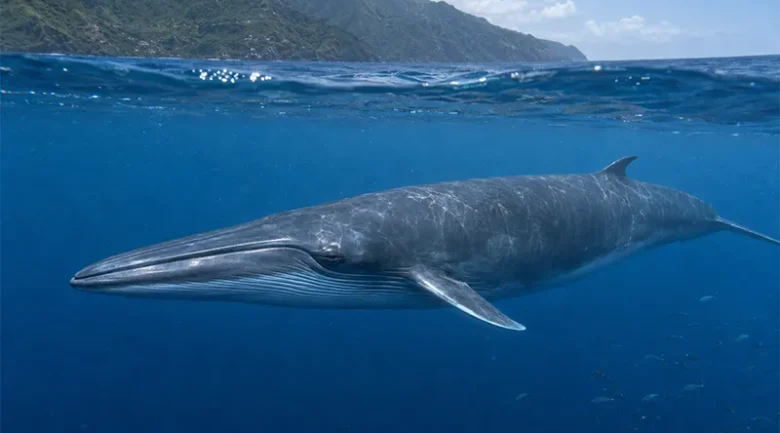
The Bryde’s whale (Balaenoptera edeni) is a large, sleek rorqual whale that seasonally transits the territorial sea and Exclusive Economic Zone (EEZ) of the Commonwealth of Dominica. While Dominica’s western coastal shelf is internationally renowned for its resident population of toothed sperm whales (Physeter macrocephalus), baleen whales like the Bryde’s whale represent a transient, pelagic component of the island’s rich marine biodiversity. Unlike migratory humpback whales (Megaptera novaeangliae), which travel to cold polar waters to feed, Bryde’s whales are unique among rorquals for spending their entire life cycles in tropical and subtropical waters. The drop-offs along Dominica’s leeward coast create upwelling zones that aggregate large schools of small schooling fish, offering a productive foraging habitat for these elusive marine mammals.
Taxonomy and Diagnostic Features
The Bryde’s whale complex is taxonomically split into two recognized subspecies or distinct forms: the larger Balaenoptera edeni brydei (offshore form) and the smaller Balaenoptera edeni edeni (Eden’s whale, coastal form). Individuals sighted within the Eastern Caribbean generally align with the larger offshore subspecies.
Anatomical Profile
- Dimensions and Mass: Adult Bryde’s whales in the Caribbean typically measure between 11.5 to 14 meters in length and weigh between 12 to 25 metric tonnes, with females generally growing larger than males.
- Cranial Ridges: The most definitive visual diagnostic feature used by researchers to identify a Bryde’s whale at the surface is the presence of three prominent, parallel longitudinal ridges on the dorsal surface of the head, running from the tip of the snout back to the blowhole. Other similar-looking rorquals, such as the sei whale (Balaenoptera borealis) or fin whale (Balaenoptera physalus), feature only a single central ridge.
- Dorsal Fin and Skin: The dorsal fin is tall, falcate (sickle-shaped), and sharply pointed, located about two-thirds of the way down the back. The body coloration is a dark slate-grey dorsally, transitioning to a lighter cream or yellowish-white belly. The skin frequently exhibits oval scars caused by bites from pelagic cookiecutter sharks (Isistius brasiliensis).
- Baleen Apparatus: Instead of teeth, the upper jaw contains 250 to 370 pairs of short, broad baleen plates with coarse grey or black bristles, engineered specifically for filter-feeding.
Foraging Ecology and Pelagic Habits in Dominican Waters
The extreme underwater bathymetry off western communities such as Soufrière, Roseau, and Portsmouth provides an optimal environment for pelagic rorquals. Deep-ocean trenches converge closely with the island’s coastline, channelling nutrient-rich pelagic food supplies directly into navigable coastal zones.
Diet and Feeding Mechanics
Bryde’s whales are opportunistic engulfment filter-feeders. Their diet in the waters surrounding Dominica consists primarily of schooling forage fish, including sardines, anchovies, and herrings, as well as pelagic crustaceans like krill and copepods. They utilize ventral pleats (throat grooves stretching from the chin to the navel) that expand dynamically to encompass thousands of gallons of water and fish in a single gulp. The whale then uses its muscular tongue to force the water outward through the fringed baleen plates, trapping the prey inside.
Surface Behavior and Acoustics
Unlike humpback whales, Bryde’s whales are erratic surface breathers. They rarely display their tail flukes when executing a deep dive. Their surface blow is a narrow, columnar spout that reaches heights of 3 to 4 meters. They exhibit unpredictable swimming patterns, frequently changing direction, and are generally solitary or found in loose pairs. To maintain contact across vast pelagic expanses, they emit low-frequency, powerful acoustic moans and short pulses ranging from 70 to 130 Hz, which propagate effectively through deep-water channels.
Environmental Protection and Conservation Status
Within the maritime borders of Dominica, the Bryde’s whale is classified as a protected species subject to comprehensive national environmental and maritime safety frameworks.
Statutory Marine Sanctuaries
The spatial movements of Balaenoptera edeni along the island’s leeward corridor intersect directly with the Sperm Whale Reserve Act. Although this 1,231-square-kilometer sanctuary was primarily constructed around the specific vulnerabilities of resident sperm whale pods, the statutory language comprehensively extends habitat protections to all members of the order Cetacea.
Consequently, the strict operational mandates within the reserve apply equally to protect the Bryde’s whale:
- Vessel Mitigation Schemes: Commercial shipping traffic, inter-island high-speed ferries, and industrial vessels must comply with mandatory speed limits and designated traffic separation lanes to minimize the risk of catastrophic hull strikes.
- Acoustic Pollution Controls: Industrial operations and unauthorized deep-sea acoustic soundings are legally restricted within the reserve to maintain the acoustic integrity required for whale communication and navigation.
- Active Field Enforcement: Specialized Sperm Whale Reserve Rangers, operating under the Ministry responsible for the Blue Economy, actively patrol the reserve boundaries to enforce environmental compliance and monitor pelagic mammal health.
Eco-Tourism Compliance and Incident Reporting
Because Bryde’s whales are highly mobile and spend brief periods at the surface, they are not the subject of targeted commercial eco-tourism. In the event of opportunistic encounters during standard whale-watching excursions, vessel captains must strictly observe the national code of conduct overseen by the Forestry, Wildlife and Parks Division and the Discover Dominica Authority. Vessels must drop to a no-wake speed, maintain a minimum approach buffer of 100 meters, and avoid cutting across the animal’s path of travel. In the case of entanglements with local artisanal fishing gear or fish aggregating devices (FADs), mariners are legally required to report the coordinate data immediately to the Fisheries Division to mobilize certified disentanglement personnel.


