



Sperm Whale Reserve Fund in Dominica
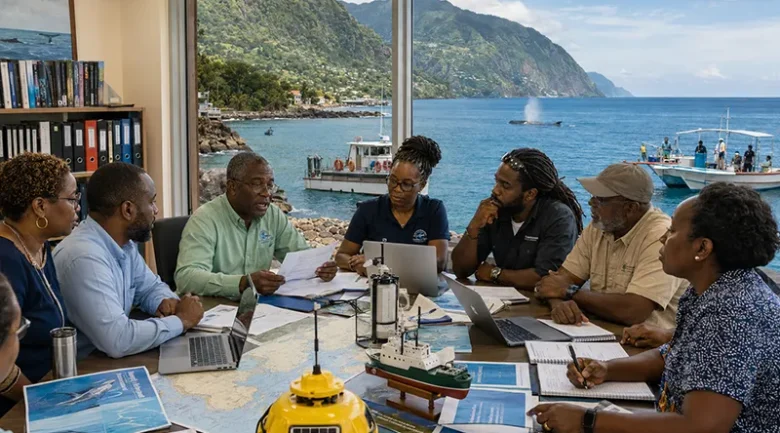
The Sperm Whale Reserve Fund is a specialized statutory financial mechanism established by the Government of Dominica to provide dedicated, long-term financing for the world’s first protected marine sanctuary exclusively designated for the sperm whale (Physeter macrocephalus). Legally enacted following the passage of the landmark Sperm Whale Reserve Act, 2025, the fund is structurally independent of the state’s central Consolidated Fund.
Administered out of Roseau under the Ministry responsible for the Blue and Green Economy, the fund directly drives marine conservation finance. It ensures that revenues generated from regulated eco-tourism, corporate partnerships, and scientific research are recycled straight into the monitoring, enforcement, and community development frameworks necessary to sustain the island’s resident cetacean population.
Statutory Authority and Capital Inflow Channels
The operational integrity and revenue architecture of the Sperm Whale Reserve Fund are governed entirely by national conservation legislation.
Legal Creation under the 2025 Act
The fund was given legal effect under Section 8 of the Sperm Whale Reserve Act, 2025. Designed as a ring-fenced financial instrument, its capital cannot be diverted for non-environmental state expenditures. The law establishes a multi-tiered capital accumulation strategy to ensure self-sustainability without over-relying on the national budget.
Primary Revenue Streams
The fund aggregates capital through five primary statutory channels:
- Commercial Tourism Levies: Royalties and licensing fees collected from commercial whale-watching operators, diving charters, and professional media production teams.
- High-Value Allocation Permits: Premium user fees charged for highly restricted, in-water “swim-with-the-whales” encounters, modeled after successful regional high-value, low-impact wildlife programs.
- Fixed Penalties and Fines: Statutory financial penalties levied against maritime vessels that violate vessel speed limits or breach designated shipping lanes.
- International Conservation Grants: Philanthropic donations, sovereign grants, and multilateral aid coordinated through strategic partners such as National Geographic Pristine Seas, Dynamic Planet, and the Environmental Law Institute.
- Parliamentary Appropriations: Baseline budgetary funding allocated by the House of Assembly to ensure continuous baseline operations.
2. Allocation Framework and Conservation Spending
Disbursements from the Sperm Whale Reserve Fund are strictly regulated and audited to cover the recurring operational costs of the 1,231-square-kilometer reserve off Dominica’s leeward coast.
| Expenditure Sector | Operational Purpose and Target Initiatives |
| Enforcement & Patrols | Funding the daily operations of the Sperm Whale Reserve Office, including marine vessel maintenance and the salaries of the Chief Sperm Whale Reserve Officer and Reserve Rangers. |
| Scientific Research | Supporting the ongoing acoustic hydrophone telemetry and behavioral genetics research led by international and local scientific bodies. |
| Community Co-Investment | Financing coastal infrastructure upgrades for local artisanal fishers and supporting educational programs in local schools. |
The Blue Carbon Economy Link
A forward-looking mandate of the fund involves capitalizing on the financial mechanics of global carbon markets.
Carbon Sequestration Valuation
Sperm whales play a critical biological role in climate mitigation through the “whale pump” effect. By diving to extreme depths to hunt giant squid and returning to the photic zone to breathe and rest, they release massive quantities of iron and nitrogen. These nutrients fertilize marine phytoplankton, which absorb atmospheric carbon dioxide via photosynthesis.
Scientific models estimate that Dominica’s resident population of approximately 200 to 250 whales helps sequester roughly 4,200 metric tonnes of carbon annually. This biological process creates a natural carbon sink equivalent to thousands of acres of forest. The Sperm Whale Reserve Fund acts as the baseline repository for incoming revenue generated from Blue Carbon Credits as these marine carbon offsets are commercialized on international climate exchange markets.


