

Humpback Whales
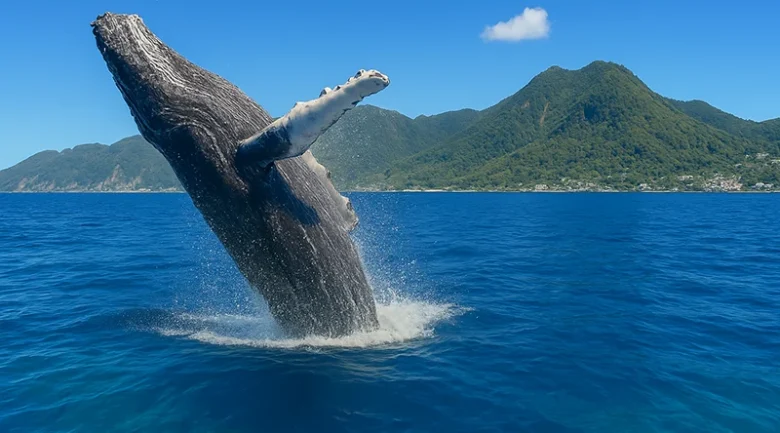
Humpback Whales (Megaptera novaeangliae) are among the awe-inspiring giants that enrich Dominica’s Marine Biodiversity. These migratory whales visit the island’s waters, the Caribbean Sea, between November and April, offering extraordinary opportunities for Whale Watching along Dominica’s western coast. Their presence signals the island’s growing identity as the Whale Watching Capital of the Caribbean.
Seasonal Visitors to a Marine Paradise
The arrival of humpback whales contributes significantly to Dominica’s Marine Ecosystems, particularly within and around designated protected areas and marine reserves. These include the Soufrière-Scott’s Head Marine Reserve, Cabrits National Park Marine Section, and the Salisbury Marine Reserve. The deep waters surrounding these zones create a favorable migratory corridor for whales moving between feeding grounds in the north and breeding zones in the Caribbean.
Whale Watching and Marine Tourism
The whales’ acrobatic displays, breaching, tail slapping, and haunting underwater songs, make them a favorite among visitors engaging in Marine Tourism, which also includes Snorkelling, Diving Spots, Boating, and Swimming in crystal-clear waters. Professional tours depart from Coastal Villages such as Soufrière, Scotts Head, Portsmouth, and Roseau, all of which are central to Dominica’s Tourism Industry.
This carefully regulated sector has helped generate local income, create jobs, and support the Dominica Economy, while bolstering community-led conservation in Coastal Communities.
Eco-Tourism and Sustainable Tourism Efforts
Humpback whale tours are governed by principles of Eco-Tourism and Sustainable Tourism, with operators trained in marine mammal behavior and navigation protocols. These practices are championed by both the Government of Dominica and NGOs to ensure respectful, non-invasive observation.
The Ministry of Tourism, Discover Dominica Authority (DDA), and the Ministry of Agriculture, Fisheries, Blue and Green Economy play pivotal roles in promoting regulations and supporting long-term sustainability.
Conservation and Climate Change Awareness
The presence of humpback whales also draws attention to larger global issues like Climate Change, which affects marine migratory patterns and food supply. In response, conservation efforts are driven by organizations such as:
- Whale and Dolphin Conservation (WDC)
- International Whaling Commission (IWC)
- Caribbean Cetacean Society
- Dominica’s Forestry, Wildlife and Parks Division
Dominica’s surrounding waters are now internationally recognized for their ecological significance, and continued conservation is crucial to maintaining the health of these Marine Ecosystems.
Enhancing the Tourism Landscape
Marine conservation and outdoor adventure are driving a new era in Dominica’s tourism industries. With rising interest in whale watching, snorkelling, and marine reserve exploration, these experiences support local jobs and ecosystem protection, positioning marine tourism as a cornerstone of sustainable tourism planning.
Dominica’s marine environment, particularly its deep coastal drop-offs and nutrient-rich waters, continues to shape its standing as one of the Caribbean’s most dynamic destinations for nature lovers and scientists alike.


