




Utilities in Dominica
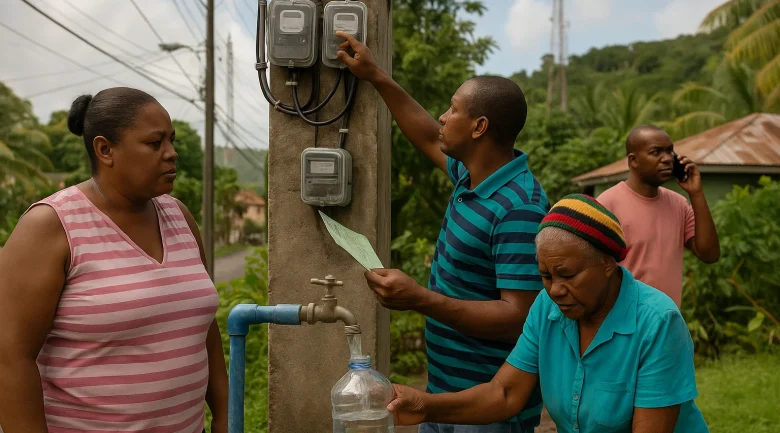
In Dominica, Utilities are deeply tied to Dominican social and economic realities, linking electricity, water, wastewater, and telecommunications expenses to the island’s cost of living and shaping the choices families and businesses must make to balance comfort, productivity, and access to essential services.
National Utility Framework and Main Service Providers
Service delivery rests on a small group of regulated providers operating under the sector. Electricity is supplied by Dominica Electricity Services Limited (DOMLEC), regulated by the Independent Regulatory Commission (IRC), which approves tariffs and monitors performance under the Electricity Supply Act of 2006. Water and wastewater services are delivered by the Dominica Water and Sewerage Company (DOWASCO), which operates within a legal framework outlined in water regulation laws and the Water and Sewerage Act. Mobile and broadband services are mainly provided by FLOW and Digicel under licences issued in keeping with the Telecommunications Act. Oversight focuses on reliability, pricing, capital investment and consumer protection.
These utilities interact with national climate resilience, infrastructure and national development strategies, influencing everything from tourism competitiveness to household vulnerability during external shocks.
Price Levels, Tariffs and Cost of Living
Tariff decisions directly shape monthly budgets. Recent international comparisons suggest average residential electricity costs of US$0.21-0.25 per kWh, placing local bills among the higher ranges in the Eastern Caribbean. A 2025 announcement on a modernised tariff signalled a reduction to about US$0.22 per kWh, roughly a 12 per cent drop from earlier levels near US$0.25.
For water, a 2024 notice showed that domestic unmetered customers pay a flat EC$48.30 per month, while domestic metered customers are charged EC$21.62 for the first 1,000 gallons and EC$10.12 for each additional 1,000 gallons. DOWASCO also applies a Water Access Charge, a flat monthly fee added to consumption charges that was formally introduced to address cash-flow gaps. Treated-water charges have been scheduled to rise from EC$2.00 per kilolitre in 2023/24 to EC$2.50 in 2024/25 and EC$2.85 in 2025/26.
Cost-of-living profiles compiled for Dominica estimate combined household spending on electricity, water and garbage at roughly EC$200–350 per month, with fixed internet often near EC$100. When compared with estimates that overall monthly living costs approach EC$950 while average post-tax income sits near EC$1200, utility bills represent a significant slice of disposable income, especially for lower-wage households and pensioners.
Consumer price index data from the Eastern Caribbean Central Bank show the “Housing, Water, Electricity, Gas and Other Fuels” component rising above its base index, confirming that these items have steadily contributed to inflation pressures. Public complaints about “light bill” and water increases frequently appear in local media and social spaces, linking utility charges to perceived erosion of purchasing power.
Historical Trends in Utility Costs and Living Standards
From the 1970s through the early 2000s, electricity generation relied largely on imported diesel, leaving tariffs exposed to swings in global oil prices and limiting the scope for dramatic reductions. Historical regulatory reforms, including the creation of the IRC and the modern Electricity Supply Act, were partly responses to longstanding concerns about cost levels and transparency in tariff-setting.
Over roughly half a century, wage growth and public sector salary adjustments have struggled at times to keep pace with increases in fuel, food and utilities. This imbalance is reflected in occasional arrears to DOMLEC and DOWASCO, disconnections, and the growing importance of energy-saving appliances, rooftop water storage and rainwater harvesting at the household level.
Water tariffs have historically remained comparatively modest but have risen as DOWASCO confronts the costs of replacing ageing pipes, expanding treatment capacity, and servicing loans. Electricity rates, meanwhile, have been periodically reviewed through formal tariff processes, where IRC consultations weigh DOMLEC’s revenue requirements against consumer impacts and efficiency expectations. These reviews also influence capital investment plans, line-upgrade schedules and reliability targets.
The combined effect on living standards is mixed: universal grid and water access in most communities is a clear social gain, yet recurring complaints about high bills show that affordability remains a central issue.
Infrastructure Upgrades, Geothermal Development and Future Outlook
Heavy damage from storms, particularly Tropical Storm Erika and Hurricane Maria, exposed the vulnerability of overhead lines, intakes, treatment plants and telecom towers. Subsequent capital works have focused on hardening electricity and water systems, relocating or protecting intakes, and improving remote monitoring and load management tools. Telecom operators have also invested in network redundancy and restored mobile coverage to previously isolated areas.
The most significant prospective shift concerns the exploration of geothermal resources and broader green energy development. A 10 MW geothermal power plant in the Roseau Valley, backed by multilateral and regional financing, is expected to lift the renewable share of electricity to around 89 percent once operational. Official and regional briefs consistently state that this transition should reduce and stabilise electricity costs, cut greenhouse gas emissions, and strengthen energy security.
Regulatory proposals for Time-of-Use (TOU) tariffs aim to give customers lower off-peak rates and more control over usage patterns, making it easier to benefit from cheaper renewable generation at certain hours. If implemented alongside geothermal supply, this approach could gradually lower average household bills by encouraging households to shift high-demand activities, such as ironing or water pumping, to off-peak periods.
For water, planned upgrades include ongoing pipe replacement, additional storage, and improved watershed protection, all of which have cost implications but are intended to secure a safe supply in a changing climate. Telecom infrastructure is moving toward higher-speed, more resilient networks, which influence digital inclusion and the viability of remote work and online services.
Over the coming decade, the balance between capital investment, regulatory reform and green-energy expansion will determine whether utility charges ease relative to incomes or remain a persistent pressure on household budgets.


