




Consumer Price Index (CPI) for Dominica
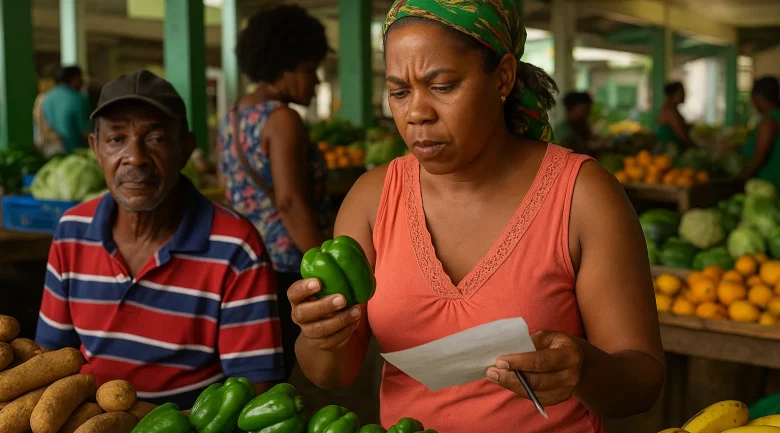
Monthly changes in household expenses are monitored through the consumer price index for Dominica, a measure that tracks shifting prices for goods and services and helps illustrate how living costs evolve across the island’s economy as families adjust to ongoing financial pressures and market movements.
Statistical Role and Institutional Oversight
The index is compiled by the Central Statistical Office, which monitors price movements across urban centres such as Roseau and Portsmouth, as well as selected communities outside the capital. It serves as a vital economic indicator for government planning, wage negotiations, social-assistance adjustments, and private sector decision-making. The compilation process relies on consistent market observations and established methodologies that reflect international standards.
Prices are collected from supermarkets, village shops, produce markets, pharmacies, clothing retailers, transportation services, and utility categories. The index also helps contextualise fluctuations driven by seasonal patterns, global commodity shifts, and changes in domestic supply conditions, especially in sectors exposed to Dominica’s varied geography and vulnerability to storms or shipping delays.
Structure of the Consumer Basket and Measurement Approach
The Consumer Price Index is built on a structured basket of goods and services that reflect typical consumption patterns of Dominican households. The basket includes food staples, energy, transport, medical expenses, communication services, educational supplies, housing-related costs, recreation, clothing, and personal care items. Each category carries a weighting determined by household expenditure surveys, ensuring that changes in more frequently purchased items have a greater influence on the overall index.
The following points highlight the main components that generally appear in the consumer basket:
- Food and non-alcoholic beverages from supermarkets, local markets, and small village vendors.
- Housing, utilities, and household operations such as electricity, water, cooking gas, and maintenance supplies.
- Transportation expenses, including bus fares, private vehicle fuel, and vehicle maintenance items.
- Health and medical services are purchased from clinics, pharmacies, and hospitals.
- Communication services covering mobile plans, internet packages, and postal services.
- Education expenses, including school supplies and related fees.
- Clothing, footwear, and accessories.
- Miscellaneous goods and services linked to personal care, recreation, and household needs.
These components help create a balanced and realistic picture of price behaviour in day-to-day life across the island.
Usefulness for Economic Planning and Public Policy
The index guides both short-term responses and long-term strategies. Government agencies use it to evaluate the true value of wages, social welfare payments, and public sector compensation. Businesses refer to CPI movements when setting prices, budgeting for imports, or assessing shifts in household purchasing power. Financial institutions and regional partners also consult the CPI when analysing Dominica’s economic conditions within the wider Eastern Caribbean.
Because Dominica depends heavily on imported food, fuel, and manufactured products, the index often reflects global price movements, shipping delays, and currency dynamics. At the same time, local agricultural cycles, disaster-related production losses, and supply bottlenecks influence the domestic cost structure. As a result, CPI trends frequently become part of national conversations surrounding affordability, food security, and financial stability.
Interpretation of Inflation Trends and Sectoral Behaviour
Changes in the Consumer Price Index allow analysts to determine monthly and annual inflation rates. A sustained increase typically indicates rising living costs, while slower growth shows stabilisation. Sector-level analysis helps identify which areas drive inflationary pressure. Food prices may rise after storms that affect farm output; energy costs may change due to shifts in global oil markets; transport fares may adjust as fuel costs climb; and imported goods may fluctuate with freight movements.
The index also captures periods when specific groups of items drop in price due to domestic harvests, promotional cycles in retail stores, or stable fuel markets. Monitoring these patterns helps shape policy discussions around resilience, household vulnerability, and national development priorities.
Relation to Regional Economic Monitoring
Although the CPI is produced nationally, its structure allows comparisons across the Eastern Caribbean Currency Union, enabling policymakers to understand how price trends in Dominica align with or diverge from neighbouring territories. This is valuable for assessing shared challenges such as shipping disruptions, tourism fluctuations, or shifts in agricultural supply.


