



Income Tax in Dominica
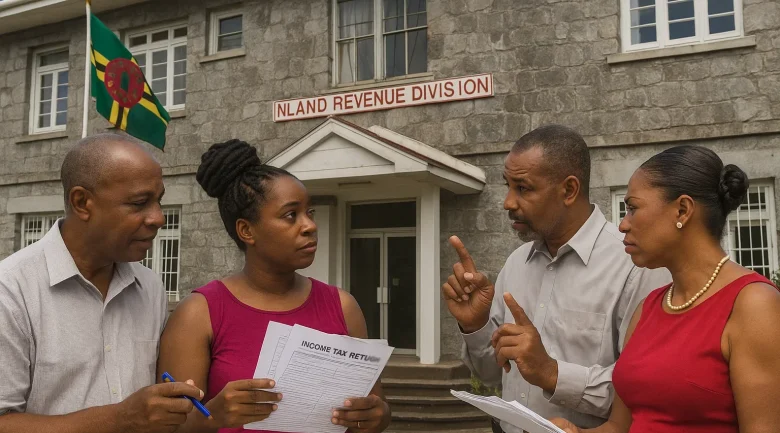
Income tax in Dominica is governed by the Income Tax Act, Chapter 67:01 (“the Act”), administered by the Inland Revenue Division (IRD) of the Ministry of Finance. The statute sets out the chargeability of tax on income from employment, business activities, investments and other sources, along with rates, deductions, residency rules and filing requirements.
Key Features and Rates
The Act distinguishes between personal income tax, corporate income tax, withholding taxes and the treatment of residents vs non-residents.
Personal Income Tax
- Residents benefit from a tax-free allowance of EC $30,000 annually.
- Chargeable income is taxed progressively as follows:
- EC $0 – 30,000: 0% tax.
- EC $30,001 – 50,000: 15% tax.
- EC $50,001 – 80,000: 25% tax.
- EC $80,001 and above: 35% tax.
- Non-residents pay tax on income derived from Dominican sources only and typically do not receive the full resident allowance.
- The Act provides for deductions and allowances: for example, mortgage interest (up to EC $25,000), approved donations and student loan relief up to EC $5,000 per student.
Corporate Income Tax
- Companies resident or trading in Dominica are taxed at a flat rate of 25% on net profits.
- The Act requires companies to file returns within three months of the end of their financial year. Quarterly installment payments may apply (e.g., 25%, 35%, 40% of estimated tax) for resident companies.
Withholding Tax and Non-Resident Payments
- Payments such as dividends, interest, royalties or rental income paid to non-residents are subject to withholding tax of 15%, unless reduced by a treaty.
Administration and Compliance
- The IRD issues tax tables and guidance for calculation of tax liabilities and submission of returns. For example, the Personal Income Tax Return must be filed annually, generally by 31 March for individuals.
- Employers must deduct tax under the PAYE (Pay As You Earn) mechanism on monthly salary payments, remitting the withheld amounts to the IRD.
- The Act allows the Comptroller of Inland Revenue to make assessments, raise penalties for late filing or payment, and take enforcement action where returns are not submitted.
Residency, Scope and Interaction with Other Taxes
- Tax residency is determined by criteria such as physical presence (e.g., 183+ days) or place of habitual abode in Dominica. Residents are taxable on worldwide income, while non-residents are taxed only on Dominican-source income.
- The salary, business income, rental income, royalties and dividends all fall under the Act’s definitions of “income” and “chargeable income”.
- The Income Tax Act works alongside other instruments: for example Tax Information Exchange Agreements (TIEAs), which supports international cooperation in tax matters.
Economic and Policy Significance
The income tax framework is foundational for Dominica’s fiscal policy and revenue generation. It supports government spending on infrastructure, health, education and national development. The progressive personal tax rates aim to reduce the tax burden on lower income earners, while a flat corporate rate and clear withholding regime enhance the country’s attractiveness for businesses and investors. References to no capital gains tax and relatively modest personal tax burdens (compared with many jurisdictions) are often cited in investor-guides.
From a policy perspective, the Act enables the government to:
- Fund core services via tax revenue.
- Use allowances and deductions (e.g., for mortgage interest) to promote home ownership and education.
- Provide a competitive tax environment compared to many Caribbean peers, aiding foreign direct investment and international business.
Challenges and Development Issues
While Dominica’s income tax system provides a clear statutory basis and relatively low rates, there are several practical and policy challenges:
- Compliance and enforcement: Ensuring that taxpayers, particularly in informal sectors or with foreign-source income, properly file returns and report worldwide income is complex.
- Documentation and transparency: Many deductions (e.g., student loans, mortgage interest) require proper documentation, which may be limited in smaller or informal businesses.
- Global tax transparency: As international norms evolve (for example automatic exchange of information via OECD standards), Dominica must continue to update and align its legislation, including the Income Tax Act and related Acts.
- Incentive balance: While tax reliefs support investment and development, the government must balance revenue-raising needs with competitive tax policy.
Recent Trends & Context
According to tax-guides for 2025:
- The personal income tax top marginal rate remains at 35%.
- The corporate tax rate remains at 25%.
- The tax system is promoted as part of Dominica’s investment climate, particularly in tourism, real-estate, and international business sectors.
Overall Significance of Income Tax in Dominica
The income tax regime in Dominica stands out for its progressive personal structure, modest corporate rate, and straightforward administration. It balances government revenue needs with competitiveness for investment and fairness for individuals. While enforcement challenges remain, especially in auditing worldwide income and managing compliance in informal sectors, the system provides a clear statutory foundation that supports both fiscal stability and economic growth. Ongoing updates, such as the 2023 amendment, show that Dominica continues to adapt its tax laws to align with international standards and national development priorities.


