



Roseau Valley Watershed
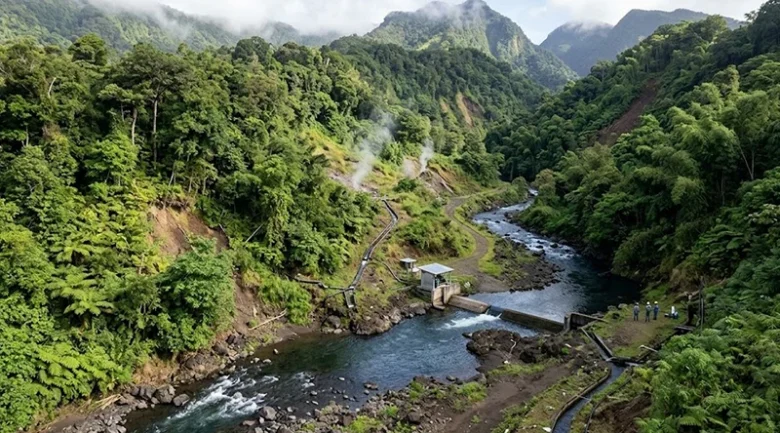
The Roseau Valley Watershed is one of the most ecologically and hydrologically significant drainage basins in Dominica. Located in the south-central portion of the island, primarily within the parish of Saint George, it serves as a critical source of potable water, hydroelectric power, and geothermal energy. The watershed is characterised by its steep volcanic topography, high annual rainfall, and dense tropical vegetation, making it a focal point for national conservation and resource management efforts.
Geographic and Hydrological Features
The watershed encompasses a complex network of rivers and streams that originate on the high-elevation ridges of the Morne Trois Pitons National Park. The primary artery is the Roseau River, which flows westward through several communities before discharging into the Caribbean Sea at the capital, Roseau.
Key hydrological landmarks within the watershed include:
- River Claire and River Trois Pitons: Major tributaries that feed the main river system.
- Freshwater Lake: Situated at approximately 762 meters above sea level, it acts as a high-altitude catchment area.
- Trafalgar Falls: A site where the Papillote and River Claire meet, demonstrating the significant hydraulic head used for power generation.
Ecological Significance and Biodiversity
The Roseau Valley Watershed is a high-biodiversity zone, transitioning from montane thicket and elfin woodland at its highest reaches to mature rainforest and secondary forest in the lower valley. It provides essential habitat for several endemic species, including the Sisserou Parrot (Amazona imperialis) and the Jaco Parrot (Amazona arausiaca). The lush riparian vegetation along the riverbanks acts as a natural filter, maintaining water quality and supporting freshwater fauna, including the mountain mullet and various species of crayfish (Cryphiops spp.).
Economic and Resource Management
The watershed is the industrial and utility backbone of Dominica. It supports three major pillars of the national economy:
- Hydroelectric Power: The Dominica Electricity Services Limited (DOMLEC) operates several hydro stations along the Roseau River system, utilising the watershed’s perennial flow to provide a substantial portion of the island’s renewable energy.
- Potable Water Supply: The Dominica Water and Sewerage Company (DOWASCO) manages intake points within the watershed that supply water to the greater Roseau area and surrounding southern communities.
- Geothermal Development: The valley is the site of Dominica’s primary geothermal project, which utilises the region’s volcanic heat to transition the nation toward 100% renewable energy by 2030.
Conservation and Environmental Challenges
Due to its steep slopes, the Roseau Valley Watershed is highly susceptible to landslides and siltation, particularly during extreme weather events. Management is governed by the Forestry, Wildlife and Parks Division and the Environmental Coordinating Unit (ECU). Key challenges include:
- Siltation and Erosion: Heavy rainfall often leads to sediment loading in the Roseau River, which can impact downstream infrastructure and coastal reefs.
- Encroachment: Balancing agricultural expansion and residential development with the need to maintain forest cover is a primary focus of the Physical Planning Act.
- Climate Resilience: Restoration of riparian buffers remains a priority under the Climate Resilience and Recovery Plan (CRRP) to mitigate flood risks.


